










Gun Tests
Username:
Password:
Forgot your Password?
Home | Compare Guns | My Gun Vault | RSS/XML | About Us
 Advanced Search


Expert Knowledge For $2 a month

Thousands of detailed reviews. Dozens of new firearm reviews monthly. Five free comprehensive buying guides. Delivered to your door and online. Instant access - flexible payments.

First Name:
Address 1:
City:
Last Name:
Address 2:
State       Zip:
Email:

The Almost Drop-In Dayton Traister 77/22 Trigger

Dayton Traister’s replacement trigger for Ruger’s popular Model 77/22 line of rimfire and .22 Hornet rifles offers a marked improvement over the factory triggers—once it is installed properly.

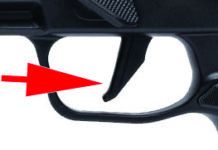
The two pointers show the areas
on the Dayton Traister trigger
where shooters might need to re-
lieve some metal to make them
fit properly in the Model 77/22.

Heavy, creepy triggers with overtravel make you shoot poorer groups and blow shots in the field, but because of lawsuit and insurance concerns, most factory rifles today come with triggers that can be pretty horrible. For instance, two rifles that are favorites of hunters, the Ruger Model 77/22 in .22 rimfire and the Model 77/22 in .22 Hornet, come with triggers that impede good shooting, but until recently, there was no way to improve their triggers by swapping them out with an aftermarket product.

That problem has been resolved with the availability of Dayton-Traister Trigger Company replacement triggers for 77/22s. We recently ordered two of the adjustable drop-in products and fitted them to Rugers. We thought it would be about a 10-minute job per gun to install the adjustable drop-ins, but we found out fitting them to the guns wasn’t without problems.

Installation
Before we set to work on the guns, we tested the factory triggers with a RCBS Premium trigger-pull gauge and took notes on the operation of the standard triggers. The rimfire trigger was passable, breaking fairly crisply at 3 pounds 12 ounces, but the Hornet trigger was terrible. It had a fair amount of creep, and it broke at a heavy 41/2-pound weight. Both factory triggers had a slight amount of travel or slippage after the sear released the shot fired.

The Model 77/22 action is held to the stock with two screws, one behind the trigger guard and one in front of the rotary magazine. The action pops out of the wood stock by opening the bolt after both screws are removed, and the trigger-guard assembly, which is also the rear housing of the rotary magazine, is levered forward toward the muzzle of the gun and lifted free. The bolt must be open for the trigger guard assembly to be removed. Once done, the action is then free to slip out of the stock.

A single pivot pin holds the factory trigger in place. This pin and the trigger spring are retained to use with the drop-in replacement. A small trigger tension disk, which comes taped to the installation instructions, is placed atop the trigger adjustment screw in the new trigger and the factory spring is placed on top of the tension disk. With the bolt open, the new trigger is inserted back into the assembly and secured in place by the factory pivot pin. Simple. It shouldn’t take more than 5 minutes after the action is out of the stock to swap the triggers.

The problem is that the cast triggers required minor fitting in both of our guns. It was not a big job, but you might face the same problems, so be aware of them. There were two raised casting marks on the portion of the trigger that engages the sear, and when we tried to slip the trigger into position, the raised portions made the trigger too thick to fit inside the sear housing. We had to use a file to relieve enough metal off the sides of the trigger so that it slipped easily into place. While the other trigger slipped into the sear housing, it had a slight casting blemish around the pivot pin hole that also had to be filed down before it slipped into place.

Once the trigger on the Hornet was in place, we closed the bolt and found that the firing pin slipped back down as the bolt was closed. It didn’t snap on the empty chamber; it was as though the trigger was being pulled while the bolt was thrown down, effectively uncocking the gun each time. Thinking we had done something wrong, we took the gun back apart and fiddled around with the parts two or three times. Unable to solve the Hornet’s puzzle, we decided to assemble the other trigger to see if we could figure out the problem. Once this trigger was in place, it worked flawlessly. It finally dawned on us that the adjustment on the Hornet trigger was dialed out to its limit, so we screwed it down, increasing the pull until the trigger held the sear in place.

Testing The Triggers
With two new working triggers in the actions, we then tried the weight adjustment screws to see how light we could set the triggers. Both could be adjusted to around a pound or under, but if you closed the bolt briskly or rapped the action, the guns would fire. Of course, this was dangerous. We kept making the trigger weight heavier by turning the weight-adjustment screw deeper until the gun would not fire when we rapped on the back or side of the action with a mallet. That occurred at just under 2 pounds with both test triggers. At the high end of the weight-adjustment range, we quit at about 4 pounds. Who would want more than that? With both triggers set at about 2 pounds 4 ounces, we then reassembled the guns. You will need to use a gauge to get the pull you desire. Dayton Traister recommends that you use a locking compound on the screws once you set the pull, which is good advice for any gun that rides around in vibrating vehicles.

While playing with the triggers in the actions, we were pleased with the smooth pulls, how crisply the triggers seemed to break, and the almost total lack of travel after the sear slipped free. The trigger in the rimfire was especially tight and crisp.

With the stock bolted back on, a tester threw the Hornet to his shoulder and squeezed off at an imaginary loping rabbit. The pull seemed heavy, he said. Then when he tried to recock the gun, it fired as the bolt closed—thankfully on an empty chamber. It did this repeatedly. We were perplexed. The only way we could get the gun to stay cocked was to hold the trigger forward as we dropped the bolt. Oddly, it was pulling at more than 4 pounds to fire when this occurred.

We tore the gun apart again, thinking something had slipped. But the gun functioned flawlessly when it was out of the stock. We reassembled it, and the firing pin again dropped when we closed the bolt. We took the gun apart again, and again the trigger functioned perfectly without the stock. We then looked carefully at the stock and trigger-guard assembly as we reassembled it yet again.

Here was the problem. The new trigger was bearing on the side of the trigger guard. After the trigger was pulled, there was enough tension bearing on the side of the trigger to keep it from slipping back forward. We had seen this same problem on the factory rimfire and Hornet triggers. To solve the problem, we ground down the trigger slightly on the side that was bearing on the trigger guard on one gun, and I filed out the inside of the trigger guard on the other gun. Both solutions were satisfactory, and both guns’ triggers now broke at the proper weight.

PS Recommends
The problems we had installing the Dayton Traister aftermarket triggers for Ruger’s popular Model 77/22 line of rimfire and .22 Hornet rifles were potentially very dangerous. Anyone installing one of these triggers should make sure they do not have this problem. During one function test, the firing pin would not fall until about a half-second to a second after the bolt was closed. The snap was frightening when the firing pin dropped. Apparently, the trigger was engaging the sear only enough to hold it briefly, but any vibration on the gun would fire it. However, once the tension was relieved from the side of the trigger, I could not make the trigger malfunction.

What we expected to be a 10-minute job turned into a morning-long ordeal. Will you have the same problems? That’s impossible to say, but now you know some of the potential obstacles and possible fixes for the problems.

Despite the problems, we were pleased with the final results. For less than $50, you can install one of the Dayton Traister Model 77/22 triggers on your Ruger rimfire or Hornet rifle and feel a marked improvement over the factory trigger. If we were to do it all over again, we would go ahead and buy the triggers because the short-term pain is worth the long-term gain.

However, we hesitate to recommend the Dayton Traister triggers for everyone because of the installation problems and related safety questions. In our minds, not every shooter should undertake this installation, despite the “drop-in” aspects of the products. We also urge shooters to use caution and thoroughly test the triggers by repeated dry firing and jarring the rifle before using live ammunition. If you have any doubt about your ability to handle the minor fitting problems you might encounter or if you don’t already know your way around a trigger, then we advise that you avoid the Dayton Traister replacement triggers for the Ruger.


Also With This Article
Click here to view the contacts and addresses.


-By Jim Matthews


Publishing Systems Powered by iProduction [gladys]Home | Subscribe | Customer Service | About Us | Contact Us | Privacy Policy | Site Map | Links
Copyright Belvoir Media Group, LLC. All rights reserved.