




Gun Tests
Username:
Password:
Forgot your Password?
Home | Compare Guns | My Gun Vault | RSS/XML | About Us
 Advanced Search


Electronic Ear Muffs: We Like RidgeLine

Peltor is also a solid pick, edging out Silencio and Gentex products.

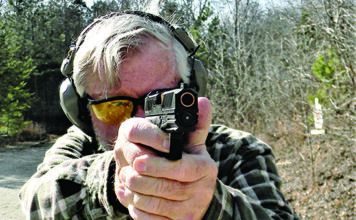
Stereophonic ear-muff units we tested in-
cluded RidgeLine Products’ Pro-Ears Pro-Mag
model, which came in first in our evaluation.

It is a given that hearing-protection devices (HPDs) are one of a shooter’s required accessories. Most shooting ranges won’t even allow customers into the range area unless they’re wearing one of these devices. Although the majority of firearms users make do with the lower-tech ear plugs and muffs, electronic wizardry is alive and well in this industry, in various sophisticated models. All of them feature the ability to transmit and even amplify ambient and low-level sounds encountered at the rifle and pistol range, but block loud or impulsive noises such as gunfire.

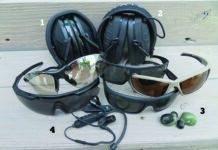
We recently tested four stereophonic units that typically retail between $100 and $200. Our test units included RidgeLine Products’ Pro-Ears Pro-Mag model, the Silencio/Safety Direct Rangesafe RSX-87 unit, Aearo Peltor’s Tactical 7-S, and the Gentex Corporation Wolf Ears Model 1030A. To compare the products, we went to an indoor range and shot two handguns, a .357 Mag. Smith and Wesson Model 686 revolver with a 6-inch barrel and a .44 Mag. Ruger Vaquero revolver. We also wore the products indoors while shooting a .22-caliber Daisy 2206. The ammunition consisted of reloaded .38 wadcutters, Winchester .44 Remington Magnum 240-grain jacketed soft-point cartridges, and various .22 LR bullets. We also shot the products outdoors using a 12-gauge Mossberg 500 pump action shotgun with a modified choke and a 28-inch barrel.

In each case, testers wearing the units would score each product in several categories: noise reduction of loud sounds, amplification of soft sounds, comfort, and gunstock interference. Most important in our test scheme was the units’ ability to dampen noise. If they don’t muffle loud noises, then what’s the point? Each model was rated excellent (if loud sounds were entirely dampened), good (muffled sound; no hearing discomfort), fair (sounds seemed loud but gave the tester no apparent hearing discomfort), poor (some hearing discomfort), and unacceptable (sounds caused ringing, buzzing, threshold hearing shift, or ear pain).

We also gauged the phones’ ability to amplify normal sounds. Each item was evaluated according to the quality and reliability of sounds it transmitted, how well it rendered where transmitted sounds came from (stereophonic accuracy), and the testers’ overall impression of the sound clarity.

Comfort was also a consideration in our evaluation. Shooting is good, clean fun—at least until your skin gets chafed by an ill-fitting ear cup or a metallic headpiece starts digging into your scalp. Besides reducing a shooter’s enjoyment level, poor muff comfort can also detract from his concentration, resulting in poor accuracy.

We also checked each product for any problems it cause on the gun. Gunstock interference is one of the drawbacks of all earmuff HPDs, where hearing protection interferes with head placement against a rifle or shotgun stock. Though this is of little or no concern to handgunners, most long-gun shooters will encounter problems.

Test shooters completed evaluations in all four categories on each ear muff, for each firearm used (with the exception of stock interference while using handguns). Further, testers were instructed not to discuss any findings with each other until the entire battery of assessments were complete.

Here’s what we learned:

We Would Buy
RidgeLine Pro-Ears Pro-Mag

This product took top honors in every testing category except noise reduction. It came in a close second in that assessment. This is surprising because the manufacturer indicates that the unit’s passive Noise Reduction Rating (NRR) has a value of 28, one of the highest on the market for ear muffs.

All in all, our testers thought the Pro-Mag was an excellent performer. One tester said its transmitted noise sounded a little hollow, but if that’s the worst thing we can say about it, then it seems RidgeLine has developed a winner. The unit has individual controls for each cup’s sound transmission/amplification system. They can be adjusted independently of each other. This is a very useful feature for users who may have different hearing sensitivity in one ear compared to the other. Each cup requires one N (1.5-volt) battery. Two batteries are provided with the product. They are easily installed in the interior of each cup.

The head band adjusts for head size with little effort. The shooter pulls or pushes the head band until it fits comfortably.

Performance Shooter Recommends: The manufacturer’s suggested retail price for this unit is on the high side ($219.95), but once you try it you’ll be hard-pressed to find fault with it.

Peltor Tactical 7-S:
Works Fine, Except On Stocks

This unit features superb noise reduction, but it is our second pick based on its higher suggested retail price of $258.30 and its propensity to ride up on gunstocks. On the price point, however, we note that it is available from some sources for much less: Cabela’s, for instance, offers it for $164.99.

Despite its stated passive NRR of 21 (compared to the RidgeLine’s higher stated 28 rating), the Peltor unit outperformed the RidgeLine Pro-Mag in noise reduction, we thought. In outdoors testing, this unit outperformed the others, including the top-ranked RidgeLine Pro-Mag. If you do all or even the majority of your shooting outside, then the Peltor product should get extra consideration.

It also performed well in the areas of amplification and comfort, but came up short regarding its interaction with a gunstock. Examination of the design compared to the other units failed to suggest why this should be, but testers generally scored the unit lower in this area than the other products.

The unit requires one 9-volt battery, which is installed on the outer portion of the left ear cup. Although the amplification system does allow for adjustable volume levels, one device controls both cups equally. This means it’s not possible to adjust sound levels in one ear separate from the other. Additional information in the unit’s sales literature revealed instead that any such adjustments can only be made directly on the circuitry in the right cup. To effect this change, the cup’s padding and foam must be removed, and adjustments must be made on the circuit board within. This design is inconvenient, in our view. We preferred the individual controls like those found on the RidgeLine and Silencio models.

Like the Pro-Mag, the Peltor’s metal bands adjust for differing head sizes easily.

Performance Shooter Recommends: The Peltor Tactical 7-S unit is worth buying, in our estimation.

Silencio Rangesafe RSX-87: Budget Pick
The Silencio name is well known in the hearing protection field, and this model gave a respectable showing in our tests. Of the four products, it has the lowest suggested retail price, of $169.18.

Examination of the results suggests that this product is better used when the shooting environment makes for less dynamic acoustics. Its comparative performance was significantly better outdoors, where echoes and sound bounce are minimized, and indoors while using the .22 rifle.

Its noise reduction performance lagged behind the previous two models, and, although it is not given an official NRR by the manufacturer, is nevertheless expected to have an NRR of approximately 26 based on when its sound cut-off system activated. Also, the non-electronic version of this design is rated at 26 NRR. Like the Pro-Mag set, the Silencio muffs have individual volume controls for each ear.

The Silencio unit operates on two 9-volt batteries, not supplied with the unit, each of which is installed in the interior of the ear cups. The adjustable headstrap has less range of motion than the previous two models and is somewhat stiffer to operate, in our estimation. It also has a lock-nut assembly, presumably allowing an individual to tighten the size adjustment in place after it has been customized. The RidgeLine and Peltor units didn’t seem to suffer without this feature, however.

Performance Shooter Recommends: For those who have budgetary restrictions, it’s likely they can locate the Silencio Rangesafe RSX-87 for the lowest price of the four units we tested. Though it’s not our first choice, we think it is still worth having, particularly for shooters who spend most of their time on outdoor ranges.

Gentex Wolf Ears Model 1030A: Choose Another Unit
This unit came in last overall and ranked at the bottom of every test category but one—comfort—where it came in third, barely beating out Silencio’s product.

No single NRR is given for the Wolf Ears. When we contacted the manufacturer for this information, company representatives referred us to the “Attenuation Characteristics” chart located in the unit’s instructional brochure. This chart lists the reduction ratings for specific frequencies when the unit is switched off, and they ranged from a low of 22.9 at 125 Hz up to 35.8 at 6000 Hz and higher. The Gentex product is powered by a single size N 1.5-volt battery, provided with the product, which is installed on the exterior of the left ear cup.

These ear muffs were unique in that their transmitted sound level can be at one of three levels: off (functioning simply as passive HPDs), on (transmitting sound at one constant level), and amp (sound amplified by a factor of two). Though the sensitivities of the two speakers could be adjusted, this can only be accomplished by using a small screwdriver to turn the two deep-set gain adjustment screws located near the control switch. In our view, this is an inconvenient design.

The adjustable head strap has a lock-nut assembly similar to the one on the Silencio product, but we didn’t find that the device made the unit any easier to lose.

Performance Shooter Recommends: The Gentex Wolf Ears Model 1030A has suggested retail price is $185. We saw no compelling reason to spend your money on this unit.


Also With This Article
Click here to view "Noise Reduction Rankings."
Click here to view "Gunstock Interference Results."
Click here to view "Comfort Results."
Click here to view "Amplification Results."
Click here to view the contacts and addresses.


-By Oliver Shapiro


Publishing Systems Powered by iProduction [gladys]Home | Subscribe | Customer Service | About Us | Contact Us | Privacy Policy | Site Map | Links
Copyright Belvoir Media Group, LLC. All rights reserved.