
















The Firearms Policy Coalition (FPC) has its final brief in support of Supreme Court review in Viramontes v. Cook County, Illinois, asking the Supreme Court of the United States to finally decide the constitutionality of so-called “assault weapon” bans.
FPC is joined in this litigation by two individual FPC members, Cutberto Viramontes and Christopher Khaya; and the Second Amendment Foundation.
Both individuals want to acquire semiautomatic rifles that CookCounty has banned and would do so if it were lawful—Viramontes an AR-15 platform rifle, and Khaya an IMI Galil semiautomatic rifle. Both are residents of Cook County, Illinois.
Defendants are Cook County, Cook County Board President and Chief Executive Officer Toni Preckwinkle, State’s Attorney Kimberly M. Foxx, and Sheriff Thomas Dart.
The brief explains that multiple federal courts have now split on how to apply Bruen’s text-informed-by-history framework, including whether “in common use” is a textual or historical inquiry and which side bears the burden of proof. It warns that “lower courts are in conflict” and cites Justice Thomas’s and Justice Kavanaugh’s recent calls for the Court to “address the AR-15 issue.”
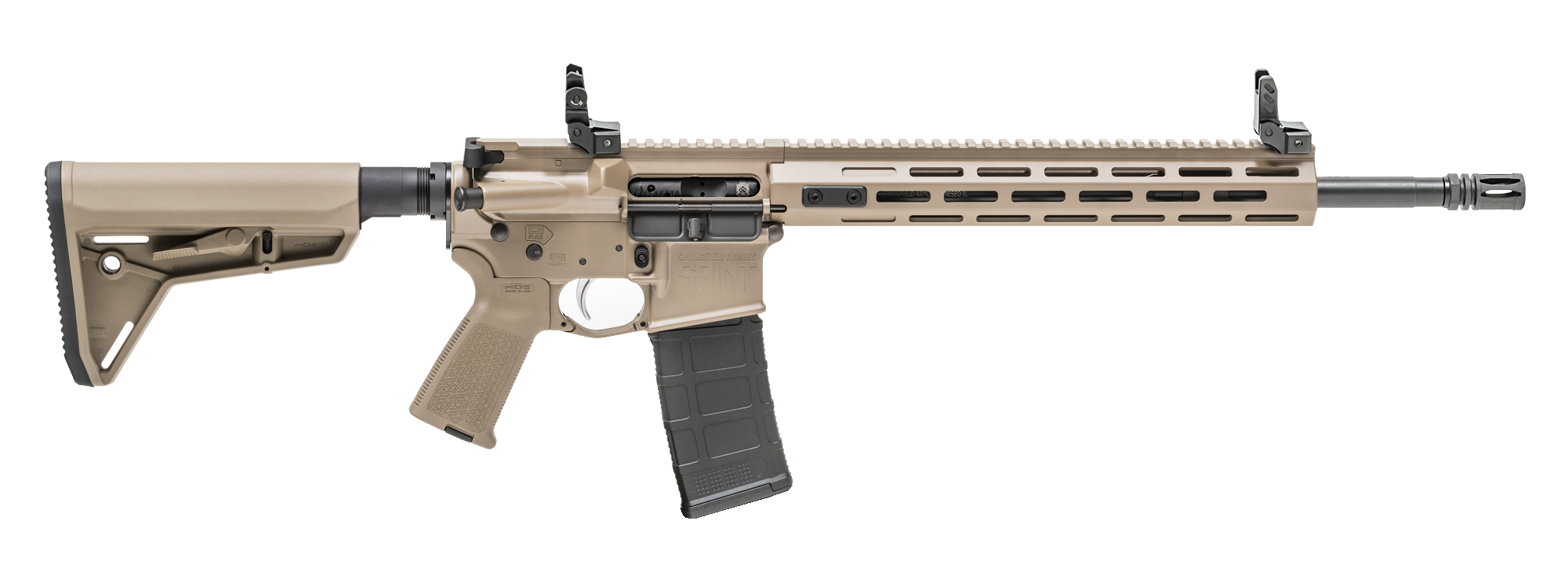
The filing further argues that the semiautomatic arms banned by Cook County “are ‘in common use’ by any plausible measure,” noting that there are “well over 20 million of the banned arms in circulation” and that “the AR-15 … is ‘the most popular rifle in the country.’”
“The issue raised by this case is exceptionally important,” the FPC’s August 28, 2025 petition to the court argued. “The AR-15 platform rifle is the most popular rifle in the country, and modern semiautomatic rifles like the AR-15 are the second-best selling type of firearm in the country behind only semiautomatic handguns.”
The case was distributed for Supreme Court conference on December 12, 2025. That means the justices are considering whether to hear the case. The Question Presented (a heading in the brief) asks “Whether the Second and Fourteenth Amendments guarantee the right to possess AR-15 platform and similar semiautomatic rifles.”
A Second Amendment Foundation (SAF) summary of the case reads, “In 2006, Cook County, IL enacted an Assault Weapons Ban and in July of 2013 revised it. The County’s Ordinance bans the possession of commonly possessed semi-automatic firearms categorized as an ‘assault weapon.’ The Ordinance defines ‘assault weapons’ to include, among other things, semi-automatic rifles with the capacity to accept a detachable magazine, coupled with which are any number of characteristics, such as a pistol grip, telescoping stock, or muzzle brake, which are commonly possessed throughout the United States for lawful purposes.”
The most recent FPC filing argues that the lower court’s decision upholding Cook County’s ban on commonly owned semiautomatic rifles such as the AR-15 is “based on an interpretation of the Second Amendment that flagrantly distorts this Court’s precedent and makes a mockery of the Amendment’s text, history, and purposes.” That, they say, is irreconcilable with the Supreme Court’s landmark Heller and Bruen decisions.
“It’s time for the Court to settle the AR-15 question once and for all,” said FPC President Brandon Combs. “The Seventh Circuit and others have twisted the text of the Constitution and the Supreme Court’s precedents beyond recognition. But the Constitution doesn’t let governments ban a class of arms simply because politicians or judges dislike them.”
Combs continued, “The AR-15 is the most popular rifle in the country. Millions of peaceable Americans own and use these arms every day for lawful purposes. The idea that they fall outside the Second Amendment’s protection is as lawless as it is absurd, so FPC is asking the Supreme Court to make that unmistakably clear, once and for all.”
The petition and other key case documents can be viewed at firearmspolicy.org/viramontes. Plaintiffs are represented by David H. Thompson, Peter A. Patterson, and William Bergstrom of Cooper & Kirk, PLLC.
“This case is the ideal vehicle for the Supreme Court to say—once and for all—that semiautomatic rifles like the AR-15 are protected by the Constitution,” said Combs. “The stakes could not be higher: If the Second Amendment doesn’t cover the most popular rifles in America, then it covers virtually nothing at all.”