











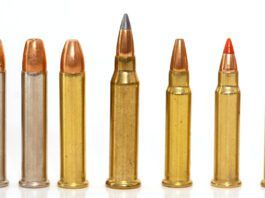
Tricky Trio of 22 Autoloaders: Marlin Tops Remington, Ruger
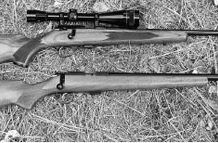
Medium-Price .22 Bolt Rifles: We Pick CZ Over Remington

High-End Rimfires: We Narrowly Pick Anschutz Over Kimber
A well-made rimfire rifle will make other shooters at the range stop, stare, and sometimes drool. Some people might buy them simply to admire their beauty or impress onlookers, but we believe that no matter how good a gun looks, if it doesn't perform, it isn't worth our consideration.
We recently tested two models that fit, or perhaps define, the high-end rimfire sporter market: The Anschutz 1710 D KL Monte Carlo No. 220.2030, $1413; and the $1877 Kimber SuperAmerica. When other shooters saw these rifles at the range, they usually stopped and asked, "What kind of rifles are thooose!"
To find out if these guns shot as well as they looked, we enlisted a panel of testers that included seven teenagers (four male and three female) and three adult males. The teenagers' experience varied from first-time shooter to four years of hunting and target shooting. The adult males all had over 25 years of shooting experience of all kinds. One of the adults commented that these rifles were "too good for teenagers to shoot."

Rimfire Carbines: Rugers Handy 10/22CRR Is Our First Choice
In September 2005, Sturm Ruger announced production of a compact version of its prolific 10/22 semi-automatic rifle, $275. Christened the 10/22CRR, we ordered one immediately. When it arrived, our first impression was that this carbine was not merely shorter; it, in fact, seemed scaled down from the original design.
We couldn't help but smile at the compact 10/22's size, but the real fun began when we went shopping for additional rimfire semi-automatic carbines to fill out a test roster. We acquired a Marlin 70PSS with composite stock, $318. The Marlin carbine differed from the Ruger in several ways, not the least of which was that it can be broken down by removing the barrel for transport. Marlin refers to this model as the Papoose. Our third gun was the Armscor AK 22, $220. The AK22 closely resembles an AK47, down to the replica magazine.
All three guns arrived with a single magazine. Further, each carbine could be viewed as a youth model, a training device, or both. But would the reduction of size compromise the time-proven 10/22 design? Would the Armscor AK22's big-gun appearance interfere with function or reliability? Would the integrity of lockup between barrel and receiver of the Marlin show signs of failure after repeated applications? Could three conceptually different models produce the same level of accuracy?
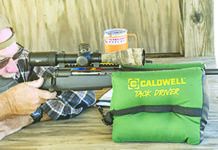
To find out, we shot the guns at 50 yards using a Caldwell Tack Driver ($33 unfilled from ). The Tack Driver is a sand-filled support with a left- and right-side chamber that forms an 11-inch-long channel to grip the forend. Our selection of test ammunition included the Federal Classic 40-grain solid copper-plated rounds and two Remington products. They were the Remington High Velocity 36-grain HP and the Remington Eley Target Rifle 40-grain LRN ammunition.
Here's what we found when we tested the guns head to head:

Youth .22LR Single Shots: CZ, Henry, Rogue, and Savage
We tested four rifles suitable for use by young shooters, and in two cases, our evaluators came away very disappointed.

Pump-Rifle Probe: Are These Rimfire Slide Actions Any Good?
Pump-action .22 rifles have been with us for well over a century. Many millions of kids cut their shooting teeth with a pump rifle, a supply of tin cans, and Dad's careful tutoring. Shooting galleries throughout the U.S., and probably the world, used the Gallery model of the Winchester, so many people gained familiarity with the rifle even if they never owned one. Pump-rifle designs were generally simple and durable, and the Winchesters probably set the standard for other makers to follow.
The common talk among shooters was that you could load the .22 pump rifle in the morning and shoot it all day, or something like that. Whether or not the Winchester Model 62 was the first rifle that spawned that phrase (it was probably the Winchester Model 1890), the 62 would fill the bill with its full-length tubular magazine that accepted 20 Short, 16 Long, or 14 Long Rifle cartridges. Per the 10th Edition of Modern Gun Values, the Winchester Model 62 rifle was introduced in 1932 and discontinued in 1959. That tome gives an approximate value for the Model 62 Winchester in excellent condition at about $600, but that price has probably gone up since our 1996 edition was printed. We were lucky enough to obtain the loan of a Winchester 62A in excellent condition, which gave us an excellent basis for comparison with two new pump .22s we also acquired, a close copy of the Model 62 Winchester by Taurus, called the M62 Carbine ($279) with 16.5-inch barrel, and another by Henry Arms, called simply the Pump Action .22 ($300), with an extended forend and side ejection.
We put these to our functional and accuracy tests, beginning with the Winchester to see what a good, classic pump gun would feel like. First, we shot them offhand to get a feel for what they offered. Without spoiling the story, we liked what we found from this informal shooting. All three balanced well, and all three had acceptable triggers. We were shooting at a stump at 75 yards, so didn't try for accuracy until later, off the bench. But all fed and functioned well right off the bat. In fact, there were no failures to feed or function with .22 LR ammo in any of the three rifles throughout our shooting. Here are our formal findings.
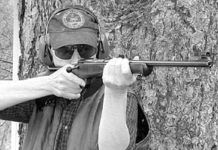
Fine 22 Rifles: We like Coopers Custom Classic, Anschutz 1710
Now is a great time to break out your .22 LR rifle and get in some practice for big game season, still a few months off in most places. What's that, you say? You don't have a good .22? Well, maybe we can help you choose one. In the past few days we checked out three magnificent .22 bolt-action rifles, and we're here to tell you what's good and what's not so good about them.
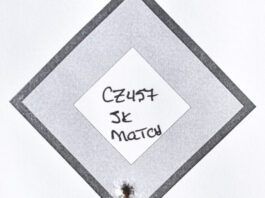
This go-around we grabbed one of the more costly .22 rimfire bolt rifles made today, the Cooper Custom Classic ($1,895). We also secured the less expensive but still somewhat pricey Anschutz Model 1710 D KL ($1,295), and followed that up with the lovely and inexpensive CZ ZOM 451($250). Because the first two are commonly mentioned as being marvelously accurate rifles, we thought it would be a good idea to find out just how accurate they were. Therefore, we tried the trio with two types of some of the finest match ammunition available. We also threw in some high-speed ammo. We mounted the best scopes we could fit, and shot the rifles from a solid machine rest, trying for one-hole groups. If a fine rifle can shoot match-grade .22 ammunition well, it will do okay with normal ammunition, though the groups will generally be larger. In other words, if you're spending nearly two grand for a .22 LR, we think you'll want to know just how small of a hole it's capable of, and that was our primary interest here. We could bore you with tales of near-inch groups with Stingers or Remington high-speed, but if you're like us, you'll want to know the real skinny on what these costly bangers can do with some of the best ammo, and how well a far-less-costly rifle would do against them.
The three rifles were all bolt actions, and all had fancy quarter-sawn walnut stocks. The overall weights were significantly different, yet all had fine balance. All three were attractive rifles with varying degrees of premium extras. During our tests, we got some pleasant surprises. Come along and see what we found.
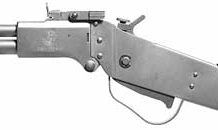
Survival Rifles: What to Choose When the Stakes are Highest
In 1959 a revolutionary rifle made its appearance. Designed by Armalite for the U.S. Air Force by Gene Stoner, the little rifle was designated the AR-7. It was chambered in .22 LR (high-velocity rounds only), and was unique in that it came apart without tools. Even better, all the parts could be stored within its hollow butt stock, and the rifle would float in either stowed or assembled form. When the rifle was made available to the general public, outdoorsmen of all sorts grabbed ‘em. At about the same time, the AR-7 made an appearance in the early James Bond film, "From Russia With Love," and its place in history was thus secured.

.22 Hornet Buzz: CZs 527 Lux Varmint Rifle Is Our Pick
The .22 Hornet cartridge evolved out of the black-powder .22 WCF, which originated in 1885 for the Winchester single-shot rifle, and was also chambered in the 1873 Winchester. The tiny Hornet first saw the light of day as Winchester-loaded ammunition in 1930. Yes, that's right, Winchester loaded Hornet ammunition before any commercial rifles were available for it. Commercially made rifles were produced by Winchester, and then Savage and Stevens, beginning around 1933. The first experimental rifles for the Hornet, for which Winchester made the ammo in 1930, were built at Springfield Arsenal in the 1920s.
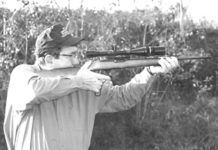
Lever-Action Hunting Rimfires: Ruger, Browning, And Marlin
Lever-action rimfires are among the industry's most entertaining products, whether for big kids or little kids. Suitable for small-game use and plinking, they have the capacity of autoloaders if the game is walking a tin can to a backstop, or they have the accuracy to knock a squirrel out of a tree at 50 paces. They're also easy to carry and accept scopes without fuss.
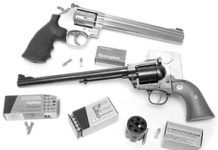
Long-Barreled .22 Revolvers: Ruger, Smith & Wesson, and Dan Wesson
Ruger's New Model Single Six Convertible is a bargain, and the Smith & Wesson 617 will help you rule the plate racks. The seemingly solid Dan Wesson 722 VH10 disappoints.

High-Quality Rimfire Sporters: T/Cs New Autoloader A Best Buy
The $335 Thompson/Center 22 Classic is accurate, lightweight, and good looking—and much more affordable than the $950 Kimber Classic and $874 Sako Finnfire bolt guns.