


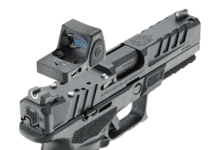

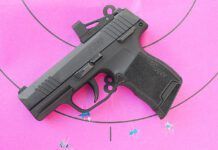





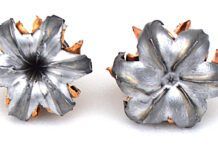

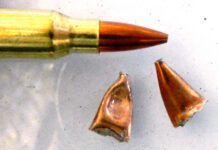




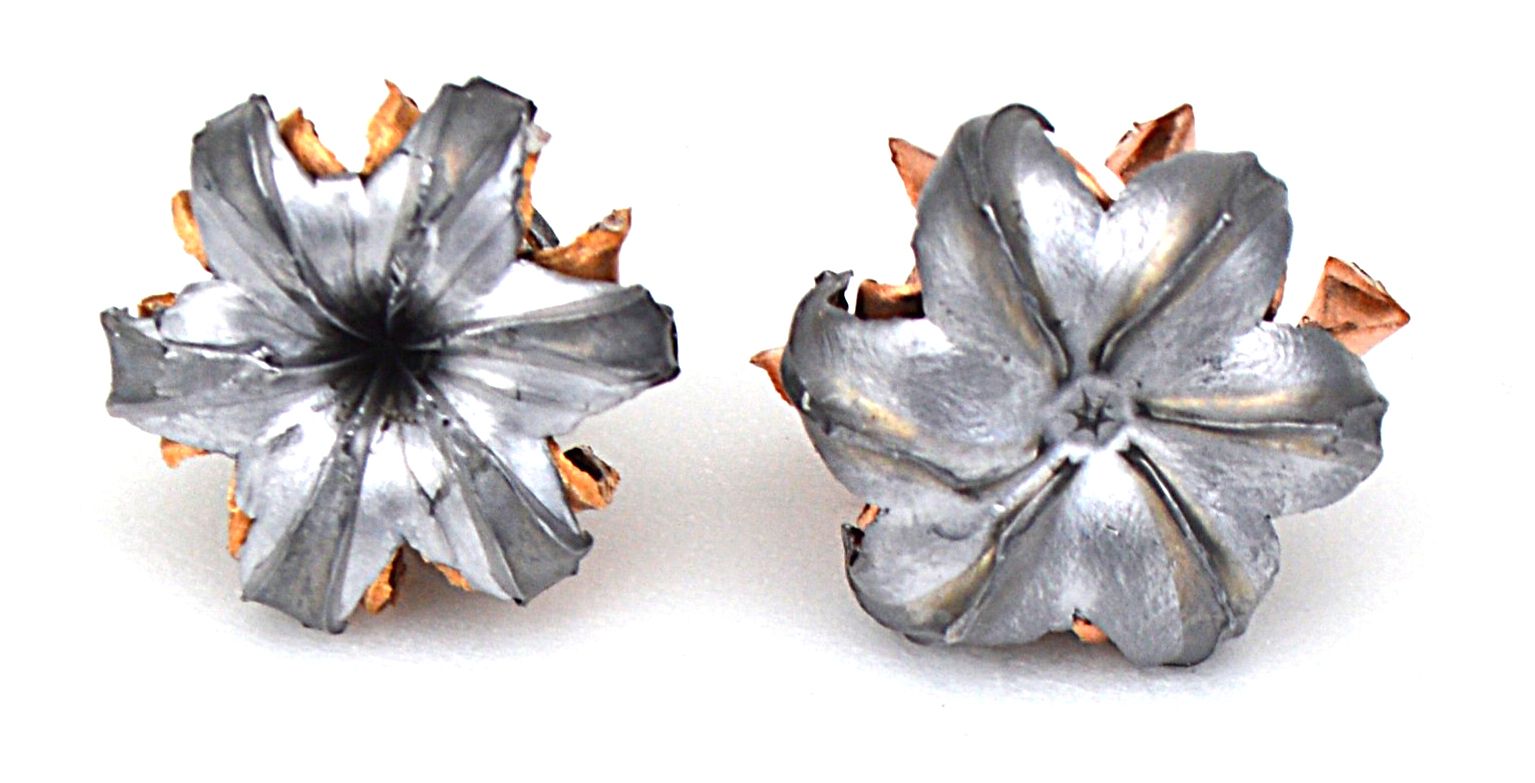
For a short-barrel 9mm carry gun, the goal is a modern jacketed hollow point (JHP) designed to expand reliably even with reduced velocity from a 3-inch or shorter barrel or a fluted solid-copper bullet that may weigh a little less but which can still offer great penetration and terminal performance. Because bullet weights can vary wildly in how accurate they are in a given gun and how well they function, we’ve selected five different weights for you to try in your carry piece before committing a lot of money.
Some Things to Consider
Weight: 124-grain is a good middle ground for short barrels. 147-grain subsonic loads lose some expansion reliability at reduced velocity, though HST and Gold Dot 147-grain handle it well.
+P: Gives a bit more velocity, which helps expansion in short barrels, but check your pistol’s manual first, since not all compact 9mms are rated for sustained +P use. It also means more recoil and muzzle flash.
Practice ammo: Train with cheaper FMJ, but verify it hits to the same point of aim as your carry ammo.
Rotate periodically: Replace carry ammo every year or two, especially if it’s exposed to sweat, lint, or temperature swings.
Norma MHP 108-Grain Monolithic Hollow Point
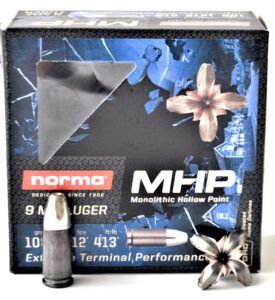 Monolithic simply means the projectile is manufactured from a single piece of copper. This light projectile weighs 108 grains and delivered 1198 fps/344 foot-pounds and an IPSC Power Factor of 129. The Norma load was accurate enough, but it was not the most accurate load in the test. Felt recoil was subjectively lightest of the test. Penetration was adequate at 16 inches. Expansion was the greatest at 0.95 inch. We were impressed by the Norma 108-Grain Monolithic Hollow Point’s performance. It offers a combination of light recoil, acceptable accuracy, and a fast-opening bullet.
Winchester W Defense 115-grain JHP USA9JHP
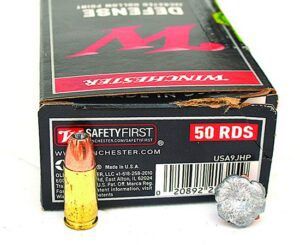 Feed reliability is flawless and its recoil is modest, about middle of the road. The load is available in a 50-round box and seems for sale about everywhere. Cost per round is 56 cents. Velocity was 1118 fps in a SIG Sauer P365’s 3.1-inch barrel and 1143 fps in a Glock 19 with a 4.02-inch barrel. This is good velocity, all things considered, when you are looking to limit recoil. Penetration was a bit short in the Glock at 11.0 inches on average, with 0.58-inch expansion. In the SIG pistol, we found penetration to be more in the ideal range at 12.0 inches, with 0.56-inch average expansion. This seems to be a considerable difference in penetration and expansion in a short-barrel pistol compared to the longer barrel, with only 25 fps separating the loads, but there it is. Cup-and-core bullets of this design tend to deviate more in velocity than bonded-core bullets. The jacket thickness of the former can vary, leading to changes in velocity.
Fiocchi CovertX 124-grain JHP 9CCWB
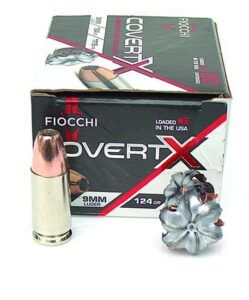 This load comes in a 20-round box, making the cost per round $1.05, some of which is likely due to the nickel-plated cartridge cases. The burn is clean, something we liked a lot. There isn’t any unburned powder to speak of. Muzzle signature is muted. This CovertX load exhibits good accuracy. Velocity was 1115 fps in the Glock and 1055 fps in the shorter-barrel SIG. Recoil is modest, a little less than the faster 124-grain HST. The Fiocchi CovertX penetrates 14 inches of Clear Ballistics gel and expands to a plump 0.64 inch. This is a very consistent loading. The CovertX loading meets the company’s stated goal of offering better expansion in short-barrel guns and a faster-opening hollow point. This is a defense load that isn’t geared toward service use, where more penetration is needed. We’d buy 40 to 60 rounds to shoot in our primary carry gun and see how it did. If it cycles, then load the balance, carry it, and replenish with more 20-round boxes as needed.
Hornady Critical Duty 135-Grain FlexLock +P 90226
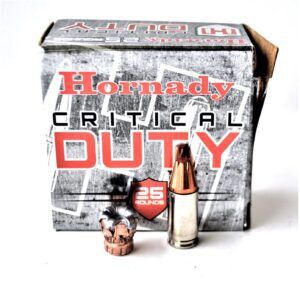 This is the load that won the FBI contract. Barrier penetration and reliability is unquestioned. The Hornady 135-grain load breaks 1055 fps out of the longer pistol and delivered 334 foot-pounds of energy and 142 Power Factor. Penetration was an eye-popping 20 inches. The bullet expanded to 0.52 inch. Most civilian shooters do not need this level of penetration. If you do, this is a fine load and was the most accurate of the test.
Winchester Silvertip 147-Grain JHP W9MMST2
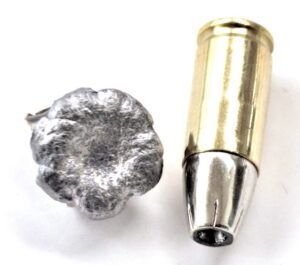 Winchester’s 115-grain Silvertip has been a staple for personal defense for decades. The 147-grain version is intended to offer more penetration and offer an alternative to bonded-core police-type loads. Velocity was 980 fps, penetration 18 inches, and expansion 0.61 inches. For a heavyweight bullet, we feel the Silvertip offers good performance.
Reliability First
Whatever you choose, run at least 50 to 100 rounds of your actual carry load through your gun with no malfunctions. Some pistols are picky about feeding certain hollow points.