




















I want to remind Gun Tests readers about how important it is to secure our firearms from the curious, the inept, and the deranged. Just ask Colin Gray, the Georgia man who was recently sentenced to 15 years in prison for making a rifle and ammunition accessible to his son Colt Gray. The younger Gray pleaded guilty to murder and other charges for killing two students and two teachers at Apalachee High School northeast of Atlanta on September 4, 2024. Colt Gray was sentenced to life in prison without the possibility of parole. The father was found guilty of second-degree murder in the deaths of the two 14-year-old students and of involuntary manslaughter in the killings of the two teachers. The prosecution had asked for a sentence of 80 years in prison for the father.
Colin Gray did not pull the trigger on that fateful day, but he purchased and left a firearm accessible to a minor who had shown signs of deteriorating mental health in the weeks leading up to the killings. Prosecutors said Colin Gray gave his then-14-year-old son the rifle as a Christmas gift. The son carried the semiautomatic rifle to school on a school bus.
If you’ll recall, we talked in this space about Jennifer and James Crumbley, who were the first U.S. parents to face such charges after their son killed four students and wounded others at Michigan’s Oxford High School in 2021.
Like the Crumbleys, Colin Gray should have locked up his guns and ammunition and kept them away from any minor in the house. This was a preventable tragedy had Mr. Gray performed even the most basic firearms safety.
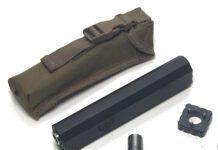
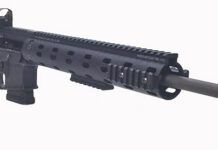
On a happier note, a federal court has ruled that key National Firearms Act restrictions are unconstitutional. On August 5, 2026, the U.S. District Court for the Northern District of Texas in San Angelo ruled in Jensen v. ATF and Silencer Shop Foundation v. ATF that key National Firearms Act of 1934 (NFA) restrictions are unconstitutional for untaxed firearms and permanently blocked the ATF from enforcing them against the plaintiffs, their members, and their customers.
The Jensen lawsuit was brought by Gun Owners of America (GOA), Gun Owners Foundation, Silencer Shop Foundation, Palmetto State Armory, SilencerCo, B&T USA, the Firearms Regulatory Accountability Coalition, individual plaintiff Brady Wetz, and a coalition of 15 pro-gun states: Alaska, Georgia, Idaho, Indiana, Kansas, Louisiana, Montana, North Dakota, Oklahoma, South Carolina, South Dakota, Texas, Utah, West Virginia, and Wyoming.
Judge James Wesley Hendrix held that Congress wiped out the constitutional basis for federal gun registration when it zeroed the transfer and making taxes on NFA items in the One Big Beautiful Bill Act of 2025. The court rejected the government’s attempt to save the regulations under the Commerce Clause.
Hendrix wrote, “The challenged NFA provisions are unconstitutional. Congress’s choice to eliminate the transfer and making taxes matters, and the defendants cannot save the NFA’s regulatory scheme by referring to a power that Congress never invoked. Efforts to render the NFA constitutional must come from Congress, not this Court.”
The injunction stops the ATF from enforcing federal gun registration requirements, Form 1 and Form 4 applications, fingerprinting, and photography mandates against the protected parties. The court stayed the order for seven days so the Department of Justice could seek appellate review if it chooses to do so, but at the time of this writing, the DOJ had not appealed.
Erich Pratt, senior vice president of Gun Owners of America, said, “This is a historic victory for the Second Amendment. The federal government [wanted to] keep its registry of guns after Congress has eliminated the gun tax. The court correctly recognized that the ATF cannot continue enforcing the NFA’s unconstitutional restrictions against law-abiding Americans.”
“This is a massive win and an important step forward in our strategic plan to end the NFA. We cannot wait to fully eliminate this unconstitutional scheme so people can exercise their rights when, where, and how they choose,” said Brandon Combs, Firearms Policy Coalition’s president.
Aidan Johnston, director of federal affairs for Gun Owners of America, said, “Last year, GOA worked with Congress and President Trump to eliminate a nearly 100-year-old tax on suppressors and short-barreled firearms. Today’s decision affirms what GOA members have been saying all along: the archaic National Firearms Act of 1934 and its federal gun registry are unconstitutional.”
In a release, the Second Amendment Foundation (SAF) explained that since 1934, the NFA required anyone who wished to purchase certain classes of firearms, including silencers and short-barreled rifles, to pay a $200 tax and register the firearm with the ATF, purportedly drawing from Congressional authority to levy taxes. Through the passage of the One Big Beautiful Bill, however, the tax on these arms was eliminated, but the registration requirement was left in place.
“Without the tax, the remaining requirements for the affected arms under the NFA have no constitutional basis,” said SAF Executive Director Adam Kraut. “And now the first court to rule on the issue has agreed with us.”
“The removal of the $200 tax in the One Big Beautiful Bill offers the best opportunity to remove the NFA registration requirements that we’ve had in almost a century,” said SAF founder and Executive Vice President Alan M. Gottlieb. “We are thrilled the court ruled in our favor and look forward to other jurisdictions following suit in our remaining NFA cases. We can now argue in courts across the country to allow Americans to exercise their Second Amendment rights without fear of being placed on some government registry.”
— Todd Woodard