













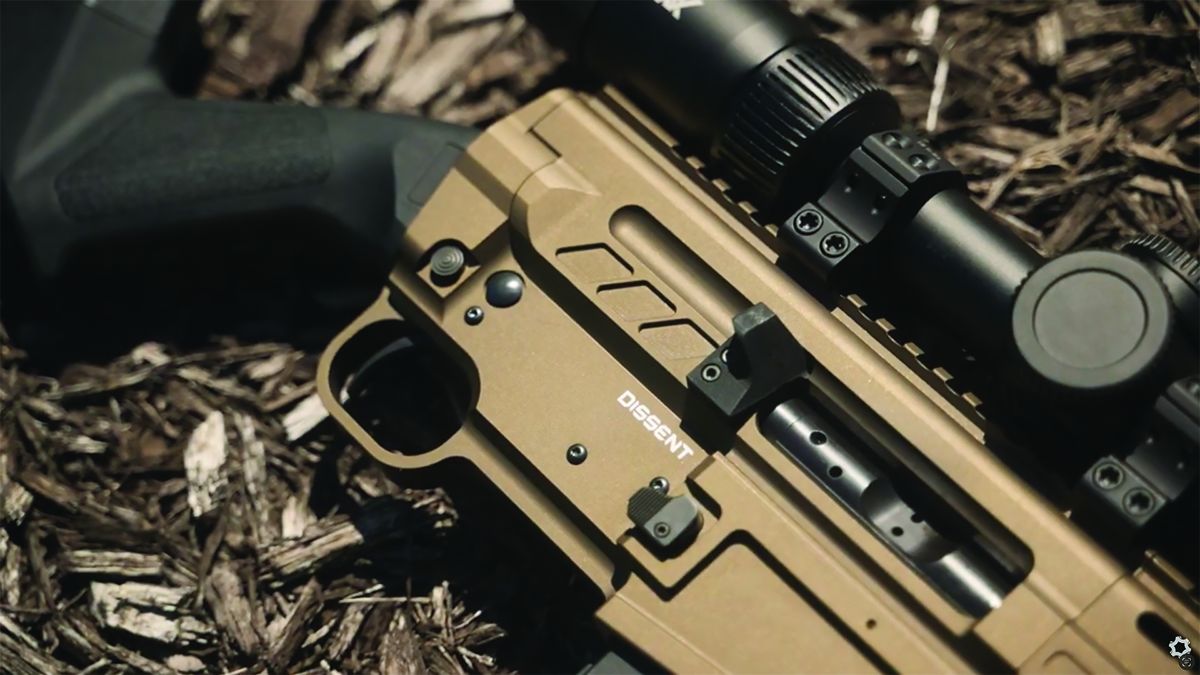
It seems everyone has bought or is buying an AR-pattern rifle, sometimes without applying the proper purchasing rules they might know from the bolt or lever worlds. A good bolt gun needs to be accurate, and its rate of fire is secondary, if it’s even a factor at all. A good lever gun is flat and fast to handle, and its reliability is as important today as it was to soldiers fighting in the American Frontier Wars.
But what does a first AR-15 need to be if you don’t want to spend a lot money? Well, all of that: fast, accurate, and reliable, like any other short or long firearm used for self-defense.
So, on a budget, the goal is to spend on the parts that affect reliability and save on the parts you can upgrade later.
Where The Money Should Go
Barrel and bolt carrier group (BCG): These are the heart of the rifle. Look for a chrome-lined or nitrided barrel, a bolt that is high-pressure and magnetic-particle tested (HPT/MPI), and a properly staked gas key (the screws should be visibly crimped over). A poorly staked gas key is one of the most common cheap-rifle failures.
Chambering: A 5.56 NATO chamber is the safe default, since it also fires 223 Remington. A barrel marked only “223” shouldn’t be fed 5.56 ammo. Click here to read a longer explanation of the two cartridges.
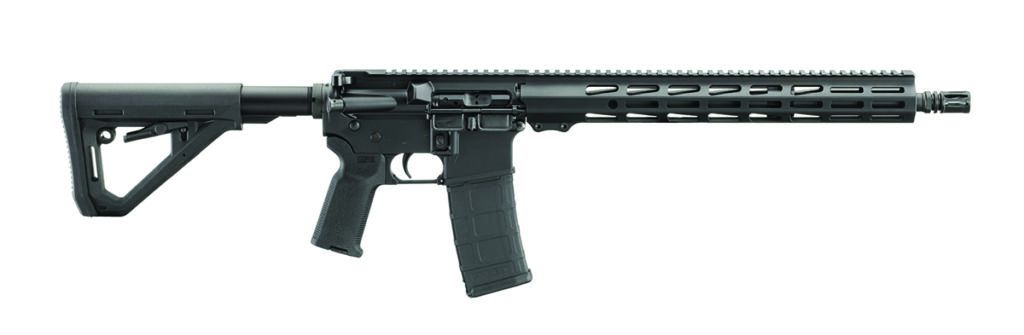
Barrel and gas system: A 16″ barrel with a mid-length gas system is generally smoother and more forgiving than a carbine-length system, and it’s common on budget rifles.
Brand reputation and warranty: Established budget-friendly makers like Palmetto State Armory, Ruger (AR-556), and Smith & Wesson (M&P15 Sport) have track records and customer service. A lifetime or long warranty matters more than a few extra features if you’re planning on buying a gun to grow with.
Where to Save
Handguard, stock, grip, and trigger: Mil-spec versions work fine and can be swapped later.
Optics: Backup iron sights or an inexpensive red dot are enough to start.
Finish and aesthetics: These don’t affect function.
Costs People Forget
Magazines: Magpul PMAGs are cheap and reliable. Avoid bargain-bin mags, which cause a lot of feeding problems. Click here to read a test of AR magazines.
Ammo: Budget for a few hundred rounds to break in the rifle and practice. Click here to see our test of 223 Remington AR cartridges.
Accessories: Basic cleaning kit, a sling, and safe storage (a lockbox or safe).
Training, if you’re new to semi-auto rifles.
Other Options
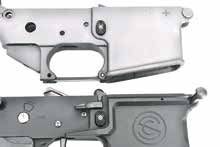
Complete rifle vs. building: Building from parts can be cheaper or more customizable, but a complete rifle with a warranty is usually the better value for a first-timer. Click here to read to read our evaluation of four AR-15 lower receivers.
Used rifles: You can get good deals, but inspect the bore, check that the bolt and gas key are in good condition, and function-test it if you can.
Sales and kits: Sales and “kit” bundles can be good values, but compare the specs above rather than judging by price alone.
Legal basics: You’ll need to pass a background check at a dealer (FFL), and you should confirm your state and local laws on features, magazine capacity, and age requirements before buying.