















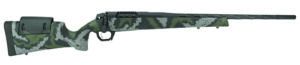
Hornady announced the latest addition to the Creedmoor ammunition line in May 2025 with a cartridge that split the difference between the 6 Creedmoor and the 6.5 Creedmoor, the 25 Creedmoor. We recently tested two rifles chambered in the round, with the first one coming from Christensen Arms located in Gunnison, Utah. Our 25 CM sample is the Ridgeline FFT, $1900, a very light 20-inch model. Using FFT (Flash Forged Technology) for the stock, the rifle’s empty weight is only 5.7 pounds including the company’s proprietary carbon-fiber-wrapped barrel. The second test rifle is the Weatherby 307 Range XP 2.0 3WRX225CMR4B, $1190. It sports a 22-inch barrel with longitudinal flutes and an adjustable stock, all mated to the recently introduced Model 307 action produced by Weatherby in the company’s factory in Wyoming.
Ammunition
One of the problems with shooting a new cartridge is the lack of ammunition choices. With only two types of 25 Creedmoor to try, our range data was a bit limited, so we tried to help things out by doing some initial experimenting with handloads.
Hornady started out with the two loads we would have expected in the 128-grain ELD-X (Extremely Low Drag — eXpanding) hunting load along with a target load pushing a 134-grain ELD-M (Extremely Low Drag — Match) bullet. The ELD-X load did well, averaging a hair over an inch for three-shot groups at 100 yards. Remembering the days when we would have jumped for joy with a 1.5-minute-of-angle group, we were somewhat disappointed with the 1.42-inch groups turned with the ELD-M loads. That said, this rifle would have turned in minute-of-deer impacts out to about 600 yards, and even with the 22-inch barrel, was pushing the 134-grain match bullets to almost 2800 fps, with the 128-grain hunting loads hitting about 2840 fps. Both were velocities we thought were great for a shorter barrel.
We were also able to start load development with several bullets and powders. Initial results showed some promise using Vihta Vuori N555 powder and 135-grain Berger bullets. Groups were well under an inch at 100 yards with very low standard deviations, though velocities were slower than the factory loads. The best groups were around 0.6 inch. In fact, we were a bit surprised at our handloads and the lower velocities. Most of our test loads were only pushing 2600 fps, unless we used the almost unobtainable Reloder 26 powder. In that case, the velocities came up to expected levels, but the accuracy did not. We have to give credit to Hornady for accurately generating that much energy from shorter tubes.
The factory-ammo boxes claim 2800 to 2850 fps for the 134-grain ELD-M and 128-grain ELD-X loads, respectively. We understand that most test loads (and resulting projections) are based on 24-inch-barrel rifles. Our Weatherby Range XP sports a 22-inch barrel, and the Christensen has a 20-inch tube. Accordingly, we expected the velocities to be slower than listed on the box, and we were correct. Still, Hornady factory ammo was pushing 2800 fps from the ELD-M ammo in the Weatherby and the 128-grain ELD-X was well over 2800 fps — not too shabby for short, handy barrels. That also eased any concerns we had about choosing these shorter tubes for mounting a can. The Christensen came close, but couldn’t quite keep up with the velocities the slightly longer Weatherby produced.
We also wanted to check out the efficiency of the 25 CM cartridge case, especially in comparison to a similarly barreled 6.5 CM. We grabbed a Springfield Armory Redline 20-inch barrel out of the safe and shot it with the same types of Hornady factory ammo. The Weatherby delivered slightly more energy than the 6.5 CM Redline, while the Christensen was slightly less. We didn’t see a real advantage the 6.5 CM had until we started testing handloads we’d developed using Berger 156-grain EOL Hunting bullets propelled by Vihta Vuori N555 powder, which generated 2605 fps and 2351 foot-pounds of energy.
Could it be that the 25 CM is more efficient than the popular 6.5 CM? When we took a look at ballistics, it was clear that the 25 CM had a flatter trajectory and less wind drift than the 6.5 CM, along with slightly less recoil. All of those figures bode well for the long-range hunter or the PRS shooter who shoots the 25 CM.
Might the 25 CM replace the 6.5 CM? We doubt it. The are too many 6.5 Creedmoors in the market or in the field already. The 25 CM has a long way to go to catch up. That said, all appearances are that the 25 CM is a worthy competitor to the 6.5 CM and might be a wise choice for many shooters. We certainly liked these two.
For further information on how the 25 CM compares to other similar cartridges (6 CM, 6.5 CM, 250 Savage, 257 Roberts, and 25-06 Remington) please see our comparisons in the April-May 2026 issue.
Weatherby Range XP 2.0 3WRX225CMR4B 25 Creedmoor,
$1190
Gun Tests grade: A-
Our Range XP 2.0 worked smoothly and shot well. Though not quite as accurate as the Christensen, it didn‘t miss it by much, and the slightly longer barrel yielded more velocity. The Weatherby is about $700 less than the Christensen.
| Action Type | Bolt |
| Overall Length | 43.5 in. |
| Barrel | 22.0 in. long, 1:7.5-in. twist |
| Overall Height w/o Scope Mount | 6.5 in. |
| Weight Unloaded | 7.04 lbs. |
| Weight Loaded | 7.53 lbs. |
| Action Finish | Cerakote |
| Barrel Finish | Cerakote |
| Magazine Capacity | 5 rounds |
| Magazine Type | AICS-pattern box |
| Stock | Polymer |
| Stock Drop at Comb | 0.5 in. |
| Stock Drop at Heel | 0.25 in. |
| Stock Bedding | Pillars |
| Stock Buttplate | Soft rubber |
| Stock Length of Pull | 13.5 in. |
| Receiver Scope-Base Pattern | Savage 110 |
| Trigger Pull Weight | 1.49 lbs. |
| Safety | Two-position thumb |
| Warranty | Limited lifetime |
| Telephone | (307) 675-7840 |
| Website | Weatherby.com |
| Made In | U.S. |
Roy Weatherby founded his firearms company in California in 1945. Over the decades, he introduced a number of actions produced, in turn, by a number of different manufacturers. For much of its early history, Weatherby concentrated on very strong rifles capable of housing his proprietary high-speed cartridges. Delivering substantial energy at extended distances, the polished-steel barrels and glossy stocks were successfully marketed to movie stars and corporate moguls.
Time passes and so do entrepreneurs. Mr. Weatherby left the range in 1988 and left the company in the capable hands of his son Ed, who handed it off to Adam Weatherby in 2017. The latest Mr. Weatherby, faced with a political climate in California increasingly hostile to anyone in the firearms industry, made the decision to relocate his business to a friendlier locale. Weatherby, Inc. announced its move to Sheridan, Wyoming in January 2018. Not only did Weatherby update its facilities, the company also introduced a new product line. The firm called the action the “307” line — named after the area code for the new shop. Our sample Range XP 2.0 is based on that action, but it’s a very different Weatherby rifle than we’ve come to know.
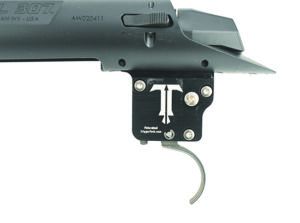
We applaud much of what we see in the new action. First, it uses the Remington 700 footprint, the base design of which is very good and the patents for which have long since expired. Based on strictly anecdotal evidence, we would wager that more Remington or Remington-pattern clone actions are being used today to build custom rifles than any other action save for the AR-15. That makes aftermarket stocks, triggers, scope bases, and most other accessories easy to purchase and install.
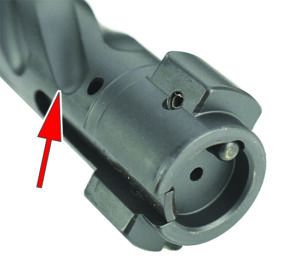
Then Weatherby added some improvements to a very good action. The snap-in extractor ring native to a Remington design has been replaced by an M-16-style extractor, along with a plunger ejector to make getting your case in and out of the chamber more certain. The bolt has been redesigned to allow tool-less disassembly. No more special tools need be ordered from Brownells. Just read the directions and take it apart by hand. The bolt stop has been replaced with a lever on the left rear side of the receiver. It is more substantial than the original Remington’s, and, like the Christensen, doesn’t rely on a fragile linkage.
Next, Weatherby replaced the mediocre factory trigger with an adjustable TriggerTech Field unit. Butter smooth, with no take-up or overtravel, our sample broke at an average trigger pull of 1.49 pounds. For those hunting in cold weather, or who just like a little heavier trigger, the TriggerTech Field trigger can be adjusted up to around 5 pounds.
Weatherby also changed the screw pattern for scope mounts. The 307 action uses a Savage screw pattern and is tapped and drilled for #8×40 screws to provide an even more secure grip.
The rest of the barreled action held a few more surprises for us. The barrel is 22 inches long and comes with a 1:7.5-inch twist for the fast-moving 25 Creed. The tube is very much a hunting-weight design, with a diameter of around 0.65 inch just to the rear of the muzzle threads. Weatherby uses what we are going to call interrupted longitudinal flutes to lighten the barrel even more and to also allow it to cool a little more quickly. The muzzle is threaded 5⁄8×24 and comes with both a thread protector and a 2-inch brake loaded with radial ports. Muzzle report is a bit loud, as with any ported rifle, but recoil was negligible. We think the 25 Creed with the right suppressor would be an outstanding choice for new or recoil-sensitive shooters.
The bolt body has also been fluted for further weight savings, and the bolt handle has been relieved of excess weight. Note that the bolt handle is threaded 5⁄16×24 in case you want to swap it out for a different pattern. The two-lug bolt provides a 90-degree throw. We were able to operate the bolt well, even with a medium-sized scope attached, and we believe we would stay with the factory unit. The thumb safety is a two-position rocker switch just to the rear of the bolt handle, as we would expect on a Remington-pattern rifle. Both the barrel and the action have been Cerakoted for enhanced durability.
While the stock is polymer, it was stiff and provided several very good features of its own. A well-reinforced fore end provides two sling-swivel studs, allowing attachment points for both a bipod and a sling. It also allows the barrel to free float. Then Weatherby provides metal pillars for the action screws to make sure nothing gives when you’re torquing the action into the stock. The bottom surface is flat, allowing the rifle to rest snugly on bags for precise shooting.
The bottom metal is polymer, though the mag release is a metal piece with paddles on either side of the trigger guard that make it easy to release with either forefinger. The Ranger XP 2.0 ships with a single five-round AICS-pattern magazine made by Magpul. We also tried out some 10- and 12-round AICS-pattern magazines from Accurate Arms and MDT. Everything fit and functioned perfectly.
The pistol grip uses an almost 90-degree angle to help with position shooting. Both it and the fore end have raised stippling that was a little smooth for us. It might be just perfect for you. The buttstock ends with a nice, soft rubber recoil pad. The Weatherby also had an adjustable cheek piece, something normally seen on pricier models. The polymer piece is secured by twin screws on each side. While only allowing three different positions, we found them to cover any adjustment our testers wanted to make.
Our Team Said: The Range XP 2.0 worked smoothly and shot well, though it was not quite as accurate as the Christensen. The Weatherby is about $700 less than the Ridgeline FFT, so we think a lot of potential quarter-bore riflemen will take a chance on the Range XP 2.0 and be quite happy with the choice.
| 25 CREEDMOOR RANGE DATA | ||
| Hornady Match 134-grain ELD-M 81421 | Christensen Ridgeline FFT | Weatherby Range XP |
| Average Velocity | 2730 fps | 2788 fps |
| Muzzle Energy | 2219 ft.-lbs. | 2314 ft.-lbs. |
| Best Group Size | 0.59 in. | 1.15 in. |
| Average Group Size | 0.86 in. | 1.42 in. |
| Hornady Precision Hunter 128-grain ELD-X 81422 | Christensen Ridgeline FFT | Weatherby Range XP |
| Average Velocity | 2779 fps | 2840 fps |
| Muzzle Energy | 2195 ft.-lbs. | 2293 ft.-lbs. |
| Best Group Size | 0.64 in. | 0.94 in. |
| Average Group Size | 0.92 in. | 1.09 in. |
Our ammunition selection included Hornady 25 Creedmoor 134-grain ELD-M and Hornady 25 Creedmoor 128-grain ELD-X. Testing was done at American Shooting Centers in west Houston. We shot the rifles off a Caldwell TackDriver Pro front bag (Brownells 100-027-023, $49), further supported by a large rear bag, heavy from Tab Gear (TabGear.com, $34). We measured velocities with a Garmin Xero C1 Pro (Garmin.com, $600).
| 6.5 CREEDMOOR RANGE DATA (for Comparison) | |||
| Springfield Armory Redline 6.5 CM | Hornady 140-grain ELD-M | Hornady 143-grain ELD-X | Berger Handload 156-grain EOL |
| Average Velocity | 2702 fps | 2643 fps | 2605 fps |
| Muzzle Energy | 2271 ft.-lbs. | 2218 ft.-lbs. | 2351 ft.-lbs. |
| Best Group | 0.61 in. | 0.44 in. | 0.41 in. |
| Average Group | 0.66 in. | 0.66 in. | 0.69 in. |
Written and photographed by Joe Woolley, using evaluations from Gun Tests Team members. GT