












Gun Tests ammunition testing can potentially save you money and time by narrowing the list of candidates you might try in your own gun, and you can also follow our system to see if a given round performs for you like it did for us. This listing contains results for 22 Winchester Magnum Rimfire, 32 H&R Magnum, 30 Carbine, 380 ACP, 38 Special, 38 Super, 357 Magnum, 9mm Luger and 9mm Luger +P, 40 S&W, 10mm Auto, 44 Special, 45 Colt, 45 ACP, 223 Remington, and 12-gauge buckshot and slugs.
Hornady 22 WMR 45-grain Critical Defense FTX 83200
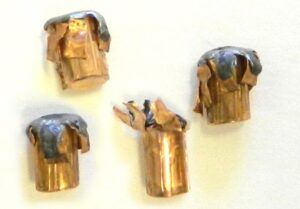
This Hornady load is among a very few loads specifically designed for use in a short-barrel handgun and it shows. Bullet weight is ideal and the bullet expanded reliably and retained all of its weight. Bullet expansion was very uniform. No bullets failed to expand, but some did expand slightly more than others, and expansion was ragged in some cases. Quite possibly a 4-inch-barrel revolver would produce better results, but the test clearly showed that Hornady has developed a potent 22 Magnum loading. General-purpose 22 Magnum loads, designed for a rifle and pushed into service in a handgun, simply cannot compete. The Hornady Critical Defense load is ideal for use in a self-defense handgun.
Gun Tests Grade: A
Federal Personal Defense 32 H&R Magnum 85-grain JHP C32HRB
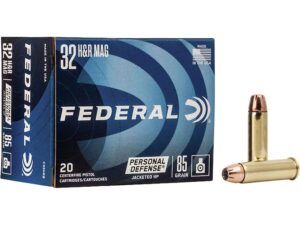
The 32 H&R Magnum isn’t a Magnum by most standards, and in fact the results from this cartridge are often disappointing. However, the 32 Smith & Wesson Long 98-grain RNL loading seldom produces more than 700 fps from a 4-inch barrel, so the 32 H&R Magnum is an improvement. The 32-caliber bullet used in the 32 Magnum doesn’t expand to the required bullet diameter we expect from a defensive caliber. It just doesn’t measure up, in our opinion, but if you cannot handle a 38 Special for one reason or the other, the 32 Magnum is considered an option. Power factor with the 32 is twice what it is with the 22 Magnum, and when you are looking for low recoil, the difference is noticeable, particularly to senior shooters. The 32 Magnum costs twice as much as the 22 Magnum but clearly doesn’t deliver twice the performance. One 32 load expanded slightly more, one had greater penetration, both are practically equal.
Gun Tests Grade: A
380 ACP (VARIOUS WEIGHTS)
Black Hills Ammunition 60-grain Honey Badger D380N420 380 ACP
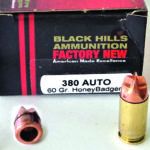
The Black Hills Ammunition Honey Badger uses a bullet manufactured by Lehigh. Velocity is greater than advertised, 1167 fps versus the advertised 1150 fps. This ammunition offers mild recoil and is easily controlled. Function was 100% in the Glock. Accuracy was excellent, near the top of the test. Penetration is 18 inches.
Gun Tests Grade: A
Lehigh Defense 65-grain Xtreme Defense 09380065S 380 ACP
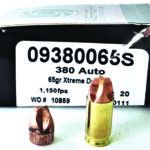
These rounds are available directly from LehighDefense.com. This load is similar in concept to the 90-grain Lehigh. The Lehigh bullet is an all-copper design. The bullet is fluted and designed to create wound potential through both cutting and fluid dynamic damage. The flutes are sharp — you actually must be careful when pressing against the bullet nose loading the magazine. The bullet may not expand, but it begins causing tissue damage immediately on impact. The bullet seems to have a buffeting effect in water. The upset is greater than a full-metal-jacketed or round-nose bullet, we saw. Velocity is greater due to the light bullet. Despite the high velocity, recoil is light. Control is good. This loading breaks 1182 fps on average, slightly greater than the Black Hills Ammunition Honey Badger, which weighs 5 grains less. Penetration in water is 18 inches. (This correlates to 14 inches in gelatin.) This is a credible loading for personal defense. Those concerned about underpenetration with the 380 ACP will find this loading attractive.
Gun Tests Grade: A
Fiocchi 90-grain JHP 380APHP 380 ACP
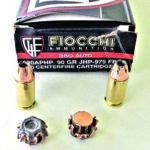
This offering and the Federal Train + Protect are similar in concept. The Fiocchi offers a hollow-point bullet, and they are packaged in a 50-round box. They are economical for practice, and while not as complex as design as the XTP or HST bullets used in more expensive loads, they expand well. The Fiocchi JHP breaks 909 fps on average and penetrates to a depth of 16 inches. Expansion is near optimum at 0.52 inch (0.54 if you count the jacket). A balance of performance and economy (pre-pandemic pricing) makes this the Best Buy.
Gun Tests Grade: A (BEST BUY)
Remington Ultimate Defense 102-grain BJHP CHD380BN 380 ACP
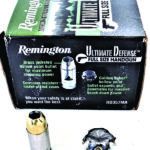
This is the Golden Saber by another name, and that isn’t a bad thing. The BJHP (brass jacketed hollow point) is the heaviest bullet tested. There was some recoil, but it isn’t excessive. Accuracy was good. The Remington load went into a special niche. Loads that penetrated more expanded less, while loads that expanded more penetrated less. The Golden Saber did not quite average 900 fps in the Glock, slower than most loads as a result of a bullet heavier than most 380 ACP bullets. The 102-grain bullet penetrated an average of 15 inches and expanded to 0.59 inch. Expansion was very consistent. This is an attractive overall balance that many shooters like us will want.
Gun Tests Grade: A (OUR PICK)
9MM LUGER (VARIOUS WEIGHTS)
Norma MHP 108-Grain Monolithic Hollow Point 9mm Luger 299740020
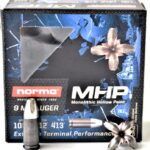
Monolithic simply means the projectile is manufactured from a single piece of copper. This was the lightest projectile tested at 108 grains. The company claims more than 1300 fps velocity. Actual recorded velocity was 1198 fps average. The Norma load was accurate enough, but it was not the most accurate load in the test. Felt recoil was subjectively lightest of the test. Penetration was adequate at 16 inches. Expansion was the greatest at 0.95 inch. We were impressed by the Norma 108-Grain Monolithic Hollow Point’s performance. It offers a combination of light recoil, acceptable accuracy, and a fast-opening bullet.
Gun Tests Grade: A
Winchester W Defense 115-grain JHP USA9JHP, $28/50
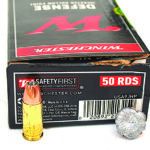
This is another load with a long lineage. It appears to be an unplated Winchester Silvertip. However, the last 115-grain Silvertip tested was much faster. Feed reliability is flawless and its recoil is modest, about middle of the road for the test. The load is available in a 50-round box and seems for sale about everywhere. Cost per round is 56 cents, lowest in the test. There were 20 boxes or more on the shelf at the box store where we purchased our test samples. The closest performance comparison in the test is the Federal Train & Protect. Interestingly, performance was close to the Federal load, with velocity greater in the short barrel, but not quite as fast in the long barrel. Velocity was 1118 fps in the SIG’s 3.1-inch barrel and 1143 fps in the Glock 4.02-inch barrel. This is good velocity, all things considered, when you are looking to limit recoil. Penetration was a bit short in the Glock at 11.0 inches on average, with 0.58-inch expansion. In the SIG pistol, we found penetration to be more in the ideal range at 12.0 inches, with 0.56-inch average expansion. This seems to be a considerable difference in penetration and expansion in a short-barrel pistol compared to the longer barrel, with only 25 fps separating the loads, but there it is. Cup-and-core bullets of this design tend to deviate more in velocity than bonded-core bullets. The jacket thickness of the former can vary, leading to changes in velocity. We would have liked a better balance of expansion and penetration, so we rated the load down a grade. But for the money, it’s hard to beat, so we gave it a Best Buy rating.
Gun Tests Grade: B (Best Buy)
Fiocchi CovertX 124-grain JHP 9CCWB, $21/20
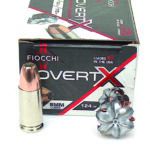 This load comes in a 20-round box, making the cost per round $1.05, some of which is likely due to the nickel-plated cartridge cases. The burn is clean, something we liked a lot. There isn’t any unburned powder to speak of. Muzzle signature is muted. This CovertX load exhibits good accuracy. We feel that Fiocchi paid a lot of attention to internal and external ballistics. Velocity was 1115 fps in the Glock and 1055 fps in the shorter-barrel SIG. Recoil is modest, a little less than the faster 124-grain HST. The Fiocchi CovertX penetrates 14 inches of Clear Ballistics gel and expands to a plump 0.64 inch. This is a very consistent loading. Fiocchi has used outsourced bullets in their previous loads, including the Extrema line, using primarily the Hornady XTP. The CovertX loading meets the company’s stated goal of offering better expansion in short-barrel guns and a faster-opening hollow point. This is a defense load that isn’t geared toward service use, where more penetration is needed. The CovertX load is accurate, clean burning, relatively low recoil, and offers good expansion. We’d buy 40 to 60 rounds to shoot in our primary carry gun and see how it did. If it cycles, then load the balance, carry it, and replenish with more 20-round boxes as needed.
Gun Tests Grade: A
Winchester USA Ready Defense 124-Grain Hex-Vent JHP 9mm Luger +P RED9HP (20)
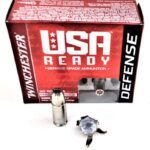
This loading uses something called Hex-Vent technology. A polymer ball in the nose instigates expansion. This load breaks 1207 fps, making it the most energetic 124-grain load tested. The bullet stayed together and expanded well as it penetrated 16 inches of water. We measured the lead mushroom at a healthy, plump 0.76 inch of expansion. Had we included in the expansion measurement the single piece of jacket that was attached to the center, the reading would have been well over an inch. One of the bullets of three tested in water slipped its jacket, a mark of a high-velocity bullets. This is outstanding performance by any standard.
Gun Tests Grade: A+
Winchester Silvertip 147-Grain Jacketed Hollow Point 9mm Luger W9MMST2 (20)
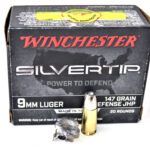
Winchester’s 115-grain Silvertip has been a staple for personal defense for decades. The 147-grain version is intended to offer more penetration and offer an alternative to bonded-core police-type loads. Velocity was 980 fps, penetration 18 inches, and expansion 0.61 inches. For a heavyweight bullet, we feel the Silvertip offers good performance. Compared to the Golden Saber from Remington, the Silvertip expands slightly more and penetrates slightly less. We would be pleased with either.
Gun Tests Grade: A
38 SPECIAL/357 MAGNUM (VARIOUS WEIGHTS)
Black Hills 38 Special HoneyBadger 100-Grain +P D38N4
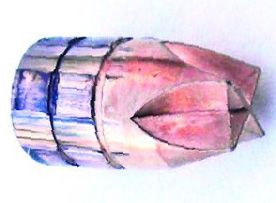
During the accuracy testing, a rater pointed out that the HoneyBadger cut a ragged hole in the paper, while all of the other loads simply pressed a round hole in the target. The HoneyBadger is a solid-copper bullet with flutes cut into the bullet. There was definitely some hydraulic distribution at work as the first water jug was burst apart, as if it had shot with a high-velocity hollowpoint. At 20 inches, penetration is ideal. This load is very easy to handle. Penetration isn’t compromised by the light bullet. We are comfortable with the terminal ballistics potential and find the HoneyBadger a good choice.
Gun Tests Grade: A
Federal Premium Personal Defense Low Recoil 38 Special 110-grain Hydra-Shok PD38H53 H
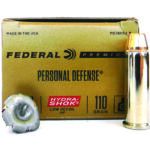
This is a specifically designed reduced-recoil 38 Special load, rated by the manufacturer at 980 fps muzzle velocity. Velocity and energy in our guns (800 fps/158 foot-pounds) were modest. Recoil is mild. This is an accurate load, and it exhibits limited muzzle flash. Penetration was 17 inches in water and expansion to 0.52 inch was excellent. We feel that this load really has the essential elements of a low-recoil but effective defense load. Expansion is very consistent, and the nickel-plated cases seem to add smoothness in loading and unloading, according to our resident handloader. Penetration is just over our 16-inch ideal range, but we like the overall balance of expansion and penetration.
Gun Tests Grade: A
Federal Premium Punch 120-Grain +P PD38P1 38 Special
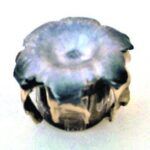
The Federal Punch is designed for home defense and concealed carry rather than service use. If cops still used revolvers, the Hydra-Shok would be among the best loads. The Punch has slightly less recoil, expands a bit more, and penetrates less. This load isn’t a bonded type and is designed to be offered at a lower price than some of Federal’s premium loads.
Gun Tests Grade: A (Best Buy)
Buffalo Bore 125-Grain Low Flash Standard Pressure SB 20E/20 38 Special
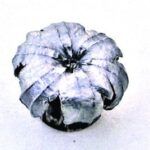
This load clocked more than the rating, as Buffalo Bore often does. Accuracy is good, and the load is indeed low flash, as advertised, although none of the loads in this test had excess muzzle blast. The 1080 fps 125-grain load exhibited the second greatest expansion of any load tested, and it had the most energy. Based purely on terminal ballistics, this cartridge is a formidable choice.
Gun Tests Grade: A (Our Pick)
Black Hills 357 Magnum 125-Grain JHP D357N2
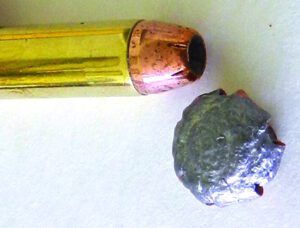
The Black Hills load is packaged in a 50-round box at an attractive price, earning it the Best Buy nod. This load exhibits modest recoil for the performance, while maintaining penetration in the ideal range at 14 inches along with good expansion and 100% weight retention. Velocity isn’t at the top of the list, so this load is controllable in double-action pairs and offers all of the power most shooters will wish to handle in a 35-ounce revolver.
Gun Tests Grade: A Best Buy
Winchester Super-X 38 Special 158-grain Lead Semi-Wadcutter Hollow Point +P X38SPD
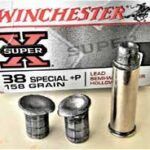
This is a lead hollow point molded or cast soft enough for reliable expansion. Average velocity is 861 fps from a 4-inch barrel. The Winchester load has probably seen more use than other lead hollow points because it was issued to peace officers decades ago. This appears to be the same load in use since the 1970s. Penetration is 20 inches in water. Expansion ranged from 0.51 to 0.54 inch. We recommend this Super-X load for personal defense.
Gun Tests Grade: A
38 SUPER (VARIOUS WEIGHTS)
Buffalo Bore 38 Super 115-grain JHP +P 33A/20
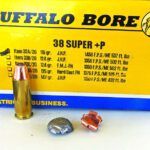
This load came out of the Rock Island’s 5-inch barrel at an average of 1421 fps. Muzzle signature was limited and function was excellent. This load penetrated an average of 18 inches with good expansion. We saw something we have never seen before with the XTP bullet, including running a 90-grain 9mm XTP at 1600 fps in a 38 Super handload. The XTP bullet core and the jacket separated in two of three water-jug tests. Penetration, however, was not compromised.
Gun Tests Grade: A
Buffalo Bore 38 Super 124-grain JHP 33B/20
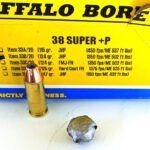
The 124-grain XTP never fragmented or separated. Function was good and accuracy was the best of the test for these high-performance loads. The balance of expansion and penetration is ideal, with a solid 19 inches of penetration. While the 115-grain Buffalo Bore loading is a good, strong 38 Super loading, we liked the performance of the 124-grain better. Accuracy is as good as any of the other high-performance loads and better than most.
Gun Tests Grade: A
Cor-Bon 38 Super +P 125-grain DPX DPX38X125-20
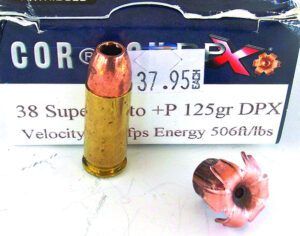
This was the most expensive load by a mile. It was also the most accurate Cor-Bon load and one of the most accurate tested. The all-copper bullet expanded well, maintaining good penetration. At 1260 fps, the Cor-Bon load penetrated 18 inches of water and gave good expansion. There is nothing to fault at that level of performance. It is an acceptable defense loading compared to the other loads and is an excellent all-round 38 Super loading. No 9mm +P equals this level of performance. It is expensive like all loads using the Barnes X Bullet.
Gun Tests Grade: A
Buffalo Bore 38 Super 147-grain JHP 33E/20
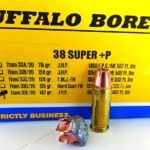
This is the heaviest load in the test. While high velocity is exciting, a 147-grain bullet at 1099 fps is interesting. This is about 100 fps faster than most 9mm loads in this bullet weight. A valid comparison one rater made is that the 9mm is a 38 Special, while the 38 Super is a 357 Magnum. The 38 Super isn’t a Magnum, but the cartridge actually has more velocity and energy than many 357 Magnum personal defense loads, particularly when they are fired in personal-defense handguns with abbreviated barrels. The 147-grain XTP load penetrated a deep 24 inches in water. This is the greatest penetration of any load tested. For those living in a climate in which heavily clothed attackers are the rule, this heavy 38 Super has much promise. We would choose a 124-grain for most needs, but for what the 147-grain load is designed to do it cannot be faulted.
Gun Tests Grade: A
40 S&W (VARIOUS WEIGHTS)
Black Hills 40 S&W 140-Grain Barnes TAC-XP D40N6
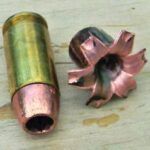
This is the only all-copper hollow point tested. The only downside, in our opinion, of all copper hollow points is that these loads are usually more expensive. In today’s world of high ammo prices, this may not always be true. The 140-grain bullet breaks a consistent 1121 fps. Penetration is 18 inches in water, in line with most of the loads tested, and expansion is 0.73 inch, the greatest of any of the loads tested. For personal defense, this load is ideal, based on a balance of expansion and penetration.
Gun Tests Grade: A (Our Pick)
Federal Punch 40 S&W 165-Grain JHP PD40P1 BX
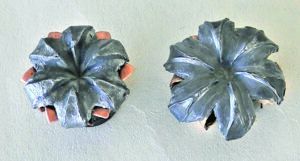
This is a non-bonded hollow point intended to sell for less than loads such as the HST and Gold Dot. The 165-grain punch breaks 1048 fps. Penetration is 20 inches, and expansion is consistent at 0.62 inch. It was tied for the most accurate load tested. While we like the HST’s performance better, if the Punch costs less, it would be a great thing.
Gun Tests Grade: A (Best Buy)
SIG Elite 40 S&W 180-Grain V Crown E40SW2-20
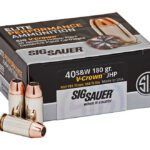
The V Crown bullet has given excellent results in many of our tests. The cartridge case is nickel plated. The bullet, manufactured by Sierra Bullets for SIG, features a wide hollow point and a soft lead bore. Velocity is good for a 180-grain bullet at 920 fps average. Accuracy is good. The bullet penetrated to 20 inches and expanded to 0.64 inch. This is a viable choice.
Gun Tests Grade: A
10MM AUTO
Cor-Bon DPX 10mm Auto 155-grain DPX10155
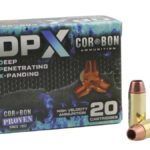
Recoil is there with the 10mm, but not excessive for a trained shooter. But even a trained shooter will make a slower run on steel plates with the 10mm compared to the 45. The consensus is that a power factor of 200 or more begins to be too difficult to control in constant practice and for the average shooter to handle. Nothing learned in this test would have us think anything different. There were times when we were very impressed with the results with the 10mm. There were several occasions in which the Cor-Bon loads blew the water jugs into the air and off the table. With most loads, the 10mm is no more difficult to control than the 45 +P per our raters input, but the 45 +P and 10mm are each at the high end of the controllable table in a self-loading pistol.
Gun Tests Grade: A
44 SPECIAL
Hornady Critical Defense Ammunition 44 Special 165-Grain Flex Tip eXpanding 90700 44 Sp
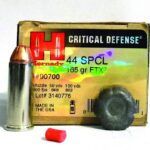
This load offers interesting performance. Expansion was good, in league with the Cor-Bon DPX and slightly less than the Buffalo Bore load. Recoil is modest, even light, due to the light bullet traveling at 980 fps velocity in the 21-4’s 4-inch barrel. Penetration is adequate at 12 inches. The bullet actually penetrated two water jugs in line but bounded off the third jug. In two instances, the red polymer nose was found beside the expanded bullet, so the nose plug, designed to promote expansion, appears to work as designed. This would be the recommended loading in the Charter Arms Bulldog. At 905 fps in the lighter gun, the FTX retained most of its expansion properties. On a basis of superior personal-defense performance and a fair price, this load gets our Best Buy nod and is probably the ideal urban load for the 44 Special.
Gun Tests Grade: A (Best Buy)
45 ACP
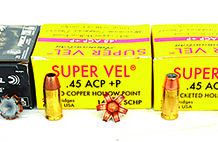
Speer Gold Dot 45 ACP 200-grain 23969
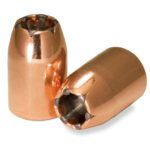
This is our No. 1 pick among the lower-weight bullets. The Federal load expanded less than the Remington while the Remington penetrated less. A toss up we have to say. We feel the 200-grain Gold Dot bullet pushes them aside in performance with equal penetration in comparison to either and practically the same expansion as the Golden Saber, but with a heavier bullet. The Gold Dot also edges either out in accuracy. While the power factor rating appears only slightly less on paper, all raters noted that the Speer load seemed mild to fire. Perhaps a particularly efficient powder blend would be the answer. In any case, the heavier bullet won out among the light weight bullets. But is the Speer Gold Dot +P worth the extra money? We wonder. The Gold Dot does not quite equal the penetration performance of the standard pressure Black Hills 230-grain JHP, (13.5 inches vs. 13.0 inches) with both expanding to a 0.72-inch slug. On price, the standard pressure round wins out, shooting for 94 cents a shot compared to $1.20 a shot for the Speer. Our view: There’s no point in adopting a loading with +P pressure without greater performance.
Gun Tests Grade: A
Federal Punch 230-grain JHP PD45P1, $26
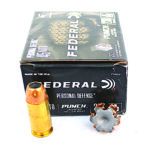 This load offers a less expensive alternative to loads such as the Federal HST or Federal Hydra-Shok. We found HST for $33, making the Punch (at $7 a box less) the more affordable option. Given that running 100 rounds through a handgun is recommended to confirm feed reliability, and then periodically rotating ammunition to verify continued function, this is a strong choice for economy. Price is often lower at big-box stores when on sale. One rater found his six-month supply for $20.56 per box, so watch for special prices. Performance is strong, too. Average velocity is 832 fps. Accuracy is good to outstanding. Penetration is ideal at 17 inches, and the expanded bullet averages 0.68 inch, with the best expansion at 0.6875 inch.
Gun Tests Grade: A
Fiocchi CovertX 230-grain JHP 45CCWB, $24
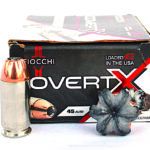 This is a new design from Fiocchi featuring a copper-jacketed, lead-core hollow point. The cartridge case is nickel-plated. Accuracy is excellent, and muzzle flash is muted. Velocity is lower than the specified 875 fps, averaging 820 fps — understandable from a Commander-length barrel. Penetration is 16 inches, and expansion is a strong 0.75 inch. Fiocchi has produced a load with good all-around performance.
Gun Tests Grade: A
Buffalo Bore 230-Grain No. 45230FMJ Flat Nose 45 ACP +P
This load used a full-metal-jacketed flat-point bullet. Since feeding is always perfect with this design, there is no reason to choose a roundnose bullet. At more than 900 fps, this is a truly heavy load well worth your time and consideration. Recoil, again, was brutal in the CDP.
Gun Tests Grade: A+
45 COLT
Buffalo Bore 255-Grain SWC 3E/20 45 Colt
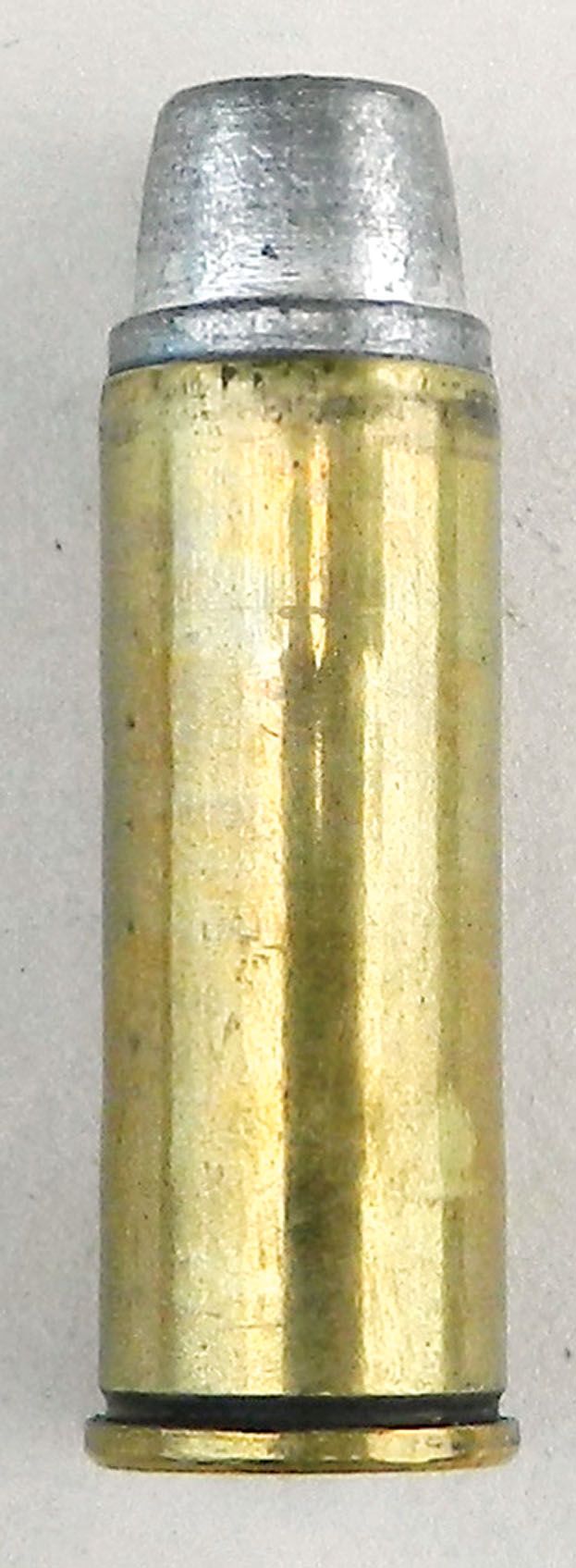
The standard Keith-type semi-wadcutter used in this round has many advantages. The weight of the bullet is carried out of the cartridge case, which allows for more powder capacity and less pressure with a heavy load. The flat nose and the sharp shoulder allow promote excellent cutting ability. There are sorry renditions of the SWC, particularly in the softer factory loads, but Buffalo Bore uses a true Keith SWC. As a bonus, accuracy at long range is often excellent with this design. This standard-pressure “heavy” load uses a gas-checked soft-cast semi-wadcutter (SWC) bullet that roughly duplicates the old 255-grain SWC load with a stiff charge of Unique powder that produced some 1000 fps in most revolvers. This load is accurate and meets the penetration criteria. The Buffalo Bore SWC load demonstrated a strong recoil push, but that is the price of power. Recoil is the only drawback, but it is not uncomfortable, simply strong.
Gun Tests Grade: A+
RIFLE, 30 CARBINE
Buffalo Bore Full Power 110-Grain Soft Point Round Nose 46A/20 30 Carbine
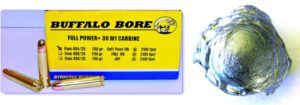
This load was the fastest tested at 2120 fps, some 120 fps over specification. You could detect the difference in muzzle blast, which was not offensive but stronger than the other loads. There were no malfunctions using both magazines, including the original and one ordered from Brownells.com. Accuracy was excellent with a 0.9-inch group at 25 yards. The carbine used is more accurate than most and will group 2 inches at 50 yards with the right handloads. This BB loading demonstrated excellent performance for home defense. The expansion was a plump 0.81 inch. Penetration was 14 inches. Testers noted that as velocity drops off at 50 yards, expansion will diminish and that will affect penetration. Still, we are primarily interested in personal defense at close-in range, and we find the Buffalo Bore loading to be an excellent choice.
Gun Tests Grade: A
RIFLE, 223 REMINGTON
Black Hills 223 Remington Remanufactured 60-grain JSP M223R4
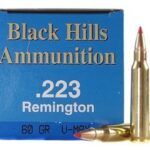
The primary rater switched from 55-grain loads to the Black Hills 60-grain JSP as soon as it was introduced. The momentum, he says, is greater and function seems better in most rifles. But the penetration and expansion are superior as well. In one experiment, the 60-grain Black Hills load expanded to a full .54 caliber diameter, although average expansion was more in the .44 range. This had outstanding performance. The load is also available in relatively affordable 50-round boxes, which make it a Best Buy.
Gun Tests Grade: A
Cor-Bon DPX Hunter 62-grain Barnes Triple-Shock X Bullet Lead-Free DPX22362/20 223 Remington
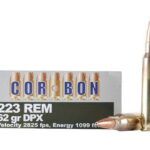
This is the single load that exhibited the best balance of expansion and penetration in our opinion, if police service is a criterion. For civilian use, the DPX offers outstanding downrange performance. While part of the appeal of the 223 is its limited penetration, a high-velocity load retains much of the frangible properties of the caliber. But the penetration that is needed in a defensive firearm cannot be compromised. The 62-grain DPX is a recommended loading for personal defense. Recoil is light, but the 223 really shines with this loading. You may find it at a cheaper price than the 53-grain DPX.
Gun Tests Grade: A
12 GAUGE SHOTSHELLS
Remington Managed-Recoil #00 Buckshot RL12BK00 12 Gauge
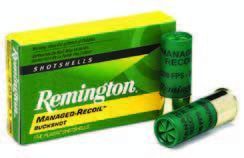
This is an eight-pellet load. Reducing the payload by one pellet may tighten the pattern and also reduce recoil. This is a reduced-recoil load at 1109 fps in the Remington 870. The pattern was superb, without any drawbacks, at 1.8 by 1.5 inches. The Benelli gained 5 fps over the pumpgun’s velocity and put all eight pellets into 1.7 by 1.6 inches. Basically, patterns were identical in each shotgun. This was an affordable load at the time of purchase, but was nonetheless high quality and feed reliable in the Benelli and a first-class performer.
Gun Tests Grade: A (OUR PICK)
Nobel Sport Italia (NSI) MiniBuck 6P 2.25 inch, Six 00 Buckshot
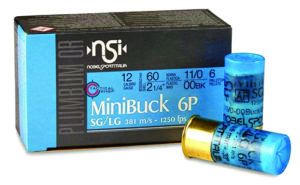
We bought the Nobel Sports short shell for $7.42 per 10 shells from J&GSales.com. The advantage of the Nobel Sports load is that the slightly longer shell is intended to cure the feed problems experienced with short shotgun shells. While this is fine as far as it goes, the advantage gained is only one shell in the Remington’s four-shot tube, and the payload increases to nine shells in a seven-shot magazine. The shell is advertised at 2.25 inches in length for the fired case, and unfired, it comes in at 2.19 inches, or 0.13 inches shorter than the unfired length of 2.32 inches for a 2.75-inch shell. The Nobel payload travels at an average of 1320 fps, and it is very consistent and produced higher velocities than its rated speed of 1250 fps. Recoil was greater than the other mini shells, but lighter than the full-power Hornady Critical Defense buckshot load, which uses eight #00 buck pellets. The pattern was noticeably better than the other mini shells at a 6.5-by-7.5-inch average. We feel that the #00 buck load at this velocity will offer good penetration; after all, many of the reduced-recoil #00 buckshot loads with eight #00 pellets are considerably slower. The NSI load worked flawlessly. There are no hang-ups of any type. It is definitely the best of the minis.
Gun Tests Grade: A
Fiocchi Exacta Aero-Slug Low Recoil 2¾-in. 1-oz. 12LRSLUG (October 2025)
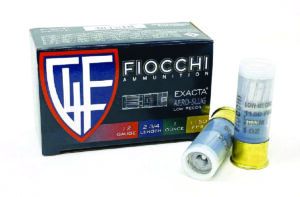 Fiocchi’s reduced-power slug generates even less velocity (1100/1087 fps) and less energy than the Remington Slugger, but we found it no easier to handle. Recoil simply isn’t an issue. This is another load well suited to defense. The blunt profile may be superior to some other slugs in effect on target; however, the softer slugs, such as the standard Foster, tend to break up on the target. This is an accurate load (4.0/3.25 inch) that offers a good option for home defense. It sells for $14.79/10, or $1.48 per shot. Like the Remington Slugger, we rated it down a grade based on hunting power, but we also like it for home defense.
Gun Tests Grade: B (Hunting)
Gun Tests Grade: A (Defense)
Hornady American Whitetail 2¾-in. 1-oz. Rifled Slug 86234 (October 2025)
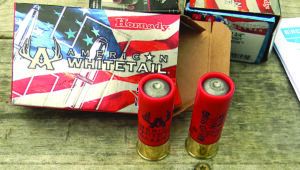 This is a strong load and is rated for 1600 fps by the factory, which translates to 2484 foot-pounds of muzzle energy. In the Ithaca, it went out at 1444 fps, and 1491 fps in the Toros. Accuracy was pretty good, too, at 3.7/3.65 inch. The American Whitetail was just slightly behind the Winchester Segmented and Fiocchi’s heavy load in velocity. It is the only load that shot about the same in either shotgun, only a half-inch different, something we did not expect. Still, since neither are rifled-barrel guns, this is not out of the question that such things would be common. It sells for $9.59/5, or $1.92 a round. This is a stout loading that will serve well for deer hunting. Like the others suitable for hunting, it’s too much for defense use. But it’s marketed for hunting, so it’s hard to pick on it for that.
Gun Tests Grade: B (Defense)
Gun Tests Grade: A (Hunting)