










Insight Technology Inc., Tech-Gear M6X Laser/Illuminator: An Enlightening Experience
While we agree that lasers are no substitute for proper shooting techniques, we also believe that they can be a valuable tool in low light confrontations. Their continued popularity among our Law Enforcement and Military communities is also a testament to their effectiveness.
Bloomberg to Obama: Get Going on Taking Guns Away
(GunReports.com)--Mayor Bloomberg urges President Obama to adopt dozens of gun registration and confiscation measures using executive power and bypassing Congress.
Browning Introduces New Tactical Safes For 2010
SDak Gets Firearms Freedom Law
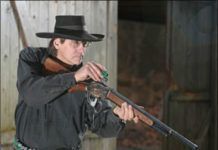
Lever-Action 1887 Shotguns: Armi Chiappa Vs. Norinco
That gun is the Winchester Model 1887, a lever-action shotgun originally designed by John Browning and produced by the Winchester Repeating Arms Company during the late 19th and early 20th centuries. The www.callofduty.wikia.com site says of the ancient firepower, "The Model 1887 originally used black powder 12-gauge shells and 10-gauge shells, but replicas made today are often chambered for more common modern ammunition." Further, the site notes that, "The Model 1887 is the only lever-action gun to ever be featured in a Call of Duty game."
Well, yes, because the design isn't a popular choice for shotguns, with semiautos, pumps, and double-barrels being more popular products. But the infatuation with the 1887 lever shotgun doesn't stop there.
In Terminator 2: Judgment Day (a 1991 sequel to Jim Cameron's original film, Terminator), a Terminator (Arnold Schwarzenegger) T-800 cyborg is sent back in time to protect Sarah Connor (Linda Hamilton) and son John Conner (Edward Furlong) from the more advanced T-1000 Terminator (Robert Patrick).
Probably the most recognizable weapon carried by Terminator Schwarzenneger is the highly customized 12-gauge 1887 Winchester lever-action shotgun. The character is seen holding this weapon (atop his Harley Davidson motorcycle) on the one-sheet posters and key publicity material. The movie gun was customized with a variety of lever handles used, such as the loop style for "swing-cocking" on the Harley Davidson.
Also, Brendan Fraser used a cut-down pistol-gripped Norinco copy of the Winchester 1887 in The Mummy Returns, most notably in the bus scene.
We understand the use of the 1887 in the Mummy movies—they're period pieces, and the 1887 fits. The initial runs of 1887s were made by Winchester in New Haven, Connecticut. They are notable for a small hammer spur at the top of the action, a solid lever, and a ball-type pistol grip on the buttstock. Most had fluid steel barrels, though some had Damascus steel and were only safe to use blackpowder. They were made from 1887 to 1901, about 65,000 in all.
Coming back to current times—in a way—the 1887 is widely used in Cowboy Action events, but perhaps most fluently by SASS champion "Gunfighter" Lassiter, aka Tom Wildenauer. Starting with an open action, he's able to load two and shoot two in under 3 seconds. Not bad for a design that few have seen and fewer have shot.
So, with all this interest in the 1887, we wanted to compare a couple of current production models to see which one we'd buy for fun shooting. Our test guns were the IAC Imports Reproduction Cowboy 1887 87W-1 lever action, $600; and the Armi Chiappa 1887 Fast Load 930.004, which we found selling under the Puma name by Legacy Sports International for $1229. Both guns have 12-gauge barrels chambered for 2.75-inch modern shells. The IAC has a 20-inch barrel with a fixed Cylinder choke and a five-round-capacity tubular magazine. The Chiappa we tested had a 22-inch barrel and was threaded for choke tubes and and came with a Cylinder screw-in tube. It had a total capacity of two because of an action modification that speeds reloads for CAS at the expense of total round count.
Here's what we thought of them:
Federal Gun Laws Are Baloney, OK Rep Says
The New Trend in Body Armor?
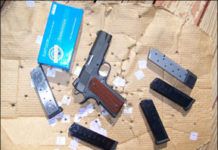
1911 Pistol Magazines Tested!
Gun Owners, Filtered: ‘New American’ Editorial on Mayors Banning Guns Group
James Debney Named President of S&W Firearms Business Unit
Sturm, Ruger wins 3rd Firearms Manufacturer of the Year Award