





S&W Bodyguards: Revolver Or Semiauto for Self Defense?

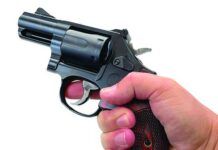
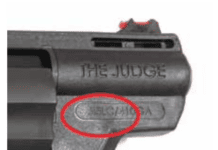
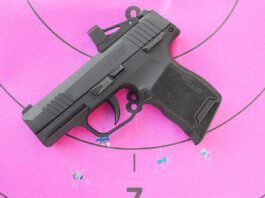
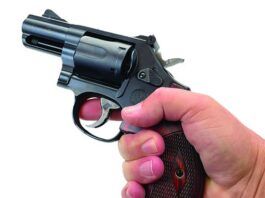
In this report we look at S&Ws two so-called Bodyguards, one a revolver in 38 Special, the other a semiautomatic pistol in 380 ACP. Both were fitted with adjustable laser sights. The first thing we found was the lasers are useless outdoors in bright daylight, no matter what youve been led to believe by various TV shows. On an overcast day, the lasers on these two pistols might be of some value, but we much prefer to use iron sights when we can see em. With them, theres nothing to turn on, no buttons to push.If you like the idea of using a laser indoors at night, these setups might be okay for you. Weve said before we dont like giving our location away by the glow of a laser sight to anyone who might be in our house whos not supposed to be there. However, a good laser - and these seem to be excellent - is a reasonable aiming device in conditions when you just cant see your iron sights and dont - or cant - have tritium inserts. Both of these handguns have adjustments so you can put the laser dots right at the impact point of your chosen ammo. One push of a button turns on the laser. A second push puts the laser into a pulsing mode, and a third turns it off, same for both guns, though they have different button setups. We shot with the ammo available, which for the 38 Special was one handload with 158-grain lead SWC and some CCI Blazer 125-grain JHP. For the 380 we used brass-case CCI Blazer with 95-grain FMJ bullets. Heres what we found.

1911 Value Shootout: Standard GI, or Kimber Custom Eclipse?

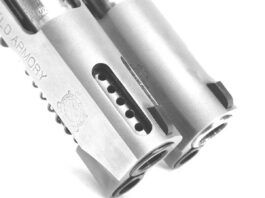
A difficult question often posed to the staff concerns subjective aspects of the handgun. Is the Italian Beretta a better handgun than the U.S.-made pistol? Is the pinned and recessed Smith & Wesson revolver the better shooter than the modern slip-barrel revolver? Among those that seem to invite the most comments is the difference between GI 1911 pistols and the semi-custom factory pistols. By semi-custom we mean pistols with high-profile sights, a custom grade beavertail safety, extended controls, and claims of superior fitting in the barrel, bushing, and barrel hood. The plain old GI pistol that served without complaint in two world wars is seen as the underdog in such a match up. The GI pistol cannot possibly play on an even field with the modern enhanced 1911, can it? The answer is, it depends.It depends on what you are doing and what you expect from the pistol. How many shooters can take advantage of the advanced features, and how many of these shooters can shoot up to the pistols capabilities is the question. But there is also the bottom line, and the bottom line is often personal defense. Many shooters swear by the 1911 GI pistol and want nothing else. One of our raters is quick to point out he knows the 1911, and as much as a person can feel emotional attachment toward an inanimate object, he loves the 1911, including all its eccentricities.The 1911 is individual enough that hand-fitting can make a difference. The closer the tolerances, the less slop and the less eccentric wear on the pistol. On the other hand, the GI pistols were fitted well in the locking lugs and barrel bushing, and that was all that mattered for acceptable accuracy. One of our testers had a conversation with an importer regarding the Philippines-made pistols. The businessman did not like the raters review of a certain pistol. The importer noted that the rater liked the RIA pistols, but not another pistol brand with more advanced features. The importer noted that the pistols come off the same assembly line - or at least the same factory, and the more advanced pistol went on for special handling. Also, the more expensive pistol had more features - yet, our tester did not like it. Our tester replied that yes, the RIA was a fine GI pistol, mainly because what features were on the pistol were done well. The other pistol included more stuff, but it took more finesse and greater skill to fit a custom beavertail and ambidextrous safety, and the pistol with superior features just didnt come out as well, in the opinion of our testers.In other words, you may purchase a good GI-grade pistol on the cheap, but if you are going to obtain an advanced-grade 1911, then it may not be advisable to go cheap. So can the discriminating 1911 shooter be happy with either a bargain-basement 45 ACP or a customized factory pistol at three times the price? To answer a number of questions concerning the performance of the 1911 pistol, our South Carolina test unit obtained both a Rock Island GI pistol and a Kimber Eclipse Target II. There are plenty of other pistols that could have stood in for these choices - the High Standard GI pistol might have just as easily been selected as the baseline, or the Springfield Loaded Model as the advanced pistol. But, in the end, we wanted to know if the Kimber Eclipse II would so outshine the RIA GI that buying the more affordable handgun would seem like a waste of money. Or would the simplicity of the GI show us that spending more on the Eclipse was just spending more?

1911 Value Shootout: Standard GI, or Kimber Custom Eclipse?

A difficult question often posed to the staff concerns subjective aspects of the handgun. Is the Italian Beretta a better handgun than the U.S.-made pistol? Is the pinned and recessed Smith & Wesson revolver the better shooter than the modern slip-barrel revolver? Among those that seem to invite the most comments is the difference between GI 1911 pistols and the semi-custom factory pistols. By semi-custom we mean pistols with high-profile sights, a custom grade beavertail safety, extended controls, and claims of superior fitting in the barrel, bushing, and barrel hood. The plain old GI pistol that served without complaint in two world wars is seen as the underdog in such a match up. The GI pistol cannot possibly play on an even field with the modern enhanced 1911, can it? The answer is, it depends.It depends on what you are doing and what you expect from the pistol. How many shooters can take advantage of the advanced features, and how many of these shooters can shoot up to the pistols capabilities is the question. But there is also the bottom line, and the bottom line is often personal defense. Many shooters swear by the 1911 GI pistol and want nothing else. One of our raters is quick to point out he knows the 1911, and as much as a person can feel emotional attachment toward an inanimate object, he loves the 1911, including all its eccentricities.The 1911 is individual enough that hand-fitting can make a difference. The closer the tolerances, the less slop and the less eccentric wear on the pistol. On the other hand, the GI pistols were fitted well in the locking lugs and barrel bushing, and that was all that mattered for acceptable accuracy. One of our testers had a conversation with an importer regarding the Philippines-made pistols. The businessman did not like the raters review of a certain pistol. The importer noted that the rater liked the RIA pistols, but not another pistol brand with more advanced features. The importer noted that the pistols come off the same assembly line - or at least the same factory, and the more advanced pistol went on for special handling. Also, the more expensive pistol had more features - yet, our tester did not like it. Our tester replied that yes, the RIA was a fine GI pistol, mainly because what features were on the pistol were done well. The other pistol included more stuff, but it took more finesse and greater skill to fit a custom beavertail and ambidextrous safety, and the pistol with superior features just didnt come out as well, in the opinion of our testers.In other words, you may purchase a good GI-grade pistol on the cheap, but if you are going to obtain an advanced-grade 1911, then it may not be advisable to go cheap. So can the discriminating 1911 shooter be happy with either a bargain-basement 45 ACP or a customized factory pistol at three times the price? To answer a number of questions concerning the performance of the 1911 pistol, our South Carolina test unit obtained both a Rock Island GI pistol and a Kimber Eclipse Target II. There are plenty of other pistols that could have stood in for these choices - the High Standard GI pistol might have just as easily been selected as the baseline, or the Springfield Loaded Model as the advanced pistol. But, in the end, we wanted to know if the Kimber Eclipse II would so outshine the RIA GI that buying the more affordable handgun would seem like a waste of money. Or would the simplicity of the GI show us that spending more on the Eclipse was just spending more?

MechTech Systems Carbine Conversion Unit for Glock 9mm

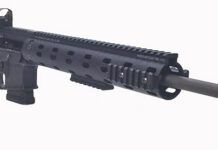
This neat unit gives excellent performance. It is a good option for the Glock fan wishing to dedicate one of his pistols to the carbine concept. Commonality of trigger action is a strong point, as well as commonality with magazines. On the basis of affordability, it is a good choice, if you already have the Glock pistol on hand.

Gun Tests June 2013 Pistol Preview: RIA Standard GI and Kimber Eclipse Target II

To answer a number of questions concerning the performance of the 1911 pistol, the Gun Tests South Carolina test unit obtained a Rock Island Armory Standard GI No. 51421 45 ACP, $410, and a Kimber Eclipse Target II 45 ACP, $1393, in what originally seemed to be a price mismatch.

Inglis Hi-Power w/stock 9mm, $1650

Long ago someone put a shoulder stock on a handgun so he could do a better job of shooting it without becoming a skilled pistolero. The shoulder stock holds the gun steadier than the hands alone can hold it, thus some immediate handgunning success was possible. Some early examples were the shoulder-stocked Third Model Colt Dragoons and 1860 Army Colts of the Civil War era, and there were some earlier uses. We've seen examples of percussion firearms dating to the mid 1830s, and would bet a nickel there exist examples of shoulder-stocked flintlock pistols going back a hundred years earlier.

For this test report the Gun Tests staff looked at a gun from the early 20th century which saw plenty of wartime and civilian use. The magazine's test gun was an Inglis Hi-Power w/Stock 9mm, $1650, supplied by Collectors Firearms in Houston (www.collectorsfirearms.com). The Browning was a Hi-Power made by Inglis in Canada ($1650 with stock, also Collectors's counter price). It had a walnut stock and tangent sights with a narrow V-notch combined with a sharpened post front blade, which gave relatively poor sight pictures. The GT staff tested the 9mm Hi-Power with Black Hills 147-gr and Winchester BEB 115-gr ammunition. Here is what the GT staff found.

Galco M6X Holster Wins Golden Bullseye Award

Galco Gunleather’s patented M6X Auto Locking Holster has received the 2013 NRA Golden Bullseye Award for “Shooting Accessory of the Year.

CCRKBA: Data Conflicts with Gun Control Rhetoric

Newly-released data from the Bureau of Justice Statistics (BJS) proves that more guns in private hands do not lead to more murders, and a Pew Research study showing widespread ignorance of this fact suggests that the public has been misled, the Citizens Committee for the Right to Keep and Bear Arms says.

Ruger SR9C KSR9C/3313 9mm, $525

A Gun Tests magazine August 2010 review on the Ruger SR9C notes that it fires from a 3.5-inch barrel. That makes it the smallest, most concealable, pistol in the test. But if you remove the 10-round magazine and insert the 17-rounder, the grip will become longer by about 1 inch.

New Beretta Pistol to Feature LaserMax Laser and Light

At the 142nd NRA Annual Meetings and Exhibits in Houston, Fabbrica D’Armi Pietro Beretta announced its newest pistol innovation featuring integral laser and light technologies furnished by LaserMax.

Para-Ordnance P12-45 .45 ACP

Small semiautos that match the physical dimensions of pistols we tested recently - such as Para-Ordnances $740 P12-45 - are usually referred to as compacts or sub-compact. But when pistols of this size class are miniaturized 1911s, the tag of "Officer's models" is hung on to them, even though they may not exactly fit the mold of the original Colt's Officer's model.

Manufacturers are taking a fresh look at the Officer's model for a number of reasons. For one, the 1911 pistol has legions of fans inside both competitive shooting and law-enforcement circles. Also, many military and ex-military personnel recognize the .45 ACP's superiority over the 9mm Parabellum, a cartridge choice often perceived as NATO's intrusion into American affairs. Traditionally the Officers model offered a six-round magazine, like the 945s. However, the Para Ordnance P12 integrates a double-stack or staggered-round magazine that holds ten rounds.

The P12 has been around a while and is essentially bug free. It fits the hand surprisingly well and points easily. Function was 100 percent despite warnings from some gunsmiths who seem weary of semiautos fitted with short slides. The P12 action also includes a Series 80-style firing pin block. This mechanism is not a favorite with 1911 purists, and some gunsmiths have a difficult time refining the action with this feature in place. But the P12 did not suffer any malfunctions because of it.

2013 NRA Annual Meetings Open Tomorrow in Houston

The National Rifle Association’s 142nd Annual Meetings & Exhibits opens tomorrow at the George R. Brown Convention Center in Houston.

Gun News

In the September 2022 issue, I mentioned in Downrange that “Fifteen Republican senators rolled over earlier in the year to pass a bill negotiated...