












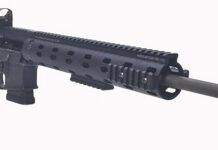



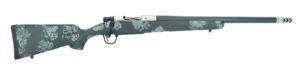
Hornady announced the latest addition to the Creedmoor ammunition line in May 2025 with a cartridge that split the difference between the 6 Creedmoor and the 6.5 Creedmoor, the 25 Creedmoor. We recently tested two rifles chambered in the round, with the first one coming from Christensen Arms located in Gunnison, Utah. Our 25 CM sample is the Ridgeline FFT, $1900, a very light 20-inch model. Using FFT (Flash Forged Technology) for the stock, the rifle’s empty weight is only 5.7 pounds including the company’s proprietary carbon-fiber-wrapped barrel. The second test rifle is the Weatherby 307 Range XP 2.0 3WRX225CMR4B, $1190. It sports a 22-inch barrel with longitudinal flutes and an adjustable stock, all mated to the recently introduced Model 307 action produced by Weatherby in the company’s factory in Wyoming.
Ammunition
One of the problems with shooting a new cartridge is the lack of ammunition choices. With only two types of 25 Creedmoor to try, our range data was a bit limited, so we tried to help things out by doing some initial experimenting with handloads.
Hornady started out with the two loads we would have expected in the 128-grain ELD-X (Extremely Low Drag — eXpanding) hunting load along with a target load pushing a 134-grain ELD-M (Extremely Low Drag — Match) bullet. The ELD-X load did well, averaging a hair over an inch for three-shot groups at 100 yards. Remembering the days when we would have jumped for joy with a 1.5-minute-of-angle group, we were somewhat disappointed with the 1.42-inch groups turned with the ELD-M loads. That said, this rifle would have turned in minute-of-deer impacts out to about 600 yards, and even with the 22-inch barrel, was pushing the 134-grain match bullets to almost 2800 fps, with the 128-grain hunting loads hitting about 2840 fps. Both were velocities we thought were great for a shorter barrel.
We were also able to start load development with several bullets and powders. Initial results showed some promise using Vihta Vuori N555 powder and 135-grain Berger bullets. Groups were well under an inch at 100 yards with very low standard deviations, though velocities were slower than the factory loads. The best groups were around 0.6 inch. In fact, we were a bit surprised at our handloads and the lower velocities. Most of our test loads were only pushing 2600 fps, unless we used the almost unobtainable Reloder 26 powder. In that case, the velocities came up to expected levels, but the accuracy did not. We have to give credit to Hornady for accurately generating that much energy from shorter tubes.
The factory-ammo boxes claim 2800 to 2850 fps for the 134-grain ELD-M and 128-grain ELD-X loads, respectively. We understand that most test loads (and resulting projections) are based on 24-inch-barrel rifles. Our Weatherby Range XP sports a 22-inch barrel, and the Christensen has a 20-inch tube. Accordingly, we expected the velocities to be slower than listed on the box, and we were correct. Still, Hornady factory ammo was pushing 2800 fps from the ELD-M ammo in the Weatherby and the 128-grain ELD-X was well over 2800 fps — not too shabby for short, handy barrels. That also eased any concerns we had about choosing these shorter tubes for mounting a can. The Christensen came close, but couldn’t quite keep up with the velocities the slightly longer Weatherby produced.
We also wanted to check out the efficiency of the 25 CM cartridge case, especially in comparison to a similarly barreled 6.5 CM. We grabbed a Springfield Armory Redline 20-inch barrel out of the safe and shot it with the same types of Hornady factory ammo. The Weatherby delivered slightly more energy than the 6.5 CM Redline, while the Christensen was slightly less. We didn’t see a real advantage the 6.5 CM had until we started testing handloads we’d developed using Berger 156-grain EOL Hunting bullets propelled by Vihta Vuori N555 powder, which generated 2605 fps and 2351 foot-pounds of energy.
Could it be that the 25 CM is more efficient than the popular 6.5 CM? When we took a look at ballistics, it was clear that the 25 CM had a flatter trajectory and less wind drift than the 6.5 CM, along with slightly less recoil. All of those figures bode well for the long-range hunter or the PRS shooter who shoots the 25 CM.
Might the 25 CM replace the 6.5 CM? We doubt it. The are too many 6.5 Creedmoors in the market or in the field already. The 25 CM has a long way to go to catch up. That said, all appearances are that the 25 CM is a worthy competitor to the 6.5 CM and might be a wise choice for many shooters. We certainly liked these two.
For further information on how the 25 CM compares to other similar cartridges (6 CM, 6.5 CM, 250 Savage, 257 Roberts, and 25-06 Remington) please see our comparisons in the April-May 2026 issue.
Christensen Arms Ridgeline FFT RL FFT 25 Creedmoor,
$1900
Gun Tests grade: A
Extremely light and maneuverable, this Ridgeline FFT operated smoothly, carried easily, and shot accurately. We picked the Ridgeline based on its better accuracy and lighter weight, which would make it a joy to carry.
| Action Type | Bolt |
| Overall Length | 41.5 in. |
| Barrel | 20 in. long, 1:7.5-in. twist |
| Overall Height w/o Scope Mount | 6.75 in. |
| Weight Unloaded | 5.69 lbs. |
| Weight Loaded | 5.93 lbs. |
| Action Finish | Cerakote |
| Barrel Finish | Cerakote, carbon fiber |
| Magazine Capacity | 4 rounds |
| Magazine Type | Internal box |
| Stock | Christensen FFT |
| Stock Drop at Comb | 0.5 in. |
| Stock Drop at Heel | 0.5 in. |
| Stock Bedding | Spot w/carbon fiber pillars |
| Stock Buttplate | Rubber |
| Stock Length of Pull | 13.75 in. |
| Receiver Scope-Base Pattern | Remington 700 |
| Trigger Pull Weight | 1.37 lbs. |
| Safety | Two-position rocker |
| Warranty | Limited w/accuracy guarantee |
| Telephone | (888) 518-8858 |
| Website | ChristensenArms.com |
| Made In | U.S. |
Components for virtually everything in the aerospace industry must be durable, lightweight, and precise. Christensen Arms was spawned in 1995 by folks with solid experience in the space industry who understood that quality rifles required many of the same techniques. Gun Tests shooters have fired several examples of the company’s products over the years, and we wanted to see how the latest carbon-fiber stock worked with the latest cartridge.
Introduced in 2022, the Flashed Forged Technology stock took Christensen’s builds to the next level. Made out of carbon fiber, like most precision hunting stocks are these days, Christensen updated the design and the process used to produce the new stock. Still using carbon fiber but not material hand laid on a form, the FFT stock uses chopped carbon-fiber material made as a monocoque shell. Now, instead of having to scrap any production errors, the material is just chopped up again and reused, creating very little waste. That translates into cost savings for the buyer. Using the monocoque shell design allowed the shell itself to provide the strength needed instead of having to add additional material to some sort of frame.
The result is very strong and light weight. Our stock weighed in at only 20.4 ounces — a full pound less than most contemporary designs. Then the company added spot bedding on the recoil lug along with carbon-fiber pillars on the action screws.
Externally, the stock also brings a few nice touches. The fore end is slim and rounded for easy carry in the field. We were pleased to see a little flat on the bottom of the fore end, just in front of the floor plate, to help shooters get more stability off a bag. Built with a conventional pistol grip, the rifle needed a little more vertical wrist, but that is personal preference. The aluminum floorplate protects a four-round internal-box magazine that releases easily from a tab inside the trigger guard. That trigger guard has also been enlarged for those hunting in colder temps. The rifle has a thinnish rubber recoil pad — not exactly an issue because the 25 CM is very tame to shoot. Of course, it includes two sling-swivel studs.
Christensen also works some of the carbon-fiber magic on the barrel. The barrel is 20 inches long with a fast 1:7.5-inch twist and is a thick, rigid tube made of 416R stainless steel with an aerograde carbon-fiber wrap. The barrels are button rifled, hand-lapped, and free-floating in addition to having a match chamber. The muzzle is threaded 5⁄8×24, which mates perfectly with the installed six-port muzzle brake or a suppressor. Like the Weatherby Range XP 2.0 in these tests, the Ridgeline FFT is designed to be accurate while being short enough to carry and maneuver easily — even with a can attached — while in the field or in a blind. For those who have not yet discovered the advantages of hunting with a silencer, it’s time, and that onerous $200 tax stamp went away back in January 2026. There are some serious benefits in not scaring away all the game in the area with your shot. Also, your ears — and your audiologist — will love you for it.
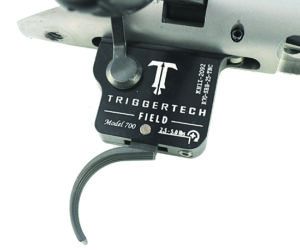
The Christensen Model 14 action uses a Remington 700 pattern for both the stock interface and the optics. For the 25 CM, just about anything you could mount on a short-action Remington 700 will work on this rifle. We also appreciate that Christensen updated some of the weak points in the Remington design, namely the trigger, the bolt stop, and the extractor. We understand the aftermath of litigation and the reasons Remington changed its triggers, but that doesn’t mean we have to like them. Even the latest Remington offerings include a much improved Timney trigger. This sample (and almost all of the Christensen rifles) come with a TriggerTech Field trigger. Supposedly adjustable from 2 to 5 pounds, our sample weighed in on our Lyman digital gauge at less than 1.4 pounds. You can heavy that trigger up with the turn of a single screw, but we trigger snobs loved it as is. The extractor, instead of a pressed-in ring, is an AR-style pivoting claw that can securely grab your empties for ejection. The bolt stop is now a lever on the left rear of the receiver instead of a light linkage accessible as a small button near the trigger. It still uses the spring-loaded plunger for an ejector.
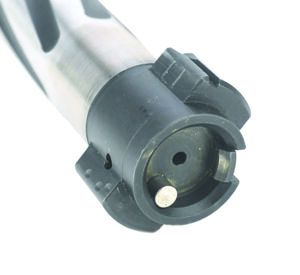
There’s more. The bolt body and bolt shroud have both been fluted for further weight savings, and the bolt handle has been drilled out for the same purpose. The bolt handle is also threaded and presents an oversized bolt knob. Easily changed, we liked it just the way it was. The action proper sandwiches in a large recoil lug between it and the barrel, and the ejection port has been enlarged for the long rounds this rifle was designed to use. Our sample was Cerakoted in a stainless finish. Altogether, we saw seven different color combinations available for purchase. The safety is a two-position thumb rocker positioned at the right rear of the bolt handle, as we would expect from a pseudo-Remington design.
The Christensen Arms Ridgeline FFT fed perfectly and shot well. It showed a slight preference for the Hornady ELD-M ammo, averaging 0.86 inch for three-shot groups. The best group came in at 0.592 inch, which we thought was very nice, indeed. The 128-grain ELD-X fodder averaged 0.921 inch with a best group of 0.64 inch. Fit and feel were great, as was the trigger. We’re going to lobby for the TriggerTech Field unit to be standard equipment on all factory rifles. Velocity with 2 less inches of barrel than the Weatherby was a little slower, losing 58 fps with the 134-grain ELD-M load and a very consistent 61 fps with the 128-grain ELD-X ammo. That brings down the energy a little but still leaves both rifles sending quality bullets downrange with 2200 to 2300 foot-pounds of energy, good accuracy, and very little recoil.
Our Team Said: The Ridgeline FFT was smooth and shot well. We liked the Ridgeline because of its slightly better accuracy and lighter weight. However, it’s $700 more expensive than the Weatherby, so the shooter will have to decide whether to spend the additional money on the Ridgeline or not.
| 25 CREEDMOOR RANGE DATA | ||
| Hornady Match 134-grain ELD-M 81421 | Christensen Ridgeline FFT | Weatherby Range XP |
| Average Velocity | 2730 fps | 2788 fps |
| Muzzle Energy | 2219 ft.-lbs. | 2314 ft.-lbs. |
| Best Group Size | 0.59 in. | 1.15 in. |
| Average Group Size | 0.86 in. | 1.42 in. |
| Hornady Precision Hunter 128-grain ELD-X 81422 | Christensen Ridgeline FFT | Weatherby Range XP |
| Average Velocity | 2779 fps | 2840 fps |
| Muzzle Energy | 2195 ft.-lbs. | 2293 ft.-lbs. |
| Best Group Size | 0.64 in. | 0.94 in. |
| Average Group Size | 0.92 in. | 1.09 in. |
Our ammunition selection included Hornady 25 Creedmoor 134-grain ELD-M and Hornady 25 Creedmoor 128-grain ELD-X. Testing was done at American Shooting Centers in west Houston. We shot the rifles off a Caldwell TackDriver Pro front bag (Brownells 100-027-023, $49), further supported by a large rear bag, heavy from Tab Gear (TabGear.com, $34). We measured velocities with a Garmin Xero C1 Pro (Garmin.com, $600).
| 6.5 CREEDMOOR RANGE DATA (for Comparison) | |||
| Springfield Armory Redline 6.5 CM | Hornady 140-grain ELD-M | Hornady 143-grain ELD-X | Berger Handload 156-grain EOL |
| Average Velocity | 2702 fps | 2643 fps | 2605 fps |
| Muzzle Energy | 2271 ft.-lbs. | 2218 ft.-lbs. | 2351 ft.-lbs. |
| Best Group | 0.61 in. | 0.44 in. | 0.41 in. |
| Average Group | 0.66 in. | 0.66 in. | 0.69 in. |
Written and photographed by Joe Woolley, using evaluations from Gun Tests Team members. GT