









The fall hunting seasons are upon us, and if you’re looking for an affordable starter deer or elk hunting rifle that won’t break the bank, here are a few suggestions based on our extensive testing of the class.
A few rifles stand out as excellent value for hunters. The right pick depends a bit on what you’re hunting (deer-sized game vs. elk, etc.) and what cartridge you’re leaning toward, but these three consistently top “best budget hunting rifle” lists for good reason — solid accuracy, reliable actions, and counter prices well under $600.
Mossberg Patriot
We tested a Mossberg Patriot Predator in 7 PRC, suitable for deer or elk. We bought it for $467. A current counter price for the rifle is $470.
We love a bargain. Especially when the quality of the product seems to be substantially greater than a higher-cost item. The Mossberg Patriot Predator uses a standard polymer stock that has been finished in-house in the Strata camouflage pattern. A mixture of green, browns and tan, we like the look and the way it breaks up the outline of the rifle. The Mossberg’s stock showed very little flex.
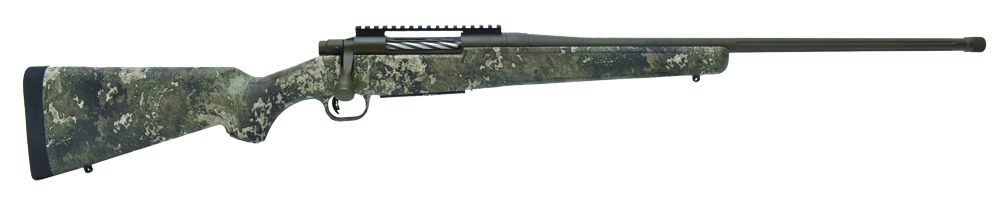
The fore end could be squeezed to touch the barrel, but we had to apply real pressure to make that happen. The rear of the stock features a Monte Carlo-style cheek piece and a negative comb on the stock that pulled recoil away from the shooter’s face. None of the stock is smooth, with all of it exhibiting some texture. Coarser gripping surfaces have been molded into the side panels of the grip and through 270 degrees on the fore end. Resulting contact with the hands was secure, but not obnoxious. The trigger guard is part of the stock requiring a different approach for the magazine and associated parts. The stock is slightly flared, allowing placement of the magazine, but there is no bottom metal per se.
The Patriot uses a polymer insert that is secured by the action screws between the stock and the receiver. It provides the attachment point for the mag. Release is accomplished via a recessed latch located at the front of the trigger guard. We found it easy to release without it being prone to an inadvertent drop. We had some problems with the last round in the magazine not wanting to actually stay in the magazine and would like to see that addressed. Sling-swivel studs fore and aft are standard, as is a pretty effective recoil pad.
Mossberg also tries to provide an easily carried rifle and they look, primarily, to the barrel for their weight savings. Our Patriot comes with a 24-inch tube and what we expect to be a standard 1:8-inch twist. Profile on the barrel is very thin, narrowing to a diameter of about 0.640 inch just behind the muzzle. The tube is capped with the expected 5⁄8×24 threads that are actually a wider diameter than the barrel. Accordingly, the muzzle flares to about a 0.750-inch diameter, leaving a shelf behind the threads against which a thread protector or a muzzle brake could abut. About 11 inches of the barrel have been fluted longitudinally, and the bolt has been fluted in a spiral pattern. Everything combines to leave a rifle with recoil that is noticeable though not punishing.
If the shooter is already accustomed to 7 RM or 300 Winchester Magnum recoil, the 7 PRC will be a piece of cake. If the shooter’s experience has been mostly hunting with long guns in the .223 to .243 range, we predict he or she will be buying a muzzle brake for their Mossberg shortly after the first shooting session.
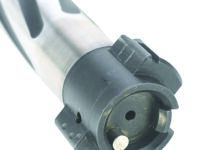
The action brings a few nice bells and whistles to the table. The entire barreled action is Cerakoted in the company’s Patriot Brown color and arrived with a 20-minute-of-action Picatinny rail installed. The bolt handle had an oversized knob that was easy to operate but still cleared the scope body by a good margin. The dual-lugged bolt uses a single plunger for the ejector and a sliding-plate extractor. The thumb safety is a two-position rocker switch behind the bolt handle on the right side. Bolt removal requires depressing a tab that is located on the side of the action where it is protected by a flange on the bolt head.
This Patriot Predator uses the Lightning bolt-action trigger — a system which employs a safety blade in the trigger, allowing for a lighter pull while maintaining safety. Our sample required right at 2.5 pounds pressure to activate and did so with very little take-up, creep, or overtravel.
Our Team Said: This Mossberg Patriot Predator proved to us once again that, with the right skills, inexpensive does not have to mean cheap. It came in second place in these tests with an average three-shot group size of 0.86 inch, and that was including the Hornady 175-grain hunting ammo that the rifle did not particularly like. It shot the ELD-X to an average 1.19-inch group. The Hornady 180-grain match ammo, on the other hand, snuggled down into a tidy 0.54-inch average that we would gladly take from just about any rifle.
Our only real concern was the magazine. We don’t know if it was the follower, feed lip design, spring tension, or something else invisible to us, but the Mossberg magazine did not want to secure the last round. It consistently popped a cartridge loose when we opened the bolt to chamber that round or when we tried to load the rifle with a single cartridge in the magazine. Everything but the last round fed fine, but that one item cost the Patriot a full letter grade.
To read the full review, click here:
Mossberg Patriot Predator 28171 7 PRC
GUN TESTS GRADE: B
We have also tested a Mossberg Patriot in 7mm Remington Magnum. We bought ours for $542. They sell at retail for $450 now.

The Patriot offers low cost with a traditional look. While we appreciate the practicality of synthetic stocks, wood stocks are traditional and typically more expensive than polymer-stocked rifles. This variant of the Patriot line sports a nice walnut stock and matte-blued metal. The wood-to-metal fit was good. The stock featured outlined stippled gripping areas on the pistol grip and the side and bottom of the forend. It also included a black-plastic grip cap. It was well executed and practical.
The magazine release is located forward of the magazine, and, when pressed, the magazine falls free. A shooter can hold the rifle with his shooting hand on the grip and use a support hand to press the magazine release and have the magazine drop into the palm of the hand. We like this set up. The trigger guard is also polymer and that helps keep the rifle to a lithe 7 pounds. Some testers prefer metal, but for the cost we are not complaining.
The Patriot uses a two-position safety lever located on the right side of the receiver behind the bolt handle. Press it forward to Fire, revealing a red dot in the stock. Rearward is Safe. The safety locks the trigger, but it allows the bolt to be manipulated.
We mounted the Simmons AETEC 2.8-10x44mm on the factory-included bases. We like it when a manufacturer includes bases since it saves us time and money. We had plenty of room to mount the short, compact AETEC scope. We also thought the scope and rifle made a great pair for a lightweight traditional hunting rig. At 7 pounds sans scope, this is a lightweight rifle you can tote up and down mountains.
In extended shooting sessions at the bench, we found the light weight of the Patriot was not our friend. The recoil was more noticeable with the Patriot compared to the other two rifles. Putting that into perspective, a hunter may only need to fire one round to down a deer, so we’d guess the Patriot wouldn’t be fired round after round very often. The LBA trigger was our friend. Inserting single cartridges or loading the magazine while it was inserted in the magazine well was an easy chore with plenty of room. The bolt was slick and smooth. The bolt knob was flat on the end. We preferred the bolt knobs on the Savage and Howa better because they made manipulating the bolts faster and easier.
The accuracy of the Patriot gave us confidence to know we could kill an animal humanely. Ironically, the least expensive rifle grouped the least expensive ammo the best. With Federal Fusion 150-grain Fusion SP bullets, we were able to shoot a three-shot best group that measured 0.85 inches. On average, the Fusion ammo grouped 1.18 inches, and that my friends is elk meat in the freezer. All other ammo grouped between 1.15 and 2.05 inches.
Our Team Said: The Patriot Walnut is a low-cost option with a fine traditional look and was still accurate enough for hunting. The shorter barrel also siphoned off velocity and energy, but we like the value in this rifle. If we were frugal, we would opt for the Patriot and put our remaining budget into an elk hunt.
To read the full review, click here:
Mossberg Patriot 27894 7mm Remington Magnum
GUN TESTS GRADE: A-
Savage Axis II
This is a field-and-stream favorite for a reason: it comes with a Picatinny rail ready for a scope, an adjustable AccuTrigger (a big deal at this price), and a detachable magazine. It’s chambered in nearly every popular hunting caliber from 223 to 30-06 to 6.5 Creedmoor. We’ve tested a Savage Axis II XP in 308 Winchester, which we bought for $411. It sells for $500 today.
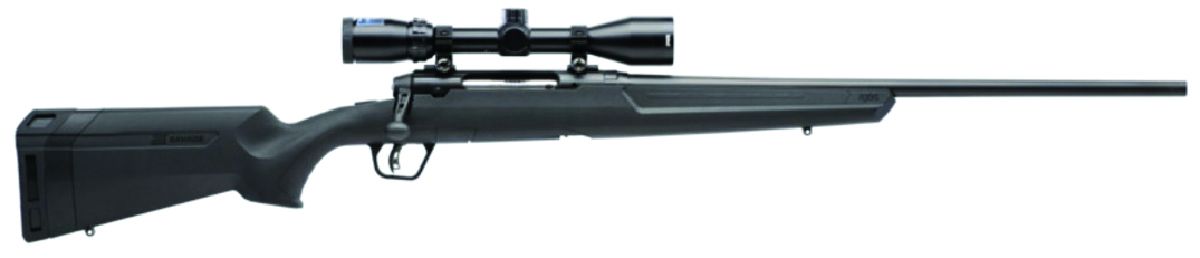
The Savage Axis II is an improved version of the Axis we have previously tested. The stock differs from the Axis, and we liked the appearance and the fit and feel. The XP is a notation for this package gun, and the Axis II features the Savage AccuTrigger, which the original Axis did not have. The rifle is supplied with a Bushnell 3×9-40 scope. Sources tell us the scope may differ in some outlets.
The AccuTrigger created a sensation when released. The center lever blocks the sear unless pressed, and this allows a rifle with a lighter trigger to be deployed with a greater degree of safety. All four rifles tested feature a variation on the trigger lever/adjustable rifle trigger.
Firing offhand at the steel gong target, we found the Savage Axis rifle’s bolt throw is quite smooth and fast in operation. Most of the raters felt that a fast follow-up shot was quick. Fired offhand, the Savage Axis II was accurate and gave the 100-yard gong a beating. It is the lightest rifle tested and gave good results in quickly tracking targets.
In this test, we found only a slight advantage in the more expensive Leupold scope. The Bushnell scope mounted on the Savage Axis II worked fine for every shooting chore. When firing off the benchrest, the Savage Axis II’s best group was with the Black Hills Ammunition 175-grain Match load, with a 1.25-inch effort at 100 yards. The rifle never gave any type of function problem.
Our Team Said: The XP rifle-and-scope combination proved to be a good one, and the Bushnell scope is adequate for the chores it will be called upon to perform in the field. Though the rifle was in third place for accuracy, we feel that the Savage Axis II XP package is a Best Buy.
To read the full review, click here:
Savage Axis II XP 57095 308 Winchester
GUN TESTS GRADE: A- (Best Buy)
Ruger American
Sturm, Ruger & Company has long had the reputation of producing good products at an affordable price.
We tested a Ruger American in 243 Winchester, buying it for $442. It sells for $400 today because it’s been supplanted by the Gen 2 models, but the Gen 1’s are still available in many stores. Since it was rolled out in 2012, the Ruger American Rifle “punches above its weight.”

On the exterior, the stock includes raised panels at the fore end and the wrist, along with a soft-rubber buttpad. The bottom of the stock has the expected two sling-swivel studs and a red Ruger dragon. The trigger guard is molded in with the rest of the stock. The detachable rotary magazine is held by a housing that can be switched out dependent on the rifle’s caliber. For example, the 223 Remington and 300 Blackout versions use a different housing that accepts AR-style magazines. Magazine release is accomplished via a latch at the front end of the magazine. The latch is protected from inadvertent activation.
The action does its part to keep the weight down, too. We measured the muzzle diameter at 0.575 inch, which matched the profile of the rest of the trim barrel. The receiver has flats milled on the sides to remove a bit more metal. That said, the ejection port is a relatively small opening, leaving the action solid on top and very rigid. Stiff actions contribute to accuracy, and the Ruger American is certainly accurate. Ruger includes a low-mount 0-minute-of-angle (MOA) Picatinny rail for scope mounting.
The bolt is released via a pivoting lever on the left side of the receiver. It is a full-diameter unit with three lugs. That provides a 70-degree lift and keeps the bolt handle (which is easy to change) well clear of low-mounted scopes. Dual cocking cams provide even more assistance in the bolt lift. For shell removal, the Ruger American uses a spring-loaded plunger and a sliding-plate extractor located in one of the lugs. The safety is a two-position thumb switch mounted very conveniently on the tang. For the Southpaws out there, Ruger chambers the American rifle for left-handed shooters in a variety of calibers.
Our preference on good triggers is to have one that allows you to put enough pressure on the trigger blade to know that we are touching it without immediately setting it off. That translates to a trigger-break weight somewhere between 2 and 2.5 pounds. This Ruger American broke consistently at about 3.6 pounds — but it felt a bit lighter. The Ruger Marksman Adjustable unit installed helps a great deal. We can still feel just a bit of flex as we tighten our finger on the trigger, but it breaks smoothly and cleanly. Marketed as adjustable between 3 and 5 pounds, we left ours where it was.
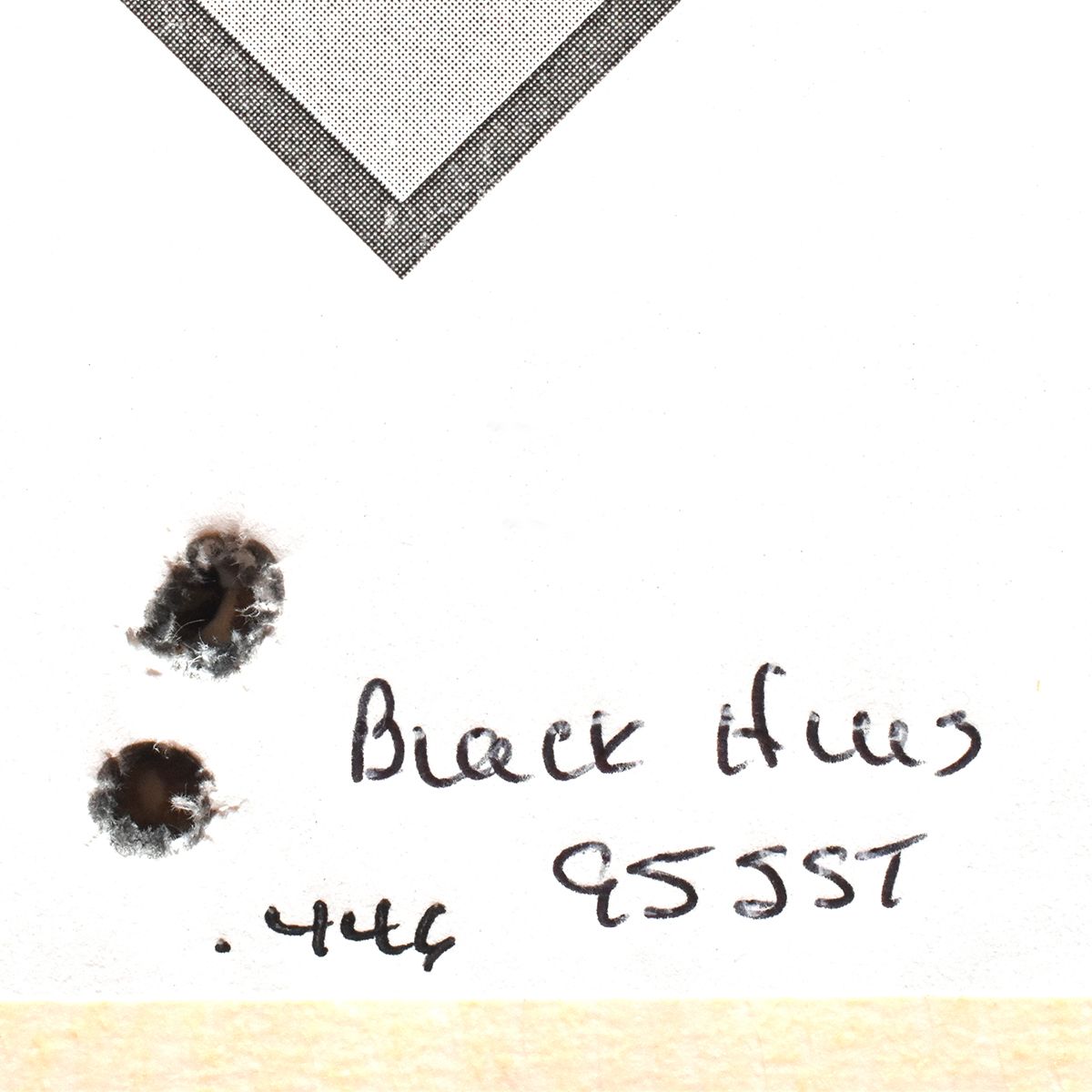
Our Team Said: With an average group size of 0.98 inch across three different types of ammo, the American was the most accurate in this group. It showed a very real preference for the Black Hills 95-grain SST load, with an average under 0.75 inch and a best group smaller than 0.5 inch. The rifle’s bolt throw was smooth from the first time we worked it. With the wild popularity of muzzle brakes and suppressors today, we would love to see Ruger thread the muzzle and allow for easy attachment of these devices. That’s our sole ding on the rifle.
To read the full review, click here:
Ruger American 6904 243 Winchester, $442.
GUN TESTS GRADE: GRADE A- (Best Buy)