












Gun Tests has reviewed dozens of Glock pistols over the years, and in many cases, a Glock has not won an evaluation when it was shot head to head with a comparable handgun.
Shooters favor their Glocks for carry and home defense, and we wholly endorse folks keep shooting “the new breed of Austrians,” as The Sommelier recommends in John Wick 2.
But shooters who are new to the market will wonder if a Glock is always the best choice. Our testing says they aren’t. Here are some recent examples:
CANIK GETS THE NOD
In the August 2026 issue, we pitted a Glock 19 Gen5 FS PA195S203DE 9mm Luger, $539, against a Canik Mete SF Two-Tone HG5367 9mm Luger, $475.
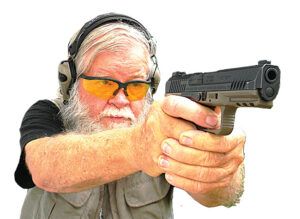
tested, with some groups smaller than 2.0 inches at 25 yards.
The Canik earned a Grade A Best Buy ranking over the Glock 19, which was scored an A-.
We were considering rating the Canik pistol down half a grade for its lack of grip texture in some areas, but this would not have been appropriate because the Canik METE SF performed very well. The pistol’s ambidextrous slide locks were praised by all raters. This really helped the pistol with left-hand shooters. The slide-lock levers are large but never snagged on the draw or when the pistol was worn in concealed carry. We think the Canik METE SF is a Best Buy.
The Glock was reliable, if not the top shooter, and it offers the widest range of optics plates. Also, Glock magazines cost less than the Canik’s. We understand many of our readers will choose the Glock based on its reputation and aftermarket support, but the Turkish gun is an up-and-comer.
SPRINGFIELD ECHELON IS OUR PICK
In the February 2026 issue, we pitted a Springfield Echelon 4.0C PC 706397982522 9mm Luger, $630, against a Glock Model 19 Generation 5 MOS 9mm Luger, $620.
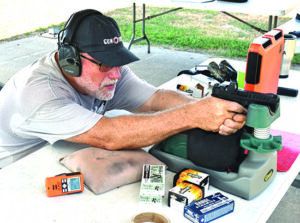
The Springfield was Our Pick in the test and got a Grade A score, compared to the B grade of the Glock.
While the Echelon pistol doesn’t kick much, as most 9mm handguns this size don’t, recoil impulse from it was rated as more than the Glock. This was due to the thin grip, but not enough to be rated down. Actual control was best of the test. As for left-hand use, the Springfield Echelon features an ambidextrous slide lock and magazine release, which the other handgun lacked. After considerable debate, the test team reached a unanimous verdict: The Springfield Armory Echelon 4.0C is a better choice for concealed-carry defense than the Glock 19.
The Glock is a reliable handgun, and it is certainly combat capable. We rated it down because the issue sights were inferior. After the test, one of the raters elected to keep the Glock Gen 5 and add it to his carry rotation. To get the pistol up to par for personal defense, he added a three-dot set of XS night sights, $125. This would bring the price of the pistol up to $745 with the sight installation cost.
H&K WINS THE DAY
In the December 2025 issue, we tested target 9mm pistols head to head, in this case a Heckler & Koch VP9 Match OR 81000553 9mm Luger, $1030; and a Glock G17L MOS Gen5 9mm Luger, $550.
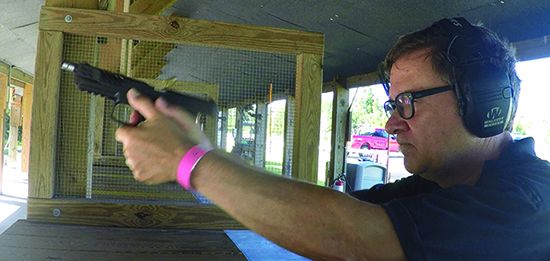
The HK, as befits its price, was a Grade A- gun and was Our Pick. The VP9 Match offers a lot of great features out of the box that give it game. Accuracy is amazing. The smooth trigger was easy to master. The large slide release for right-handed shooting needed to be managed for some shooters. The grip texture is the only complaint we have with the pistol.
There was not much difference running the G17L compared to any Gen5 full-size 9mm Glock. Accuracy was good, but the trigger could have been better. We wonder why Glock didn’t factory install the Glock Performance Trigger on the G17L, which seems like a no-brainer to enhance the G17L’s match ability. We are also not sure what formal shooting competitions allow the G17L, so in the end we were left with a range blaster that choked on soft-recoiling ammo and had performance on par with a service pistol. We felt the Glock G17L was a let down, and we wouldn’t buy it. We scored it as a C+.
THE RONIN HAS A SLIGHT EDGE
In the May 2025 issue, we pitted a Springfield Armory Ronin PX9117LAOS 9mm Luger, $700; and a Glock Model 48 MOS PA4850201FRMOS 9mm Luger, $520. This was a close match up, but the Ronin eked out a win by a half grade.
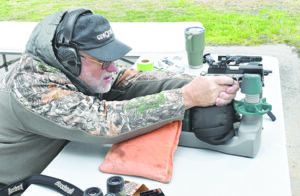
The Ronin from Springfield Armory fed and fired everything perfectly. It averaged a mere 1.34 inches across five-shot groups from three different kinds of ammo. It also recorded the fastest times in our shooting drills. We’ve already noted the weight difference on this 1911- style pistol which, along with that marvelous trigger, really does make for an advantage. The very factors that make it a bit easier to shoot also make it a bit more difficult to conceal. Shooters will have to decide which factors are the most important to them when making their buying decisions. It earned an A grade and was Our Pick.
The G48 was not quite as accurate or as fast as the all-metal Ronin. The Glock was also a half-pound lighter and could carry as much or more ammo with aftermarket mags. It was easy to carry the G48 all day long and forget we were carrying it. It as a Grade A- gun and was the Best Buy in this test.
PDP FIGHTS G49 TO A DRAW, BUT IS A BETTER BUY
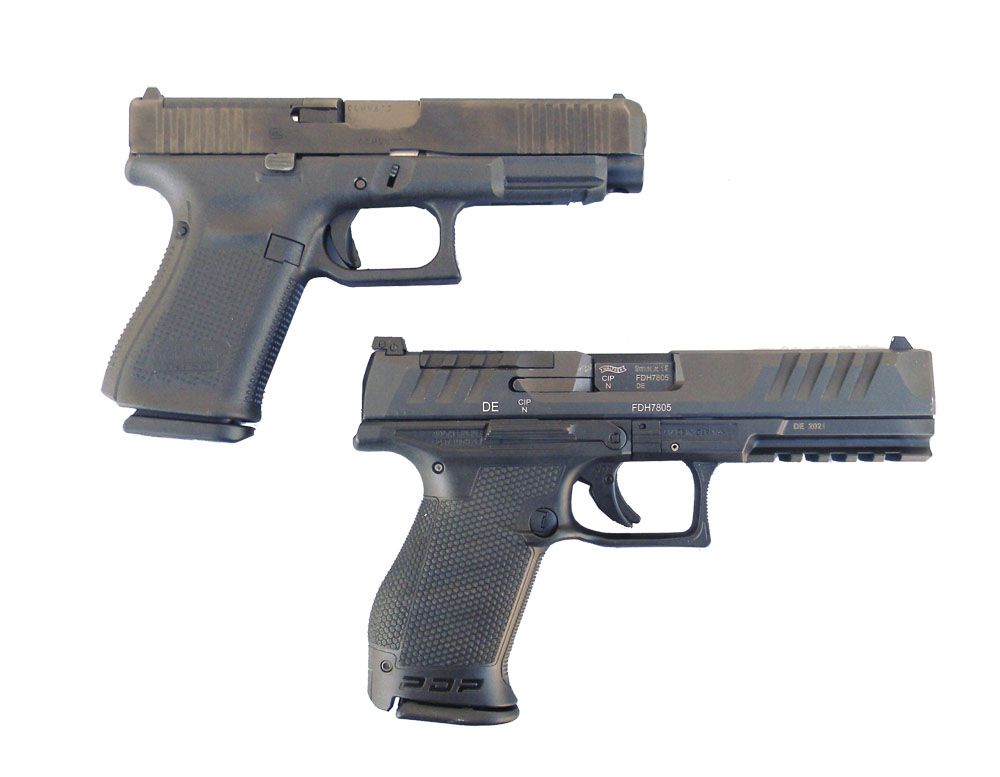
In the August 2024 issue, we tested a Walther PDP Compact 5-Inch 2844222 9mm Luger, $570, versus a Glock 49 MOS PA495S203MOS 9mm Luger, $620.
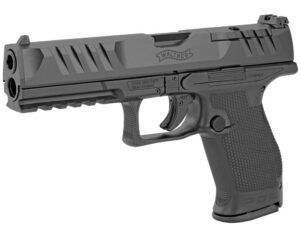
The two guns fought to a draw in scores — both were Grade A guns — but our shooters said the PDP was a Best Buy.
The Walther is a reliable, accurate, and reliable pistol. A mix of bullet weights and standard and +P loads proved reliable. The pistol has more recoil than the Glock 49. The Glock is more compact, yet kicks noticeably less. The Walther is the more accurate in slow fire. If you are a competition shooter, the difference in recoil control may direct you to the Glock, while the difference in accuracy may make the Walther a better choice. Then there is the Walther’s speed-loading advantage. Reliability is a given with both guns, and we don’t say that lightly, but these are reliable handguns with a wide range of loads. Size and weight do not matter in practical competition or home defense. We like the Walther’s takedown and trigger.
Aftermarket sights for the PDP Compact are no problem, with the Walther accepting Glock-compatible sights. Red-dot sight and combat light mounting are similar with each handgun. The bottom line among two similar handguns is price, and the Walther’s average price is less than the Glock’s average. The Walther PDP Compact is the better buy in this match-up.
Dimensionally, the Glock will have the advantage in concealed carry. There are limitless choices in holsters for a Glock 17 slide length, and the Walther PDP Compact is more difficult to holster. It was a close call, but after re-examining the shooting tests several times in conversation and in handling the pistols after the shooting, we narrowly favor the Walther PDP Compact.
If you’re looking for a Glock alternative, the best pick usually comes down to grip fit, trigger feel, and intended use (duty, concealed carry, or competition). We still love our Glocks, but we realize there are many other options out there that may be subjectively better across the board.
The only way to know is go shoot ’em.