









This is a topic with a lot of mythology around it, so here’s what the evidence actually shows:
The concept of “stopping power” with handgun rounds is largely a myth. No common handgun cartridge reliably “stops” a determined attacker instantly. The FBI, military, and trauma surgeons have studied this extensively, and the conclusions are often surprising for many gun owners.
What Actually Stops an Attacker
There are only two reliable mechanisms:
Psychological stop — the attacker decides to stop (most common). This can happen with any caliber, or even a miss.
Physiological stop — the brain/central nervous system (CNS) is deprived of blood/oxygen, or the CNS is directly disrupted. This takes seconds to minutes, even with a perfect shot to the circulatory system — long enough for an adversary to continue an attack.
A CNS hit (brain stem, upper spine) is the only immediate stop, and it’s an extremely small target to target under stress.
What the Research Shows
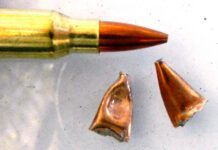
The FBI’s landmark studies (especially post-1986 Miami shootout) concluded that penetration depth (12–18 inches in ballistic gelatin) and reliable expansion matter far more than raw caliber size.
Caliber differences are smaller than believed. The FBI’s 2014 handgun ammunition study found that 9mm, 40 S&W, and 45 ACP produce similar wounding when using quality modern hollow points. The wound channels are not dramatically different.
Shot placement dominates everything. A well-placed 9mm round outperforms a poorly placed 45 every time. Under stress, most people shoot worse — which is why higher-capacity, lower-recoil guns (9mm) are now preferred by most law enforcement.
Number of hits matters. More rounds fired = more chances to hit vital structures. This is another argument for 9mm over larger, lower-capacity options, assuming good performance by the 9mm ammunition.
Modern Consensus (Law Enforcement & Military)
The FBI switched back to 9mm in 2015 after years of using 40 S&W — citing equivalent terminal performance, less recoil, higher capacity, and lower cost for training.
Most major police departments and the U.S. military use 9mm.
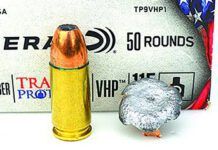
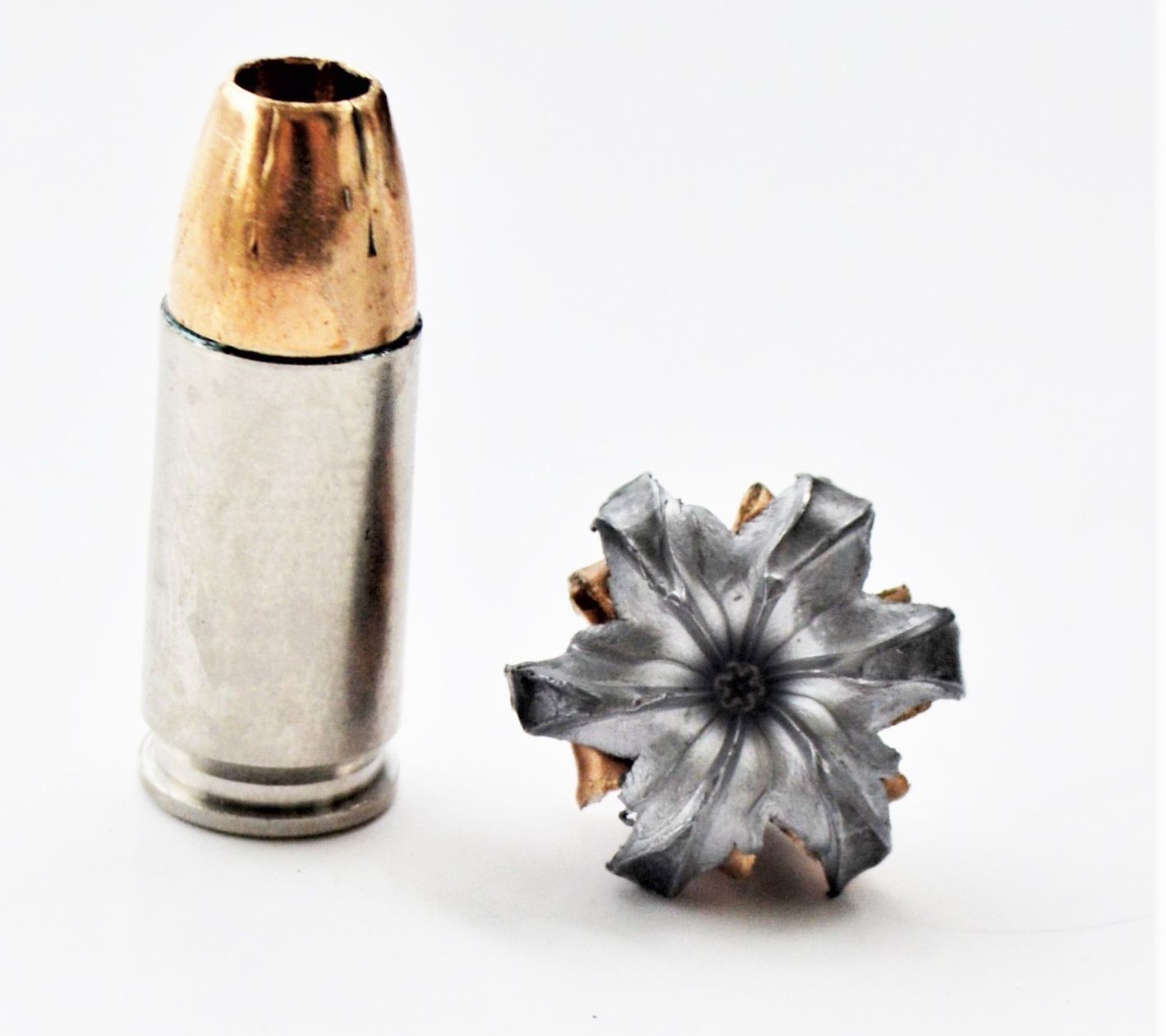
Quality hollow point ammunition (HST, Gold Dot, Critical Duty, Ranger-T) performs similarly across 9mm, 40, and 45 in testing.
What Actually Matters (in order)
- Shot placement — hits on vital structures
- Reliability — a gun that doesn’t malfunction
- Capacity — more rounds available
- Penetration — quality hollow points that reach vital organs (12–18″ gel)
- Your ability to shoot it accurately under stress — which means managing recoil
- Caliber — genuinely the least important variable among common defensive cartridges
Common Myths Debunked
“One-shot stops” — largely anecdotal, often psychological, not a reliable metric
“45 ACP is slow, so it hits harder” — not how terminal ballistics works; kinetic energy and wound channel matter, not momentum alone
“Bigger hole = more damage” — a few mm difference in diameter is clinically insignificant vs. penetration depth and placement
“Magnum rounds are better for defense” — Magnums typically cause overpenetration risk and have more recoil, making them worse for follow-up shots.
Practical Takeaway
Choose a reliable handgun chambered in a common defensive caliber (9mm is the most evidence-backed choice today), use quality hollow point ammunition, and invest heavily in training and practice. That will save your life far more than caliber selection.
Here’s a list of comparison testing for self-defense rounds we’ve conducted at Gun Tests. All the links are in front of the paywall.
9mm Luger Short-Barreled Ammo Shooting for Concealed Carry (February 2026)
Standard-Velocity 38 Special Loads Pony Up for Self Defense (September 2024)
9mm Luger Personal Defense Ammunition Testing (May 2023)
Heavy 38 Special Loads Tested (March 2022)
For Defense: Shooting 45 Colt In Wheelguns and Leverguns (October 2021)
40 S&W Ammunition Test: We Pit Eight Self-Defense Rounds (August 2021)
38 Special Loads: Federal’s Punch Is a Best Buy Bullet (July 2021)
380 ACP Ammunition Testing: Bullet Development Continues (January 2021)
9mm Barrel Lengths Compared In Range Performance Testing (September 2020)
Deep-Penetrating Heavy-Bullet 9mm Loads: Pretty Good Picks, November 2018



I think it’s easy to make the mistake that the criteria listed are independent of one another – when they not only are not, but are also not independent of the shooter him/herself.
If we look at the criterion of shot placement, for example, that is an outcome of the 5th criterion, your ability to shoot accurately – including training, and ability to manage the firing process from the very first shot – as well as subsequent shots.
Natural fit of the weapon to your hand plays a role, but the “your” part of “your hand” plays a bigger one. A large hand of a large man is a very different firing platform from that of a small hand of a low body mass woman with different grip strength and forearm strength.
Moreover, the latter two bear on reliability – for example, a limp or weak grip can cause unreliable repeat fire in a semi-auto. A smaller female firing a .380 may be vastly more dangerous than a large male firing a .460 Rowland, based solely on recoil control, or hand fit/barrel axis height. The complex of gun/hand/skill/ammunition/capacity/shooter mass and strength form a system – and hits on vital structures is a consequence of how all these interdependent subcomponents of that system interact.
I can tell you with certainty, for example, that I am more lethal by far with a Taurus G2c in .40 S&W than I am with an otherwise identical G2c in 9mm (I have both). The 9mm is “snappier” and obviously and notably less controllable – in MY hand. Your mileage may vary, as they say. The sacrifice of a couple of rounds of capacity is insignificant in comparison to the .40 “push” vs. the 9mm “snap” effect on follow-on. And while a .40 caliber hole in an assailant is not MASSIVELY larger than that of a 9mm, a bigger hole is better without question, all else being equal – otherwise there’s no reason for having a caliber larger than .22.
And it’s not a simple caliber issue, either – that .40 Taurus is much more easily controlled than a different .40 I have that is larger and heavier – a S&W 4006 – a highly counterintuitive, but range-proven (several times) outcome. I’m 6 feet, 200 lbs, one time gym rat, but old now; those are MY rules, choice, and proven outcomes – and perhaps those of others, but most likely not everyone.
And the “not everyone” part matters. That reality of individual difference leaves us with a dilemma: you can’t make a universal rule, and the right rule is highly individual-dependent. Ideally, we’d have “test tracks” where individuals could actually try a variety of configurations to find their own sweet spot and optimal defensive combinations. And – that’s where your publication comes in so very handy – comparison testing reports at least highlight the issues about which the prospective gun buyer should be aware, and help to focus down to the limited number of criteria that should be evaluated if the opportunity to do so presents itself.
It may be that any gun is better than no gun, but in a contest where your life depends on the outcome, the little things may well make the difference in who walks away.