












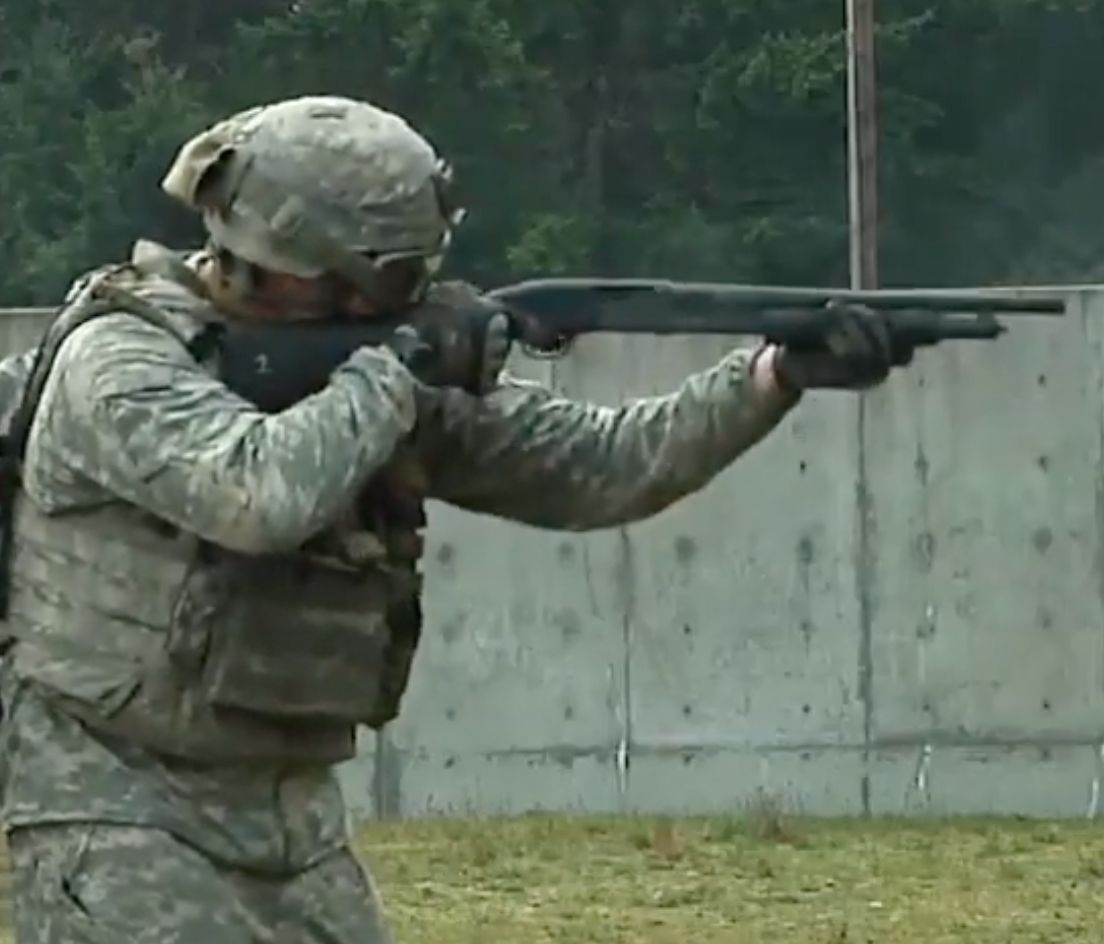
Gun collectors might be able to buy military-surplus shotguns from the Civilian Marksmanship Program (CMP) if President Trump signs the 65th annual National Defense Authorization Act (NDAA).
The NDAA is critical federal legislation that specifies the budget and policies for the United States Department of Defense for the next fiscal year. In its 3086 pages, the NDAA FY 2026 adds military-surplus shotguns to the program that sells M1 Garand rifles and M1911 pistols to civilians, according to NRA-ILA.
The FY2026 NDAA passed the U.S. House of Representatives December 10 312 to 112, and the U.S. Senate voted 77-20 to send the measure to President Trump’s desk for his signature. If signed, the CMP program stands to receive transfer of surplus pump-action shotguns, though the makes aren’t named.
NRA-ILA reported on the budget effort by saying, “Shotguns have long served as iconic trench weapons for close-range firepower. Shotguns have been used by our military since the birth of the nation, with use rising during World War I. That era saw the introduction of the combat shotgun and its unique use by the United States for trench warfare, with Americans being the only military force at the time to bring shotguns to war. The military has continued its love affair with shotguns, as various manufacturers are still contracted to provide combat shotguns to U.S. forces.”
“Since 1903, the CMP program has served a critical role in promoting America’s continued excellence in marksmanship and firearms safety by providing firearms education, training, and competitions nationwide,” NRA-ILA wrote. “While Congress may have oversight of the CMP, the program is truly a non-profit entity raising its own funds, including those garnered from the sale of surplus firearms, for use on firearm education, safety, and training programs.”
The CMP report for 2024 outlined the importance of these surplus firearms with, in the last year alone, over 20,000 of these historic firearms having been sold and those sales serving as the “economic engine that funds [the CMP] operation.”




The CMP is anything but “non-profit”. No doubt these so-called ‘surplus’ shotguns will be anything but fairly priced as ‘surplus’.
The days of buying surplus military weaponry at a fair price that we the tax payers and already paid for many times over, is long since gone. Just look at their prices on 1911’s and Garands. Why pay twice what you can buy the same gun for from Gun Broker at half that price?
So the question should be, why are they still government funded?