






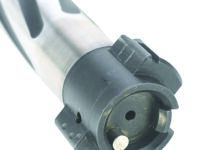
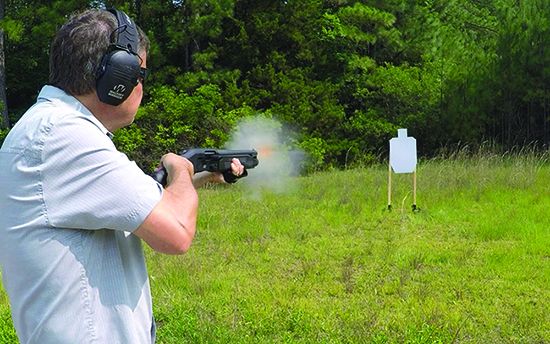
Mossberg introduced the 590 Shockwave 12-gauge pump firearm in 2017, and a variety of different shotgun manufactures copied the idea and created their own version of these guns that are classified as firearms, and not shotguns, by the ATF. Recently, Mossberg applied the Shockwave treatment to a semi-auto firearm and called it the 990 AfterShock. Citadel, a brand by Legacy Sports International, has a version of the original 590 Shockwave and calls it the Tidalwave. We wanted to revisit these firearms — humor us as we call them shotguns going forward — and take a look at the difference between semi-auto actions versus pump actions, covering the operational differences well as tactical differences. We found there are many pros and cons with these types of firearms.
The AfterShock and Tidalwave are both chambered for 3-inch 12-gauge shotshells and equipped with a 14.7-inch barrel and have an overall length of about 27 inches. The AfterShock is a semi-auto and the Tidalwave is a pump. The other big difference is the price. The Mossberg’s price hovers around $900, while the Citadel costs about $325. They are designed for close-up defense work and shine in cramped environments where maneuverability is paramount. Hallways, pie-wedging around corners, creeping down steps, you get the idea. These firearms offer the full blast of a 12-gauge shotgun, but without the length, and that’s an advantage and disadvantage.
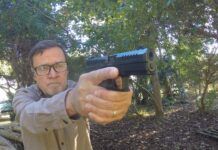
First, the downsides. These firearms are difficult to shoot. You can’t hold them like a handgun nor use them like a rifle. We found it hard to get a steady aim with the Tidalwave and AfterShock. Shooting them from the hip or side of our torso was difficult to aim, but with practice, we were able to get solid hits on the target. Holding the firearms in front of our body at arms length offered better accuracy. We used the push-pull technique — pull the grip with the firing hand while pushing with the support hand — to steady the firearm and made sure the firearm was away from our face during recoil.
Also, the Mossberg and Citadel both generate 12-gauge recoil, which flips the muzzle up and the grip back. Hold them firmly with both hands to avoid getting whacked with the firearms during recoil.
On the upside, they have power. We used three defense loads and birdshot to collect pattern sizes. For defense loads, we opted for 00 and 0B buck shot. Both Hornady Critical Defense and Panzer Defense are loaded with 00 buckshot, and Aguila is packed with 0B buckshot. For the birdshot load, we used Federal Ultra Clay & Field shotshells loaded with 11⁄8 ounce of No. 8 birdshot. For home defense, 00 buckshot sounds like the most practical choice, but it can overpenetrate and go through the walls in your home. Birdshot can be an alternative because No. 8s do not have the individual shot energy like buckshot. The disadvantage with birdshot is the pattern can be large, and some shot will fly past the target. We used IPSC and D-1 targets to judge pattern spread and set the targets at 15 yards. How did we weather the stormy shooting the Tidalwave and AfterShock offered? Here are the details.
Mossberg 990 AfterShock 83001 12 Gauge,
$900
Gun Tests grade: A-
The 990 AfterShock is smooth cycling. The gas action absorbs some recoil, so the firearm is pleasant to shoot. We like the features, such as the M-Lok slots, QD cup, fore end strap, and oversized controls. Barrel needs a shield.
| Action Type | Gas-operated semi auto |
|---|---|
| Chamber Size | 3.0 in. |
| Overall Length | 27.1 in. |
| Capacity | 5+1 |
| Weight Unloaded | 6.0 lbs. |
| Weight Loaded | 6.4 lbs. |
| Barrel Length | 14.7 in. |
| Choke | Cylinder Bore, fixed |
| Finish | Matte blue |
| Choke | Fixed, cylinder bore |
| Grip | Polymer with rubber insert |
| Fore End | Checkered polymer w/strap |
| Sights | Red fiber optic |
| Trigger Pull Weight | 4.7 lbs. |
| Safety | Manual ambidextrous thumb |
| Warranty | 1 year |
| Telephone | (800) 370-0708 |
| Website | Mossberg.com |
| Made In | Mexico, assembled in U.S. |
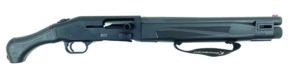
The gas system in the semi-auto 990 AfterShock is all new. It looks like a sawed-off Mossberg 940, and in hand, it feels heavy and well configured.
Features like enlarged controls and a beveled loading port make the 990 easy to load and operate. The knurled charging handle, paddle-style bolt release, and ambidextrous safety are all oversized and make it feel like you are operating a full-size shotgun, but you are not — it is a firearm. The checkered fore end is equipped with a strap that ensures your support hand stays in place on the front, doesn’t slip past the muzzle, and doesn’t get close to a hot barrel. A heat shield would be a benefit on the this and any firearm like it because the barrel temps ratchet up with extended use. There are M-Lok slots on the sides and bottom that allow you to attach accessories like a tactical light, which we thought was a good idea. The front sight is a high visibility red-fiber-optic tube.
The grip has a rubberized palm that offers a bit of protection from recoil. It also features a QD cup in the butt, which is the perfect place to attach a one-point sling.
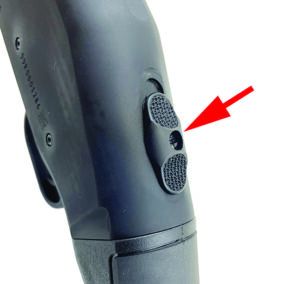
The beveled loading port and elongated elevator on the Mossberg eases loading without pinching your thumb. The oversized bolt release on the right side of the action needs just an easy press to send it home.
We started shooting at 15 yards, and we saw the Federal birdshot shredded the stiff D-1 cardboard target until it was flopping over. The light rounds have a factory muzzle velocity of 1200 fps, much lighter than the other defense loads. Recoil was mild, and the 990 ripped through the shells as fast as we loaded them in. Pattern diameter was 21 inches, which means some shot flew past the target without hitting it. Choke tubes would fix this, but that would increase the cost of the Mossberg 990 substantially.
Moving to the Aguila 0B buckshot and to IPSC targets, the 990 easily kept the pellets on target with an average pattern of 7 inches. The Panzer Defense 00 buckshot had a substantially smaller pattern that averaged 4 inches. The Hornady Critical Defense 00 Buckshot had a surgical 3-inch average pattern. Recoil was substantially more with the defense loads, but the gas system helped absorb some of it. Shooting the Mossberg fast, the strap allowed us to keep a hand on the shotgun. We looped our support hand over the barrel to help keep it down during recoil and soon realized we needed gloves to do that because the barrel became screeching hot.
Performing the push-pull technique with the 990 was made easier due to the strap. The speed with which we could hurl large amounts of 00 buckshot down range was impressive. The Mossberg cycled smoothly and had zero issues. When loading the AfterShock, we either held the grip with our firing hand and loaded with our support hand, or we cupped the receiver in our support hand and stuffed shells in with our firing hand. These techniques helped manage barrel heat, too.
Our Team Said: The Mossberg 990 AfterShock offers a lot of power in a compact package. The problems is, it is difficult to aim. This is a fun firearm to shoot, and we can see a place for it in home defense, but you will need to learn to shoot it proficiently. If price is not an issue, we’d opt for the Mossberg.
| 12-GAUGE RANGE DATA | ||
|---|---|---|
| Hornady Critical Defense 8 Pellets, 00 Buckshot 86240 | Citadel Tidalwave | Mossberg 990 AfterShock |
| Average Pattern Size | 4 in. | 3 in. |
| Federal Ultra Clay 11⁄8 oz. No. 8 Shot 3 Dram Eq. UC 12SI 8 | Citadel Tidalwave | Mossberg 990 AfterShock |
| Average Pattern Size | 22 in. | 21 in. |
| Aguila High Velocity 12 Pellets, 0B Buckshot 13⁄8 oz., 1C1200BA | Citadel Tidalwave | Mossberg 990 AfterShock |
| Average Pattern Size | 8 in. | 7 in. |
| Panzer Defense 9 Pellets, 00 Buckshot 13⁄16 oz., 3¾ Dram Eq. | Citadel Tidalwave | Mossberg 990 AfterShock |
| Average Pattern Size | 7 in. | 4 in. |
To collect pattern data, we fired off hand at a distance of 15 yards. All shotshells were 2¾-inch loads. Hornady Critical Defense factory velocity = 1600 fps. Federal Ultra Clay factory velocity = 1200 fps. Aguila High Velocity factory velocity = 1275 fps. Panzer Defense factory velocity = 1350 fps.
Written and photographed by Robert Sadowski, using evaluations from Gun Tests Team members. GT