




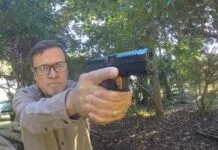
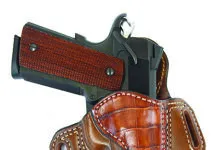




Here we are looking at two 1911-type handguns generally known as Commander types. A Commander, as originally introduced in 1950, is a 1911 pistol with a shorter barrel and slide but a full-size firing grip. The original was an aluminum-frame handgun. Beginning in 1970, a steel-frame option was offered, and today, the heavier Commander is the more-popular variation among shooters.
Our test guns are two high-end Commanders, the Springfield Tactical Response Pistol Carry Contour and the Dan Wesson Specialist Commander. They are similar pistols as far as sights and finish go, and are reasonably close in selling price. Neither handgun is commonly found in gun shops and are often a special order. The primary difference is that the Springfield features an aluminum frame and the Dan Wesson is a steel-frame handgun. This results in a significant amount of weight difference.
How We Tested
Test procedure was the same for each of the 1911 45 ACP Commanders. We lubricated the pistols along the long bearing surfaces, slide rails and slide ways, barrel hood, and cocking block. In addition to the two supplied magazines for each gun, we added four Wilson Combat magazines and used them in each pistol. There were no issues in either gun.
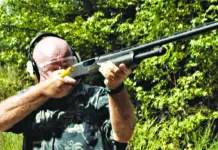
In this case we did a side-by-side rapid-fire shooting comparison of the aluminum-frame Springfield and the steel-frame Dan Wesson to gauge control. We fired 50 rounds of Black Hills Ammunition 230-grain FMJ ammunition in the combat-shooting test. We also fired 50 rounds of the same ammunition firing at maximum speed on the edges of control to evaluate recoil and its effect on the shooter. We fired these 100 rounds in each pistol in the same range session.
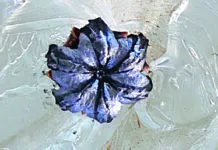
For bench accuracy, we fired from a solid bench-rest firing position at 25 yards with three 230-grain jacketed hollow-point loads. The Black Hills Ammunition was the Factory New kind, Federal’s brand was the Punch fodder, and Speer’s entry was the Gold Dot HPs.
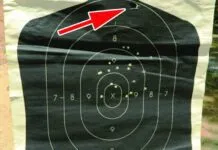
We drew and fired quickly, emptying a magazine, executing a speed load, and firing several rounds at man-sized silhouettes at 7, 10, and 15 yards.
Is one best for carry and the other best for shooting? Would an aluminum-frame Commander pound our metacarpals raw? Would the steel-frame handgun drag our trousers down? The shooter wishing to own a solid, reliable Commander 45 will find one among these two. As it turns out, the pistols perform similarly on many points, but we had a favorite.
Springfield TRP CC PC9124LR-CC 45 ACP,
$1900
Gun Tests grade: A [best buy}
The Springfield TRP CC is well made and nicely fitted. Three-dot tritium sights, an ambidextrous slide-lock safety, and a nicely contoured grip frame are good features. The lightweight cutaway frame is easy to carry.

| Action Type | Short recoil-operated locked breech, single action |
| Overall Length | 7.75 in. |
| Overall Height | 5.6 in. |
| Maximum Width | 1.4 in. |
| Weight Unloaded | 27.5 oz. |
| Weight Loaded | 31.9 oz. |
| Slide | Forged carbon steel, black Cerakote finish |
| Slide Retraction Effort | 18.0 lbs. |
| Receiver | Black Cerakote, aluminum alloy |
| Front Strap Height | 2.6 in. |
| Back Strap Height | 3.2 in. |
| Barrel | 4.25 in. |
| Grip Thickness Maximum | 1.3 in. |
| Grip Circumference Maximum | 5.3 in. |
| Magazines | (2) 8 round |
| Magazine Price | $26 |
| Rear Sight | Fixed dovetail, tritium inserts |
| Front Sight | Dovetailed post w/tritium insert |
| Sight Radius | 5.8 in. |
| Trigger Pull Weight | 5.0 lbs. |
| Trigger Span | 2.7 in. |
| Safety | Slide lock safety/grip safety |
| Warranty | Lifetime |
| Telephone | (800) 680-6866 |
| Website | Springfield-Armory.com |
| Made In | U.S. |
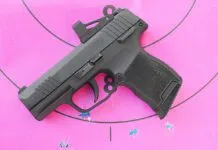
The Tactical Response Pistol (TRP) is a civilian version of the Bureau Model 1911. Adopted after a grueling 25,000-round test program, the Bureau Model — Professional Model for the rest of us — is perhaps most proven modern 1911 handgun. The Tactical Response Pistol is a more affordable version of this handgun, and the TRP has earned an excellent reputation. At the 2024 SHOT Show, Springfield introduced several new models, including the first TRP Commander type. The Carry Contour (CC) version is a 4.25-inch-barrel pistol with an aluminum frame and a clipped mainspring housing. This frame is similar to the Bobtail cut that has proven popular, but its not exactly the same. This cut is intended to make concealed carry easier under a covering garment while maintaining a good firing grip. The Carry Contour mainspring housing cannot be used as a contact point for speed loads, but this isn’t significant in a concealed-carry handgun.
The pistol features a frame rail for mounting combat lights and has a black Cerakote finish. (Coyote Brown is an option.) Beginning at the slide, the pistol features forward and rear cocking serrations. A dovetailed-post front sight shows a tritium insert. The rear sight is the popular wedge, or ledge, design that allows racking the slide on a boot heel or belt. With the rear sight’s twin self-luminous tritium inserts, you have a three-dot sight picture. On its grip panels, the pistol has the usual crossed-cannons Springfield emblem and subtle markings.
As far as metalwork, the TRP has a flat-top slide in the best custom-gun tradition and a rib cut into the slide to disperse glare. The barrel ramp is nicely polished. The barrel is a ramped type unusual in a Commander 45 and a praiseworthy addition. Barrel-to-slide fit is good, and the locking lugs slide nicely into place. The barrel bushing is snug, but not too tight to be turned with the fingers for disassembly.

The TRP features an ambidextrous slide-lock safety, with the left-hand lever larger than the right-hand lever. The left lever is for right-handed shooters, and the right lever is for lefty thumbs. The aluminum frame is nicely finished. The front strap features 20-lines-per-inch checkering compared to the Dan Wesson’s 25-lpi texture. The raters said the raspier feel is a trademark of the TRP series. Abrasion is good, and you may maintain a good grip with sweaty, cold, or wet hands. It doesn’t actually abrade the palm, but we could see that occurring given a long-enough firing session. There was no blood brought out by the TRP’s front-strap checkering, but the grip left a noticeable impression pressed into the palm.
The upswept beavertail grip safety helps funnel the handgun into the firing grip and lowers the bore axis slightly. The grip safety blocks the trigger from movement until depressed. In this case, the grip safety properly releases its hold on the trigger about halfway into compression of the beavertail safety. The pistol is supplied with a nice set of hex VZ grips, which feature a good mix of abrasion and adhesion. The slide stop is a standard size. Trigger compression is a smooth 5.0 pounds, with minimal take-up and a short reset.
During the drills, our shooters said the TRP pistol is fast on target and delivers an accurate first shot, as a 1911 should be. The safety is positive in operation and is easily manipulated as the handgun is drawn. The raters never failed to hit the grip safety and depress it properly.
The recoil spring has a great deal of influence on control and function, and we feel that the Springfield is among the more controllable lightweight 45s we have fired. We liked the accuracy potential of the handgun.

The next step was loading magazines with 230-grain hardball for a rapid run on the combat course. Normally, we fire and allow trigger reset during recoil, not firing until we regain the sight picture. This time around, we fired the pistol rapidly, simply hosing the target down at 7 yards. We switched between two raters and the two pistols, firing 100 cartridges in a few minutes. In this side-by-side drill, the shooters noted the lightweight pistol was less controllable — no surprise there — and one of the raters was rubbing his wrists after his 100 rounds of 45 ACP.
In combat accuracy, the two pistols were close. Each has good sights and a good trigger, which made for excellent results, but the Dan Wesson exhibited tighter combat groups. In rapid-fire hell-for-leather testing, the Dan Wesson was more accurate, with a smaller total group.
From the bench, the TRP proved accurate enough for most chores and more accurate than the majority of 5-inch-barrel 1911 guns we have tested, and plenty accurate for a Commander 45. Some groups went as small as 2.0 inches and a few were 2.5 inches, a good standard.
Our Team Said: During the test, the TRP had no failures to feed, chamber, fire, or eject. Like with the Dan Wesson, we found nothing to rate the Springfield pistol down on. The TRP CC does exactly what it was designed to do.
| 45 ACP RANGE DATA | ||
| Black Hills Factory New 230-grain JHP | Springfield Armory 1911 TRP CC | Dan Wesson Specialist Commander |
| Velocity | 841 fps | 856 fps |
| Muzzle Energy | 361 ft.-lbs. | 374 ft.-lbs. |
| Small Group | 2.0 in. | 1.6 in. |
| Average Group | 2.5 in. | 1.95 in. |
| Federal Punch 230-grain JHP PD45P1 | Springfield Armory 1911 TRP CC | Dan Wesson Specialist Commander |
| Velocity | 822 fps | 834 fps |
| Muzzle Energy | 345 fps | 355 ft.-lbs. |
| Small Group | 2.5 in. | 2.0 in. |
| Average Group | 2.9 in. | 2.25 in. |
| Speer Gold Dot 230-grain GDHP 23966GD | Springfield Armory 1911 TRP CC | Dan Wesson Specialist Commander |
| Velocity | 770 fps | 794 fps |
| Muzzle Energy | 303 ft.-lbs. | 322 ft.-lbs. |
| Small Group | 1.85 in. | 1.7 in. |
| Large Group | 2.35 in. | 2.1 in. |
To collect accuracy data, we fired five-shot groups from a bench using an MTM Case-Gard K-Zone rest. Distance: 25 yards. We measured velocities with a Competition Electronics Pro Chrony with the first screen 10 feet from the muzzles.
Written and photographed by Robert Campbell, using evaluations from Gun Tests Team members. GT