



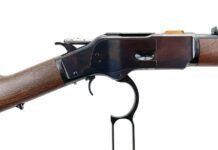






Lever-action rifles are woven into the fabric of our American culture. Many of these rifles were high tech when first introduced, offering rapid firepower. They were adopted by the military, used by lawmen and outlaws alike, and to this day are used by hunters and Cowboy Action shooters. Like all designs, however, older levergun designs were discontinued as newer and better leverguns were built. The thing is, you can’t put a good levergun down, to turn a phrase. Many great leverguns ceased production with their original makers only to be resurrected into production by other manufacturers that tweaked the design using newer, better materials, adding safety features, and chambering them in modern cartridges. Interest in the Old West and Cowboy Action Shooting prodded manufacturers to bring back production of these old rifles. Three of these resurrected rifles include the Henry New Original Henry, the Marlin Model 1894 Classic, and the Winchester Model 1873 Carbine.
How We Tested
The Marlin 1894 Classic is chambered in 44 Magnum and was run with 44 Magnum and 44 Special ammo. Both the Winchester and Henry were chambered in 45 Colt, aka 45 Long Colt. Bullet weight and shape can jam a lever action because the original designs were made to use a bullet with a rounded nose. Some modern bullet types and weights may have a hard time cycling in these guns. We could not test all the available bullets, so we want to temper expectations and make sure you test ammo before venturing on a hunt, competition, or using the ammo for protection. All of the rifles were fired using iron sights since the Winchester and Henry have no provision for an optic. The Marlin is drilled and tapped for an optic. Other than the open sights, common features include a tubular magazine, straight-grip wood stock, standard-size rectangular lever loop, and exposed hammer. From there, feature sets diverge. For example, the Henry is devoid of any modern safety devices, just a half-cock hammer and common sense. The Winchester uses a trigger stop and half-cock safety. The Marlin is equipped with a half-cock safety as well, and a push-button safety. We didn’t look at how close these guns are to the originals, because the point with a replica or clone is to be able to shoot the rifle in competition, at the range, or hunt with them. These rifles will not be accruing value like originals, and they are made to be used. Originals are best kept as safe queens.
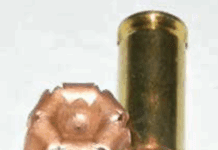
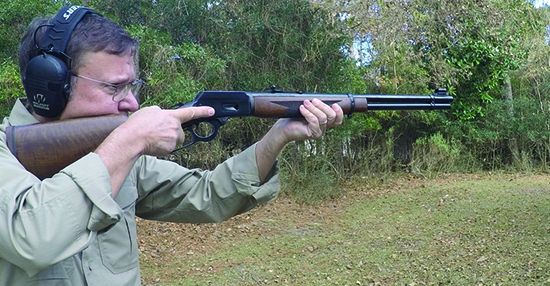
We fired the three rifles from a bench using a rest at 50 yards and collected accuracy data from three-shot groups. Ammunition in 45 Colt consisted of Blazer aluminum-case ammo loaded with a 200-grain JHP, Hornady LEVERevolution with a 225-grain FTX bullet, Winchester Big Bore with a 250-grain semi-jacketed hollow point, Federal American Eagle with a 250-grain jacketed soft point, and Choice Ammunition’s cowboy load with a 250-grain round-nose flat point. In the Marlin, we fired 44 Special Hornady Custom with a 180-grain XTP bullet, and in 44 Magnum, we fired Sellier & Bellot with a 240-grain jacketed hollow point, Black Hills with a 240-grain SJHP bullet, and a SIG V-Crown with a 240-grain JHP. In addition, our test team fired the rifles offhand to assess how well they shouldered and what they offered in terms of fast follow-up shots.
We looked for ease in loading, smoothness of the action, serviceability of the iron sights, fit and finish, and accuracy. These are expensive rifles that offer an experience of what it was like to use a firearm 130 to 165 years ago and allowed us to check three boxes on our bucket list. You may want to check these off your list or even make room in your gun safe for one of these lever-action rifles. Others you might wonder why it was ever resurrected in the first place. In real life, it is not all Lonesome Dove and Open Range; lever guns have their own unique personalities, which we experienced running these guns. Here are the specifics in order of original introduction, starting with the Henry, then the Winchester and finally the Marlin.
Marlin Model 1894 Classic Model 70401 44 Magnum
$1090
Gun Tests grade: F (INITIAL)
Gun Tests grade: A- (FINAL)
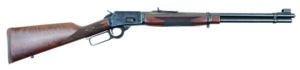
The Model 1894 Classic is a traditional blued-steel and checkered-wood deer rifle. Winchester may have won the West, but Marlin settled it. Our sample jammed and could not keep zero. We returned it to Marlin for servicing.
| Action Type | Lever, exposed hammer |
|---|---|
| Overall Length | 39.0 in. |
| Barrel | 20.2 in long.; 1:20 RH twist; satin blue steel |
| Overall Height | 7.7 in. |
| Weight Unloaded | 6.4 lbs. |
| Weight Loaded | 6.9 lbs. |
| Sight Radius | 16.6 in. |
| Receiver | Satin-blue alloy steel |
| Magazine Capacity | 10 (44 Mag); 11 (44 Sp.) |
| Magazine Type | Tube |
| Stock Material | Checkered American black walnut |
| Stock Drop at Comb | 2.0 in. |
| Stock Drop at Heel | 3.0 in. |
| Stock Buttplate | Rubber |
| Stock Length of Pull | 13.6 in. |
| Front Sight | Brass bead with hood |
| Rear Sight | Adj. semi-buckhorn rear, drilled and tapped |
| Trigger Pull Weight | 4.2 lbs. |
| Manual Safety | Half-cock notch, manual hammer block, trigger stop |
| Warranty | None written |
| Telephone | (800) 948-8029 |
| Website | MarlinFirearms.com |
| Made In | U.S. |
In 2023, Ruger re-introduced the Marlin Model 1894 lever-action series just three years after buying the bankrupt company. Marlin had been owned by Remington, which filed bankruptcy in 2020. Original Model 1894 rifles were first produced in 1894 and chambered in a variety of Winchester centerfire calibers, and as production continued, rifles were chambered in a variety of calibers. Winchester’s main competitor was Marlin back in the day. Marlin had been manufacturing lever-action rifles since 1881 using a flat, solid-steel top receiver with side ejection, which was different from Winchester top-eject rifles. Marlin rifles were touted as stronger than top-eject rifles. The Model 1894 introduced a simplified and strengthened lever-action mechanism while still using a flat solid-steel top receiver with side ejection. Another notable improvement was the finger-lever lock was replaced by an automatic latch built into the lever, so the Model 1894 was always ready for action. No need to manually rotate a lever lock to cycle the rifle’s lever loop.
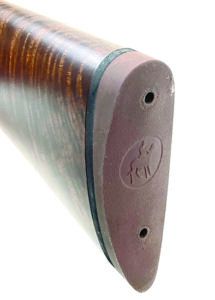
The Classic series features a satin-blue finish on all the metal surfaces and a stock made from American black walnut sporting a diamond-checkered pattern. The Classic series has a traditional lever-action look and is available in 30-30 Win., 357 Magnum, and 44 Magnum. Our sample was chambered in 44 Magnum and looked sharp out of the box. In hand, the Classic shoulders easily, though the red-rubber butt can snag on clothing. The butt and black spacer were well fitted to the wood. Sling swivel studs are provided. A band secures the fore end to the barrel, and a barrel band secures the magazine tube to the barrel. The fore end is slimmer compared to older Marlins, which had a thicker and chubbier fore end. Pistol-caliber models have a straight grip stock; the 30-30 Winchester model sports a pistol-grip stock. A red bull’s-eye inset is embedded in the stock, signifying a Ruger-built Marlin. Pre-Ruger Marlins have a black bull’s-eye.
The 1894 has a small hammer that does not block the sights. It is serrated for a sure grip and has three positions: Fully forward, half cock, and fully rearward. Half cock acts as a “safety.” Other safeties include a trigger block that requires the lever to be fully closed for the trigger to operate. We found no resistance with the trigger block when operating the trigger. There is also a manual button safety that blocks the hammer from striking the firing pin when in the Safe position. Press the button from the right side of the receiver to fire the rifle. A red band appears on the button on the left side of the receiver. The Safety button can only be moved when the hammer is in the half cock or fully cocked position. Note that the trigger can still trip the hammer when the safety is on. It won’t fire the rifle, but you may think you have a dud round when the safety is on and the hammer falls.
The one-stage trigger is wide, with a smooth face. Note that the trigger can rotate forward. This is a characteristic of many Marlin lever-action rifles. Pull weight averaged 4.2 pounds with a very slight creep before breaking. A serviceable trigger.
The 20.2-inch round barrel was equipped with an adjustable, folding semi-buckhorn rear sight and a brass-bead blade front with a removable hood. Out of the box, the rear sight was tapped far to the right. The sight front blade, which is dovetailed into the front sight base, was knocked too far to the right, while the blade itself was slightly bent to the left, like the front sight on a surplus Romanian AK-47. Well, maybe not that bad, but definitely not straight. The point of impact was anyone’s guess. The top was drilled and tapped to mount a scope.
Pushing rounds into the loading gate was easy. The top outside edge of the loading port is chamfered, which allows easing rounds into the tube. Going hot, the elevation proved to be dead on for 50 yards, but point of impact was 6 inches to the right. We dealt with it by adjusting our point of aim. The SIG V-Crown with the 200-grain bullet had a best group that measured 0.83 inch; average was 1.11 inches. Moving to Sellier & Bellot with a 240-grain JHP bullet, the best group measured 1.01 inches; average was 1.40 inches. Next was Black Hills 240-grain SJHP when we encountered a jam. The lever was being cycled briskly and a round caught in the carrier, while another round stuck out from the magazine tube. The lever was jammed open and couldn’t be closed. We ended testing for the day and brought the Marlin back to the shop where a long, skinny-shaft screwdriver was needed to remove the jammed round, then the action cycled with the remaining rounds in the tube. While we were at it, we tapped the front blade back in the base and bent the front blade so it was straight.
Back at the range, the Marlin cycled flawlessly, but the sights would not hold a zero. We checked the sights, even read the manual for any recommendations, but found no resolution, so we temporarily ended the test.
Next, we contacted Ruger/Marlin customer service via the website, and we also phoned them. After a long wait on hold, we explained the situation, and Marlin assigned an RMA number and emailed a FedEx label to ship the rifle to Marlin for servicing. (Also, we received an email five days after sending a message on the website requesting that we telephone customer service. What we learned is, forget email, call customer service directly.) While on the phone, we were asked what type of ammo we were shooting and how many rounds we fired. We received an email shortly after the phone call with a FedEx ground shipping label and shipping instructions. The label was printed and rifle shipped out the next day. Eight days later we received an email from Ruger customer service that the rifle had arrived. We were told the typical response time is approximately 2 to 4 weeks, and updates would be emailed so we could track the process. Two days later we received another email stating repairs were complete, and Marlin was preparing the gun to be shipped. That was quick! The repair note stated the barrel, forearm, and front sight assembly were replaced. The email added, “Firearm was then targeted 5 rounds of Remington HTP JSP 240 grain ammo, @ 50 yards with Potters rest, without malfunctions. Accuracy of rifle is within factory specifications. Target enclosed.” The next day the rifle arrived. Full disclosure: The rifle was sent from our test team in North Carolina, and Ruger’s repair facility is in Mayodan, NC, so that may have sped up the process.
We initially failed the Marlin due to the sight issue. It has been some time we’ve seen iron sights so out of whack. If a rifle does not hold a zero, it is worthless. After a return trip to the factory, it was groundhog day with our third trip to the range. We used the same ammo and same target at 50 yards. The rifle shot low to point of aim, about 6 inches, and windage was on the money. After adjusting the rear-sight elevation, the rifle shot dead on. We ran through more ammo to be sure the Marlin fully redeemed itself and found it preferred Black Hills and Hornady over SIG and S&B. The rifling has a 1:20 twist rate similar to Ruger’s other 44 Magnum rifles like the Model 77/44, Model 96/44, and Deerfield carbine. This twist rate is near perfect for short 240-grain bullets, and it is also friendly with bullets weighing 300 grains and heavier. We had no issues with cycling, even when we moved the lever super slowly to jam it. Even using shorter 44 Special ammo had no negative impact on the performance. Three-shot groups with either the Black Hills or Hornady ammo nearly overlapped; best groups measured 0.56 and 0.34 inch, respectively. The best with SIG was 2.53 inches, and the best we could do with Sellier & Bellot was 1.07 inches. We did notice that with five shots, the groups opened up, which is what is expected in a lever action. The Hornady and Black Hills groups looked similar to the test target that was shipped back with the rifle. There was a slight reduction of about 20 fps in velocity between the original barrel and the replacement barrel. We attribute that to temperature. The first two range sessions, the temperature was between 50 and 60 degrees. At the third session, the temp was 40.
Our Team Said: We commend Ruger for servicing the Marlin fast and at no cost to us. The repair process was painless, and the frequent emails managed our expectations. After our last shooting session, we are confident with the rifle enough to use it hunting. Though accuracy was decent for hunting, we might mount a red dot or an XS Sights ghost ring if we owned this rifle. Was our Ruger/Marlin one bad apple? We have not heard any reports of Ruger/Marlins going back to the factory, so we hope this is an isolated case. We knocked the Marlin a half point for the rubber recoil pad because it snagged on clothing when shouldered. With the third and final range test, our initial F rating is upgraded to an A- rating.
| 45 COLT RANGE DATA | ||
|---|---|---|
| Blazer* 200-grain JHP | Henry New Original Henry | Winchester Model 1873 Carbine |
| Average Velocity | 1230 fps | 1153 fps |
| Muzzle Energy | 671 ft.-lbs. | 590 ft.-lbs. |
| Smallest Group | 0.53 in. | 0.50 in. |
| Average Group | 0.97 in. | 0.83 in. |
| Hornady LEVERevolution 225-grain FTX | Henry New Original Henry | Winchester Model 1873 Carbine |
| Average Velocity | 1142 fps | 1057 fps |
| Muzzle Energy | 652 ft.-lbs. | 559 ft.-lbs. |
| Smallest Group | 1.36 in. | 1.65 in. |
| Average Group | 1.73 in. | 1.97 in. |
| Winchester Big Bore 250-grain SJHP | Henry New Original Henry | Winchester Model 1873 Carbine |
| Average Velocity | 1118 fps | 1088 fps |
| Muzzle Energy | 694 ft.-lbs. | 657 ft.-lbs. |
| Smallest Group | 1.36 in. | 2.21 in. |
| Average Group | 1.39 in. | 2.23 in. |
| Federal American Eagle 250-grain JSP | Henry New Original Henry | Winchester Model 1873 Carbine |
| Average Velocity | 1180 fps | 1147 fps |
| Muzzle Energy | 773 ft.-lbs. | 730 ft.-lbs. |
| Smallest Group | 2.23 in. | 0.66 in. |
| Average Group | 2.29 in. | 0.69 in. |
| Choice Ammunition 250-grain RNFP | Henry New Original Henry | Winchester Model 1873 Carbine |
| Average Velocity | 1051 fps | 1045 fps |
| Muzzle Energy | 613 ft.-lbs. | 606 ft.-lbs. |
| Smallest Group | 2.37 in. | 2.25 in. |
| Average Group | 2.47 in. | 2.50 in. |
To collect accuracy data, we fired three-shot groups from a bench using a rest. Distance: 50 yards with open sights. We recorded velocities and energies using a Garmin Xero C1 Pro Chronograph. *Aluminum cases.
| 44 SPECIAL/44 MAGNUM RANGE DATA | ||||
|---|---|---|---|---|
| Marlin Classic Model 1894 | 44 Special Hornady Custom 180-grain XTP | 44 Magnum SIG Sauer V-Crown 240-grain JHP | 44 Magnum Sellier & Bellot 240-grain JHP | 44 Magnum Black Hills 240-grain SJHP |
| Average Velocity | 1100 fps | 1633 fps | 1381 fps | 1536 fps |
| Muzzle Energy | 484 ft.-lbs. | 1421 ft.-lbs. | 1017 ft.-lbs. | 1257 ft.-lbs. |
| Smallest Group | 0.34 in. | 2.53 in. | 1.07 in. | 0.56 in. |
| Average Group | 0.73 in. | 2.67 in. | 1.31 in. | 1.11 in. |
Written and photographed by Robert Sadowski, using evaluations from Gun Tests Team members. GT