










The 22 LR is a controversial choice for self-defense. Here’s a balanced breakdown of factors to consider if you’re wondering if the round is right for your situation.
Arguments In Favor
- Low recoil — Makes it easier to shoot accurately, especially for beginners, elderly, or those with limited hand strength.
- Affordable practice — Cheap ammo means more range time, which translates to better marksmanship, and shot placement matters enormously.
- High capacity — Many 22 LR rifles and pistols hold lots of rounds.
- Better than nothing — A 22 LR you can shoot confidently beats a 45 you can’t control.
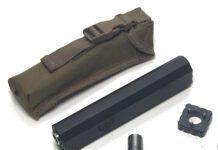
- Suppressor-friendly — Subsonic 22 LR is inherently quiet, relevant in some home-defense scenarios.
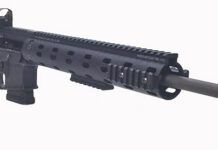
- Rifle ballistics — Out of a rifle barrel (16–18″), the 22 LR cartridge gains significant velocity (~1,200–1,400 fps), improving terminal performance considerably over pistol velocity.
Arguments Against
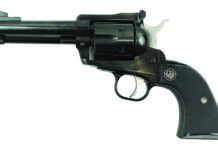
- Inadequate stopping power — The 22 LR produces very little energy (~100–140 ft-lbs from a pistol). It may not reliably stop a determined attacker.
- Shallow penetration — FBI ballistic standards call for 12–18″ of gel penetration. Most, if not all, 22 loads fall short, especially from a pistol.
- Rimfire reliability — Rimfire ignition is inherently less reliable than centerfire. Misfires at a critical moment are a serious concern.
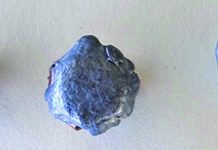
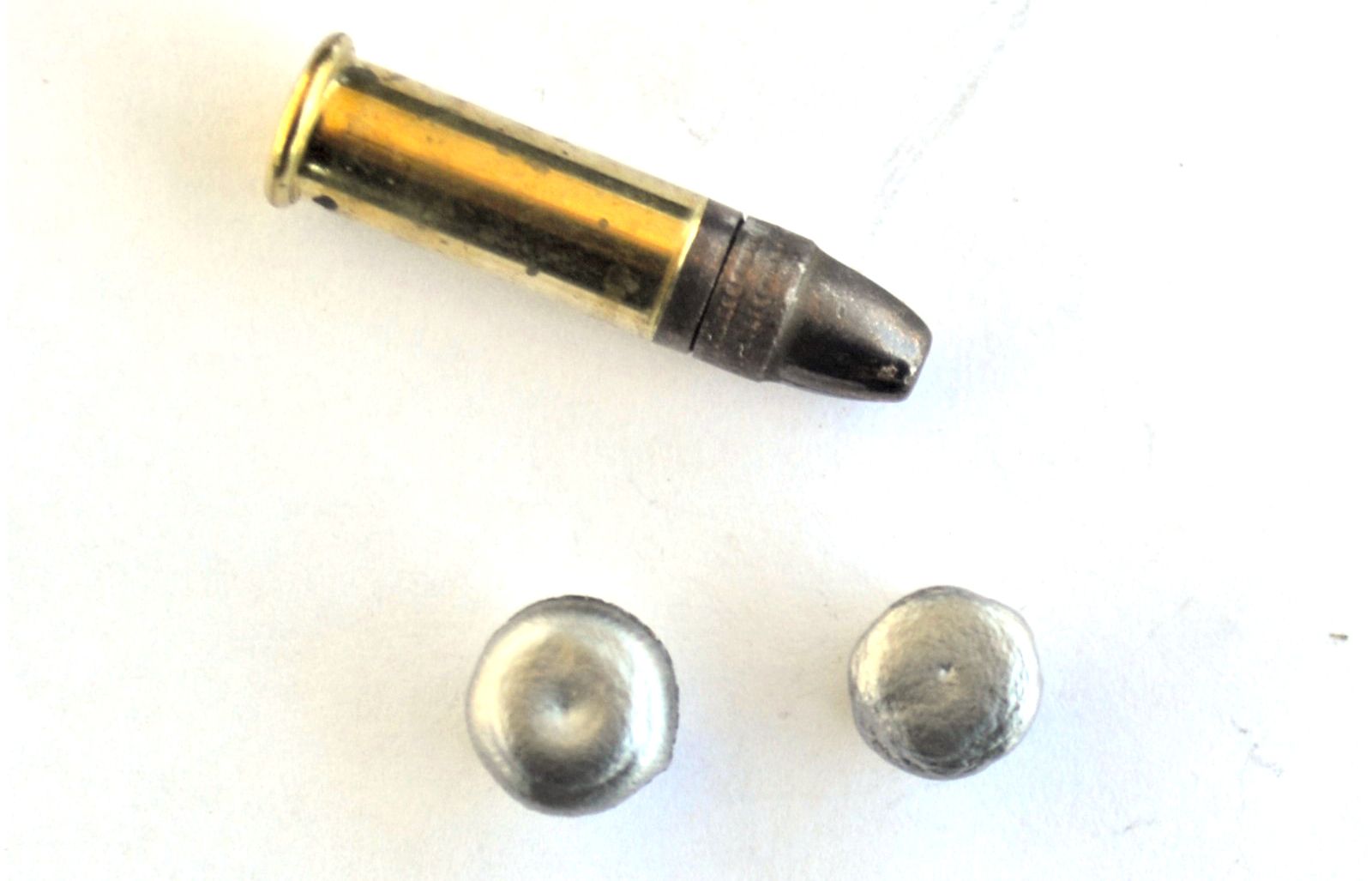
- Expansion issues —– Hollow point 22 LR rounds often fail to expand at pistol velocities, negating that advantage.
- Clothing defeats it — Heavy clothing can significantly reduce penetration.
Rifle vs. Pistol — Key Difference
If you wanted to consider a 22 LR for home defense, fired from a rifle the round is meaningfully better ballistically, but the rimfire reliability issue applies to both.
Gun Tests has conducted extensive water-penetration-and-expansion testing of 22 LR cartridges fired from handguns and rifles.
We first tested a number of 22 rimfire loads in handguns. Many of the loads were not that impressive (see table below).
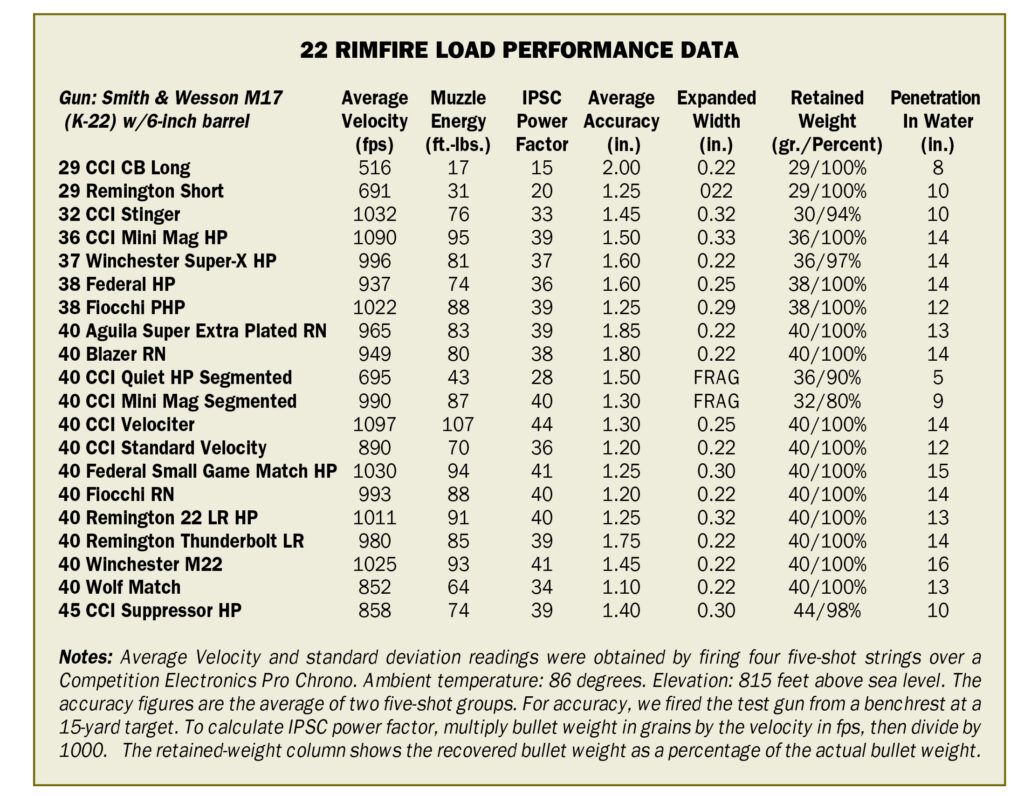
Feedback from readers was positive, and we discovered we had quite a few 22 Long Rifle fans in the readership. We also had a number of requests to test the loads in 22 Long Rifle long guns.
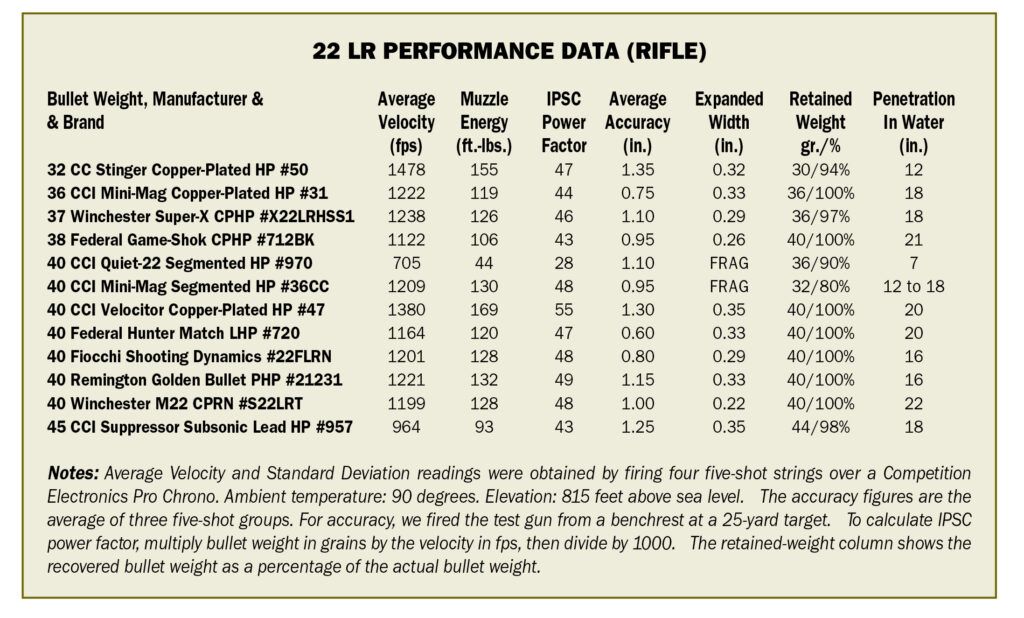
Next, we ran 22 LR rounds through a rifle, and, as expected, we saw velocities were much higher with most loads (see table below). Higher velocities lead to improved expansion and penetration. The 22 proved capable in the accuracy department with rifles as well, no surprises there.
Bottom Line
The 22 LR is not an ideal self-defense choice, but it’s not useless either. If it’s the only firearm you own, shoot it well, use quality ammunition, and practice consistently.
If you have options, most self-defense trainers recommend a 9mm as the minimum — it offers proven stopping power, manageable recoil, good capacity, and centerfire reliability at a reasonable cost.
For those who find larger cartridges difficult to handle, a 22 Magnum (22 WMR) or 32 ACP are modest steps up worth considering.
While we do not recommend a 22 for home defense, the caliber gets into the fray a lot, sometimes against animals and sometimes against dangerous intruders. One of the loads with penetration on the long end just might serve to protect hearth and home, given good shot placement.
To see our full test results of 22 LR cartridges fired from handguns and rifles, check out the articles below.
Twenty 22 Rimfire Loads Go Head to Head at the Range (Handguns)
Twelve 22 Long Rifle Cartridges, Shot From a Rifle This Round




Gents, I carry a Taurus TUC, in .22LR, that is my EDC in warm weather. I’m 78 years old, and I’ve been shooting since I was 12 years old. My 1st firearm was a Winchester Model 67, which I learned a lot about firearms. I’m fully aware of the limits of the .22LR.
When Hinley shot President Reagan and his press agent, he used a .22LR hand gun. That .22LR almost killed Reagan and it Really messed up Brady too.
My TUC has been stone reliable, and I only buy quality ammunition, CCI. The way I have if figured, 10 rounds into a Ner-do-well, face and body, just may deter them from attacking me. In cooler/winter, I carry either my Sig 365XL or my HK CC9. I trust those pistols 100%.
Keep up the good work. BTW, I’d like to see your review of the HK CC9.